
You find yourself staring at a listing for a shiny 2014 BMW with 110,000 miles, priced at a tempting $9,500. It looks like a steal. You imagine yourself cruising with a premium badge on the steering wheel, enjoying luxury for the price of a budget sedan. Then you realize the first major repair—a cooling system overhaul—costs $1,800, and your “cheap” car becomes a financial anchor. This is the “thousand-dollar mistake” that many first-time used car buyers make. They prioritize the prestige or the appearance of the vehicle over the mechanical integrity and long-term cost of ownership.
Finding a reliable used car for under $10,000 in today’s market requires a shift in mindset. You are not looking for a status symbol; you are hunting for a tool that moves you from point A to point B without draining your savings account. While the average price of a used car in the United States has climbed significantly over the last few years, gems still exist if you know where to look, what to inspect, and when to walk away.

The Reality of the $10,000 Budget in Today’s Market
A decade ago, $10,000 could buy a five-year-old car with low mileage and a remaining factory warranty. Today, that same budget typically puts you in the territory of vehicles that are 10 to 15 years old with 120,000 to 160,000 miles. According to data from the Bureau of Labor Statistics, the cost of used vehicles remains historically high, meaning your dollar must work harder than ever before.
Success in this price range depends on your ability to compromise on aesthetics while remaining stubborn about maintenance records. A car with 150,000 miles that received oil changes every 5,000 miles is a better purchase than a car with 90,000 miles and a mysterious service history. You must view high mileage not as a dealbreaker, but as a reason for a deeper investigation.
Reliable Cheap Cars: The Top Contenders
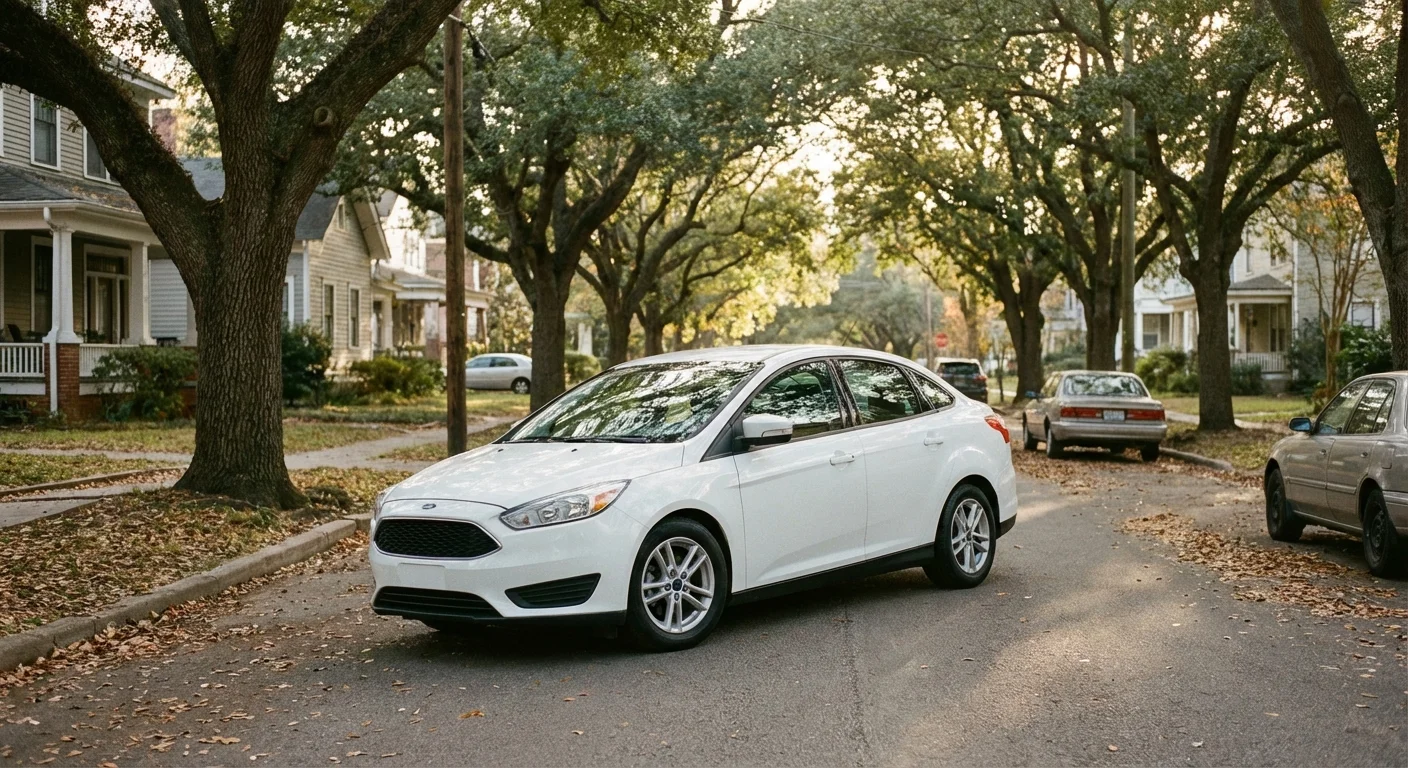
When you shop with a strict budget, certain brands and models consistently outperform the competition in terms of longevity and repair costs. You want a car that mechanics see for routine maintenance, not for engine rebuilds. Focus your search on these reliable stalwarts:
- Toyota Corolla (2009–2013): These cars are legendary for their simplicity. Parts are inexpensive, and the engines frequently last well beyond 250,000 miles with basic care.
- Honda Civic (2012–2015): Avoid the 2006–2009 models due to known engine block issues. The 2012 and later models offer great fuel economy and solid build quality.
- Mazda3 (2012–2013 with SkyActiv): Mazda offers a more spirited driving experience than Toyota. Look for the SkyActiv badge, which signifies better fuel efficiency and a more modern powertrain.
- Toyota Camry (2007–2011): If you need more space, the Camry is the gold standard for mid-sized reliability. Be wary of the 2007–2009 four-cylinder models, as some were known to consume oil.
- Honda Fit (2009–2013): This subcompact is surprisingly spacious inside due to its “Magic Seats” and offers excellent reliability for city dwellers.
Comparing Value: Popular Models Under $10,000
| Model | Expected Mileage Range | Key Advantage | Common Weakness |
|---|---|---|---|
| Toyota Corolla | 120k – 150k | Extremely low repair costs | Boring driving dynamics |
| Honda Civic | 110k – 140k | High resale value | Road noise at high speeds |
| Mazda3 | 100k – 130k | Fun to drive; modern tech | Rust issues in salt-heavy states |
| Pontiac Vibe | 140k – 170k | Toyota engine (same as Matrix) | Interior plastics feel cheap |
“Beware of little expenses; a small leak will sink a great ship.” — Benjamin Franklin
This principle applies perfectly to used cars. A “small leak” might look like a few drops of oil on the driveway or a slightly slipping transmission. At the $10,000 price point, ignoring these signals leads to financial ruin. Your goal is to find a car that has already had its major “leaks” patched by a responsible previous owner.

Savings Killers: Brands and Features to Avoid
Certain cars seem like bargains because their prices drop rapidly on the used market. Usually, there is a reason for that steep depreciation. If you see a high-end European luxury car or a discontinued American brand for under $10,000, proceed with extreme caution. These are often “Savings Killers” because the cost of a single repair can exceed 30% of the vehicle’s total value.
Avoid these common traps:
- Older Luxury Sedans: BMWs, Audis, and Mercedes-Benz vehicles from the early 2010s often require specialized tools and expensive European parts. A simple sensor replacement that costs $100 on a Ford might cost $400 on a BMW.
- First-Generation CVTs: Early Continuously Variable Transmissions (CVTs) in certain Nissan and Mitsubishi models have high failure rates. A transmission failure on a $9,000 car usually means the car is a total loss.
- Air Suspensions: High-end SUVs often feature air suspension for a smoother ride. When these systems fail—and they do—repair bills often hit $2,000 to $4,000.
- Discontinued Brands with Poor Support: While the Pontiac Vibe is a “secret” Toyota, other discontinued brands like Saab or Suzuki can be difficult to find parts for, leading to long wait times at the mechanic.

Where to Find Your Next Vehicle
You have two primary options: private sellers or dealerships. Each has distinct pros and cons that affect your final price and the level of risk you take.
Private Sellers (Facebook Marketplace, Craigslist): You often find the best deals here. You can meet the owner, gauge their personality, and ask for service records directly. Most importantly, you avoid the “doc fees” and overhead markups that dealerships charge. However, you have no legal protection if the car breaks down ten miles after you buy it.
Independent Used Car Lots: These are the “Buy Here, Pay Here” type of lots. Exercise high levels of skepticism here. They often buy cars from auctions that major dealers rejected. If you go this route, verify every claim they make.
Franchised Dealerships (Used Inventory): A Toyota dealer might have a 12-year-old trade-in on the back of the lot. These cars are usually priced higher than private sales but have been through a basic safety inspection. Check Kelley Blue Book or Edmunds to ensure the dealer isn’t overcharging for the “convenience” of buying from a showroom.

The Essential Used Car Inspection Checklist
You do not need to be a mechanic to spot red flags. Use this checklist as your first line of defense when you walk up to a car. If it fails more than two or three of these points, walk away immediately. There are plenty of other cars available.
- The Fluid Check: Pull the oil dipstick. If the oil looks like chocolate milk, the head gasket is blown—run away. Check the transmission fluid (if the car has a dipstick); it should be red or pink, not black or smelling like burnt toast.
- The Tire Test: Look at the tread wear. If the tires are worn unevenly (more on the inside than the outside), the car has alignment or suspension issues. New tires for a sedan cost $500–$800, so factor this into your offer.
- The “Cold Start”: Always ask the seller to keep the engine cold before you arrive. A warm engine can hide starting issues or “knocking” sounds that disappear once the metal expands. Feel the hood; it should be cool to the touch.
- The Electronics: Test every single button. Windows, locks, air conditioning, radio, and heated seats. In a $10,000 car, an A/C repair can easily cost $1,200, which is 12% of your total budget.
- The Paperwork: Check the VIN (Vehicle Identification Number) on the dashboard and compare it to the title. Ensure the seller’s name matches the name on the title. “Title jumping” (selling a car without registering it in your name) is illegal and a major red flag.

DIY vs. Professional: The Pre-Purchase Inspection (PPI)
While the checklist above helps you filter out the obvious “lemons,” you should never buy a used car without a professional Pre-Purchase Inspection (PPI). This is the single most important step in the process.
The DIY Approach: You can check the lights, the tire tread, and the basic interior functions. You can also run a history report through services like NerdWallet’s guide on vehicle history or Carfax. This tells you about accidents or title brands (like “Salvage” or “Flood damage”).
The Professional Approach: You pay a trusted mechanic $150 to $250 to put the car on a lift. They look for things you can’t see: frame damage from a hidden accident, rusted brake lines, or a leaking rear main seal. If a seller refuses to let you take the car to a mechanic, thank them for their time and leave. A legitimate seller has nothing to hide.
Spend the $200 for a PPI to save $2,000 in future repairs. It is the best insurance policy you can buy for a used vehicle.

Mastering the Art of Negotiation
Negotiation isn’t about being “tough” or aggressive; it is about using data to reach a fair price. Once your mechanic provides the PPI report, use the identified flaws as leverage. If the car needs $600 in new brakes and has a small oil leak that will cost $400 to fix, you have a concrete reason to ask for $1,000 off the asking price.
Keep your emotions out of the transaction. If you fall in love with a specific car, you lose your power to walk away. Tell the seller: “I like the car, but my mechanic found $1,200 in immediate repairs. Based on the market value and these repairs, I can offer you $8,500.” If they refuse to budge, be prepared to leave. There is always another car.
Verify current market values using the USA.gov Consumer Resources to understand your rights and common pricing structures for your region. Prices vary by state, so ensure you are looking at local data.

Closing the Deal and Protecting Your Investment
Once you agree on a price, the paperwork begins. If buying from a private party, meet at a bank. This provides a safe environment for the cash transfer, and many banks have a notary on-site who can witness the signing of the title. Ensure you receive a Bill of Sale that includes the date, the sale price, the VIN, and the phrase “Sold As-Is.”
After the purchase, do not spend every remaining cent of your $10,000 budget. If you bought the car for $9,000, keep that extra $1,000 in a dedicated “car fund.” Even the most reliable Toyota can have an unexpected alternator failure or a dead battery. Having this buffer prevents a minor mechanical hiccup from becoming a financial crisis.
Finally, perform a “baseline” service. Unless the seller provides proof of recent work, change the oil, the air filter, and the cabin filter immediately. This resets the maintenance clock and gives you peace of mind as you begin your journey with your new-to-you vehicle.
Frequently Asked Questions
Is 150,000 miles too many for a used car?
Not necessarily. For a Toyota or Honda that has been well-maintained, 150,000 miles is often just the “middle age” of the car’s life. However, for a luxury European car or a budget-built economy car, 150,000 miles may be near the end of its reliable service life.
Should I buy a car with a “Rebuilt” or “Salvage” title?
For most beginners, the answer is no. A salvage title means the car was declared a total loss by an insurance company. While these cars are significantly cheaper, they can be difficult to insure, hard to resell, and may have hidden structural damage that compromises your safety in a crash.
How much should I set aside for taxes and registration?
In most states, you should budget an additional 8% to 10% of the purchase price for sales tax, title transfer fees, and new license plates. If you buy a car for $9,000, expect to spend another $700–$900 at the DMV.
Buying a car for under $10,000 is a test of patience and discipline. By focusing on reliability over flashiness, conducting a thorough inspection, and keeping a small cash buffer for repairs, you can secure a vehicle that serves you faithfully for years to come. Take your time, trust the data, and don’t be afraid to walk away from a deal that doesn’t feel right. Your wallet will thank you later.
This article provides general money-saving guidance. Individual results vary based on location, household size, and spending patterns. Verify current prices before making purchasing decisions.
Last updated: February 2026. Prices change frequently—verify current costs before purchasing.








Leave a Reply