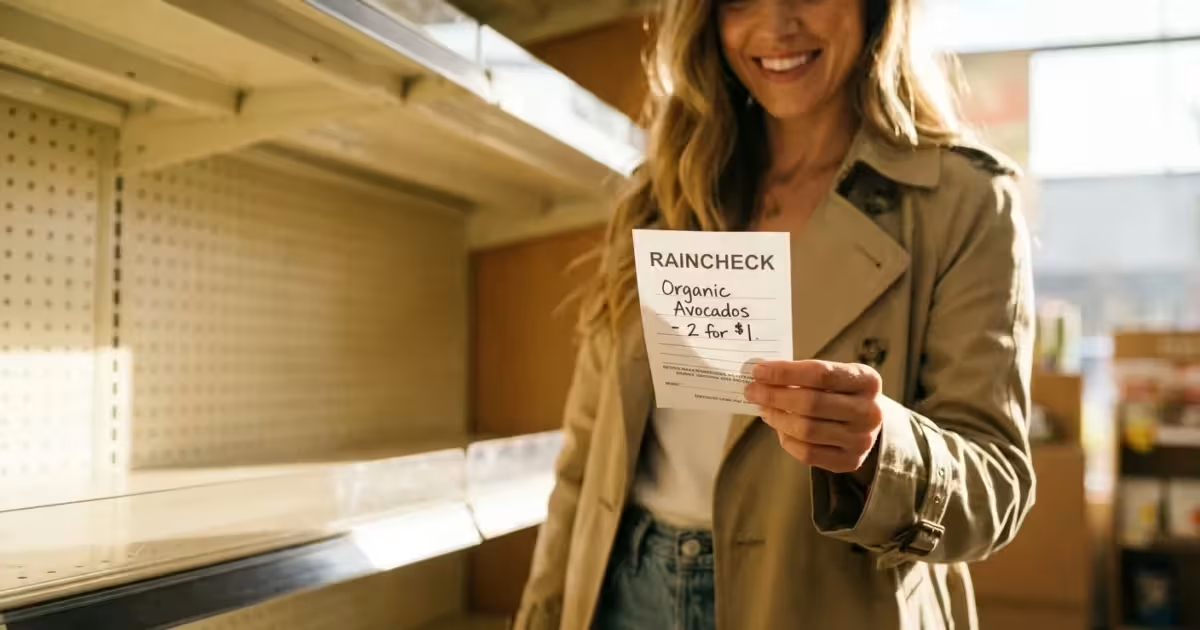
You drive to the store specifically because the weekly circular promised a massive discount on ribeye steaks or high-end laundry detergent. You navigate the crowded aisles, reach the specific shelf, and find nothing but an empty metal rack and a “temporarily out of stock” tag. Most shoppers simply sigh, feel a brief surge of irritation, and move on to the next item on their list. They leave the store having missed out on the primary reason they came in.
You do not have to be one of those shoppers. Instead of walking away empty-handed, you can walk away with a raincheck. This small slip of paper acts as a binding contract between you and the retailer, allowing you to purchase the out-of-stock item at the sale price whenever it arrives back in stock—even if the sale ended weeks ago. While digital coupons and loyalty apps dominate modern grocery marketing, the old-school raincheck remains one of the most powerful, yet underutilized, tools for protecting your household budget.
The Anatomy of a Grocery Raincheck
A raincheck is a written guarantee provided by a retailer when an advertised sale item is unavailable. According to the Federal Trade Commission (FTC), retailers must have a reasonable supply of advertised items on hand to meet expected demand. If they run out, they generally must offer a way for you to get that price later or provide a comparable substitute, unless the advertisement clearly states “while supplies last” or “limited quantities available.”
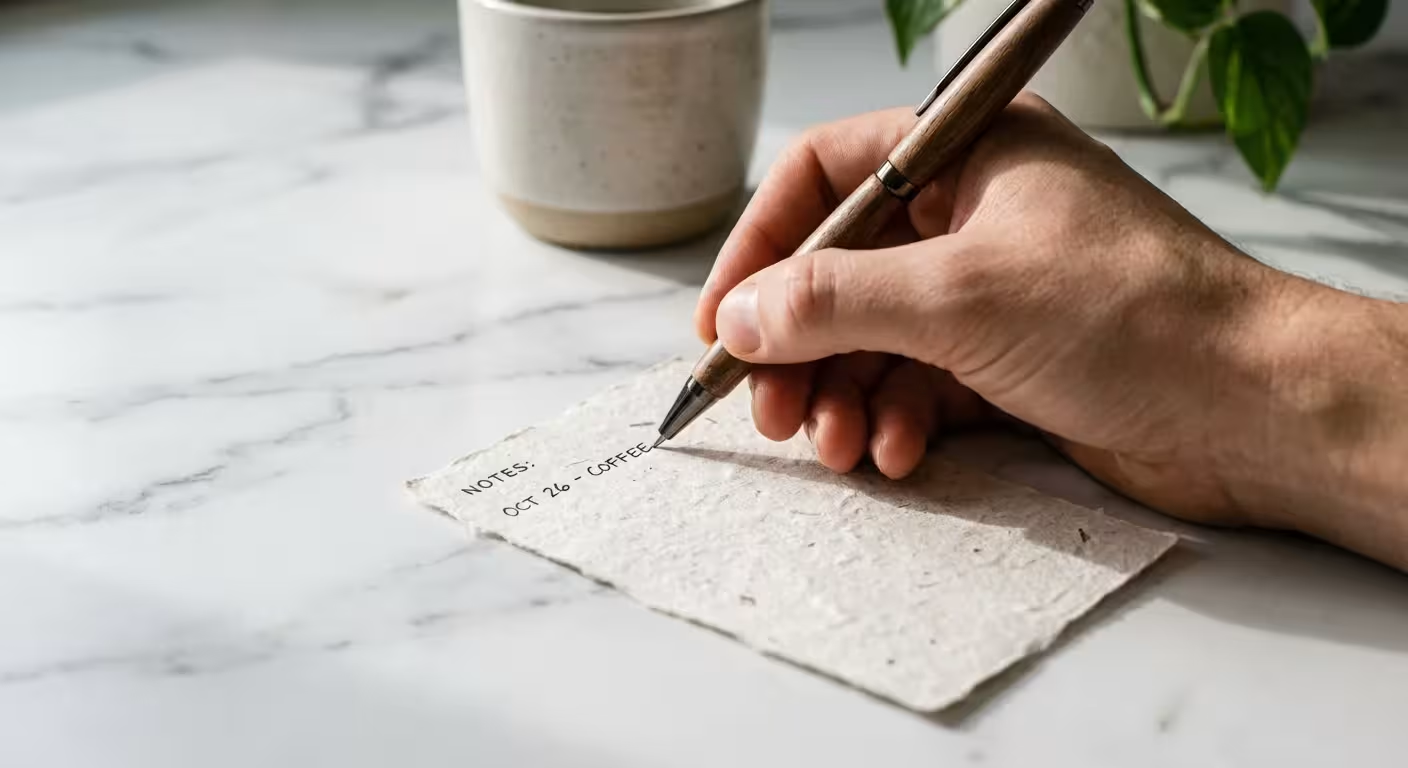
When you receive a raincheck, it typically includes several key pieces of information: the item description, the sale price, the quantity you are allowed to buy (often limited to what was in the ad), and an expiration date. These slips are usually handwritten by a customer service representative or printed directly from a register. While the process takes an extra three minutes of your time, those minutes can yield a massive return on investment when meat, dairy, or household paper products are discounted by 40% or 50%.
“Beware of little expenses; a small leak will sink a great ship.” — Benjamin Franklin
Why Rainchecks Matter in Today’s Economy
According to data from the Bureau of Labor Statistics, food prices have shown significant volatility over the last several years, making strategic shopping essential for the average American household. When a store offers a genuine loss leader—an item sold below cost to lure you into the store—they expect to run out. By securing a raincheck, you bypass the store’s inventory management failures and lock in a price that might not return for another three to six months.
Rainchecks also protect you from the “bait and switch” frustration. If a store advertises a price but never has the stock, they are effectively wasting your time and gas money. Holding them accountable via a raincheck ensures your trip wasn’t a total loss. Furthermore, rainchecks allow you to “time shift” your spending. If you don’t have the budget or the pantry space to stock up today, a raincheck with a 60-day expiration gives you the flexibility to buy that bulk item when your next paycheck arrives or after you’ve cleared some shelf space.
What You’ll Save: The Real-World Math
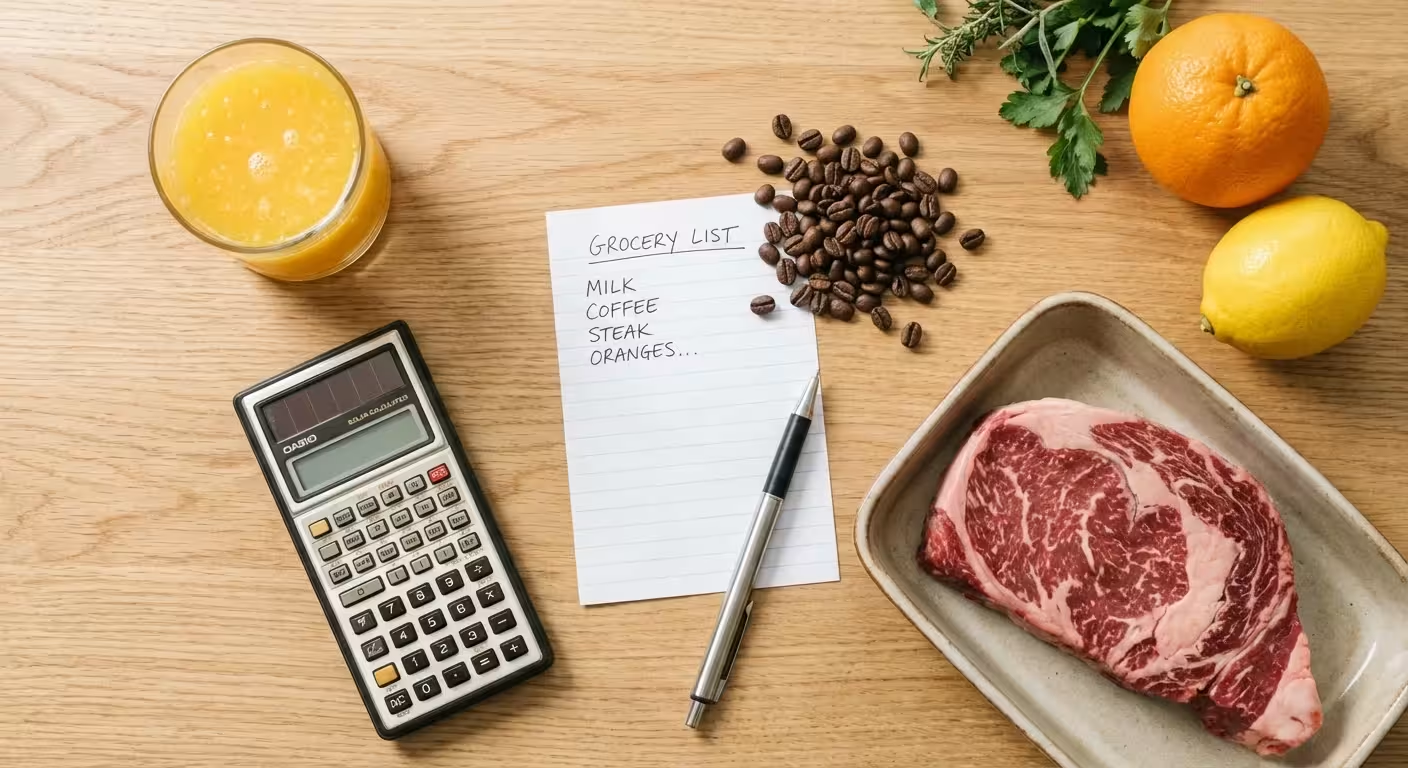
The savings from a single raincheck might seem small, but when applied to high-ticket staples, the numbers add up quickly. Consider these common scenarios:
- Meat and Poultry: A sale on chicken breast at $1.99/lb vs. the standard $4.99/lb. If you buy 10 pounds, a raincheck saves you $30.00.
- Coffee: Premium bags often go on sale for $6.99 (regularly $11.99). A raincheck for 4 bags saves you $20.00.
- Laundry Detergent: Large jugs frequently drop from $15.99 to $9.99. A raincheck for 3 units saves you $18.00.
Totaling just these three common items results in $68.00 in savings that you would have otherwise forfeited simply because the shelf was empty.

How to Request a Raincheck Like a Pro
Requesting a raincheck is straightforward, but doing it correctly ensures the store honors it without hassle. Follow these steps to maximize your success rate:
- Verify the Out-of-Stock Status: Double-check that the item isn’t tucked in a secondary location, like an end-cap or a lobby display. Stores often move sale items to high-traffic areas.
- Find a Floor Associate or Head to Customer Service: In some stores, any cashier can issue a raincheck. In others, you must visit the dedicated service desk. If the store is busy, the service desk is usually your best bet for a focused interaction.
- Reference the Advertisement: Carry the weekly circular or have the digital ad pulled up on your phone. Point specifically to the item that is missing.
- Ask for a Substitute First: Before settling for a raincheck, ask the manager if they will honor the sale price on a similar item currently in stock. For example, if the store-brand organic milk is out, they might give you the name-brand organic milk for the same price. This provides immediate savings and saves you a return trip.
- Check the Details: Before walking away with your slip, ensure it clearly lists the correct price and hasn’t been limited to an unreasonably small quantity. Most stores will honor the limit listed in the ad (e.g., “Limit 4”).
Major Retailers and Their Raincheck Policies
Not every store handles rainchecks the same way. While policies can vary by region or even by specific store manager, here is how some of the largest U.S. chains typically handle out-of-stock sale items:
| Retailer | Typical Raincheck Policy | Expiration Period |
|---|---|---|
| Kroger | Generally issues rainchecks for most advertised items, excluding “Manager’s Specials” or clearance. | Usually 30 to 60 days. |
| Publix | Well-known for a generous policy; they often issue rainchecks for nearly any advertised sale item. | Usually 30 days. |
| Safeway / Albertsons | Issues rainchecks for most weekly specials, though some digital-only coupons are excluded. | Usually 30 to 90 days. |
| Wegmans | Typically provides rainchecks for advertised specials unless marked as limited quantity. | Usually 60 days. |
| CVS / Walgreens | Standard practice for most advertised items, though they may exclude “Rewards” or “Points” offers. | Usually 30 to 60 days. |
Note that big-box retailers like Costco and Target generally do not offer rainchecks. Their inventory model relies on “while supplies last” logic, and their advertisements usually state this explicitly. For these stores, your best strategy is to ask for a “restock date” so you can return the moment the pallet hits the floor.
Advanced Strategy: The “Double Dip” with Coupons
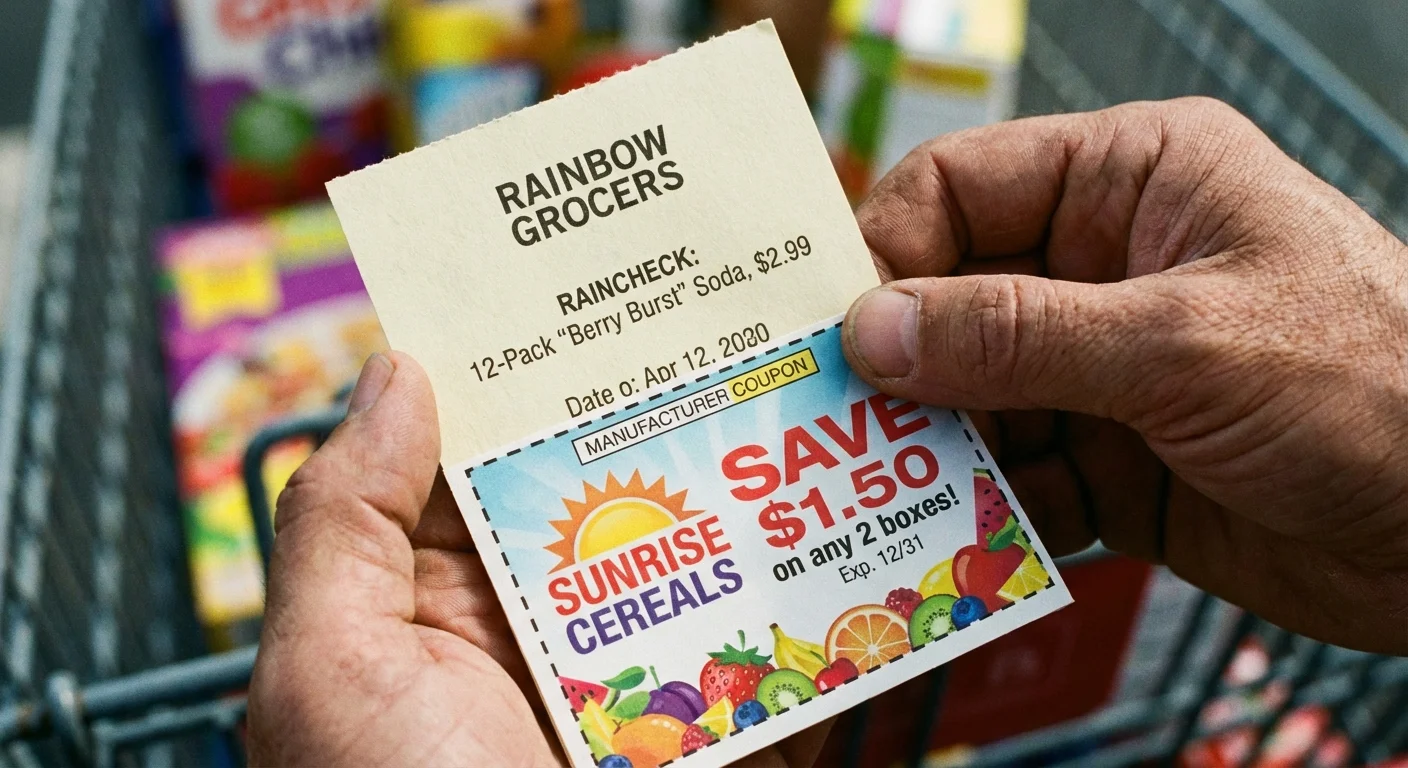
One of the most effective ways to slash your grocery bill is to combine a raincheck with a manufacturer’s coupon. This is where you can see prices drop to near-zero or even “moneymaker” status.
If you have a coupon for $1.00 off a specific brand of cereal, and that cereal goes on sale for $1.50 but is out of stock, get the raincheck. When the item is back in stock and you go to redeem your raincheck, the item will still cost $1.50. You then apply your $1.00 coupon at the register, bringing your final cost to $0.50. Because rainchecks often have long expiration dates, you have plenty of time to wait for a high-value coupon to appear in a Sunday insert or on a digital platform.
According to the USDA Food and Nutrition resources, meal planning and strategic shopping are the foundations of food security. By layering rainchecks with coupons, you aren’t just saving pennies; you are building a resilient household economy.

Where People Overspend and Common Pitfalls
Even though rainchecks are designed to save you money, they can lead to overspending if you aren’t careful. Watch out for these common mistakes:
- Forgetting to Use the Slip: A raincheck is a cash equivalent sitting in your wallet. If you lose it or let it expire, you’ve gained nothing. Keep your rainchecks in the same place you keep your coupons or store loyalty card.
- Buying Just Because It’s a Deal: Do not get a raincheck for an item you don’t actually use just because the price is low. True intentionality means only locking in prices for items that fit your actual consumption habits.
- Ignoring the Fine Print: Some digital-only or “One Day Only” sales are exempt from raincheck policies. Always read the bottom of the grocery circular. If the ad says “No Rainchecks,” don’t waste your breath asking at the counter.
- Missing the Substitution Opportunity: Many shoppers are so focused on getting the slip that they forget to ask for a substitution. A substitution is always better than a raincheck because it saves you the gas and time of a second trip.

The Legal Aspect: The FTC “Unavailability” Rule
It is worth knowing that you have some legal weight behind you. The FTC’s Retail Food Store Advertising and Marketing Practices Rule was established specifically to prevent “bait and switch” advertising. While it doesn’t 1,000% mandate a raincheck in every single scenario (stores can get around it with specific disclaimers), it does require that stores act in good faith. If you find a store consistently advertises deals but never has stock and refuses rainchecks, you can file a complaint with the USA.gov Consumer Resources portal or your state’s Attorney General.
“It’s not your salary that makes you rich, it’s your spending habits.” — Charles A. Jaffe

When to Call a Pro
While grocery shopping is a DIY task, there are times when you might need external help regarding your food budget or consumer rights. Consider these scenarios:
- Systemic Overcharging: If you notice a store’s register consistently rings up prices higher than the raincheck or the shelf tag, contact your local Weights and Measures office. They regulate scanner accuracy.
- Extreme Debt: If grocery costs are causing you to fall behind on high-interest debt, consider speaking with a non-profit credit counselor through resources found on the Consumer Financial Protection Bureau (CFPB) website.
- SNAP/WIC Issues: If you are using government assistance and believe a store is unfairly denying you the ability to use rainchecks for eligible items, contact your state’s social services department.
Frequently Asked Questions
Can I use a raincheck at a different store location?
Generally, no. Rainchecks are typically issued by a specific store and are intended to be redeemed at that same location. However, some large chains with centralized systems may allow cross-store redemption. It is always best to ask the manager who issues the slip if it is valid at sister locations.
Do rainchecks expire?
Yes. Most rainchecks have an expiration date ranging from 30 to 90 days. If the slip doesn’t have a date, ask the associate to write “No Expiration” or clarify the store’s default policy. If you find an expired raincheck, it never hurts to ask a manager if they will still honor it—many will do so to maintain customer loyalty.
Is there a limit to how many items I can get with a raincheck?
Usually, the limit is dictated by the original advertisement. If the ad said “Limit 2 per customer,” your raincheck will be for 2 units. If the ad had no limit, the store manager will typically assign a “reasonable” limit (often 4 to 6 units) to prevent resellers from clearing the shelves when the stock returns.
What if the store is still out of stock when my raincheck is about to expire?
This is a common frustration during supply chain disruptions. If your raincheck is nearing its end and the product still hasn’t arrived, take the slip to the service desk. Most managers will either extend the date on your current slip or issue a new one to ensure you eventually get your deal.
Take Immediate Action
The next time you see an empty shelf where a great deal should be, do not walk away. Locate a store associate, present the ad, and ask for a raincheck. It takes less than five minutes and secures your right to a lower cost of living. Keep a small envelope in your car or a dedicated slot in your wallet specifically for these slips. Treat them like cash, because that is exactly what they represent: the cash you didn’t have to hand over to a multi-billion dollar retailer.
Start today by checking your current weekly ads. Identify the three best deals that you truly need. If the store is out, get that slip. By the end of the month, you’ll likely find that those “forgotten” pieces of paper have shaved $50 to $100 off your total expenses—money that can be better spent on your savings goals or debt repayment.
Last updated: February 2026. Prices change frequently—verify current costs before purchasing. Prices and availability mentioned reflect research at the time of writing and may vary by location and retailer. Your actual savings will depend on your specific situation and shopping habits.






Leave a Reply