
You probably felt a twinge of sticker shock the last time you walked through a car dealership lot. According to data from Edmunds, the average price for a new vehicle in the United States has hovered near $48,000, while used car prices remain significantly higher than pre-pandemic levels. For most Americans, the car payment is the second-largest monthly expense behind housing—often consuming $700 or more of your take-home pay. But there is a group of savvy drivers who essentially opt out of this cycle. They belong to the “High-Mileage Club,” driving vehicles with 200,000, 250,000, or even 300,000 miles on the odometer while enjoying the freedom of a “paid-in-full” title.
Reaching the 200k-mile mark is not a matter of luck; it is a result of intentional strategy. Modern engineering has made engines more durable than ever, yet many cars end up in the scrap heap at 120,000 miles because owners neglect the specific needs of an aging machine. By following a disciplined vehicle maintenance schedule and understanding the chemistry of your car, you can keep your current ride on the road for a decade or more. This guide breaks down the five essential secrets to car longevity that will save you tens of thousands of dollars over your lifetime.

A man monitors rising investment gains on a tablet, securing the financial foundation needed for a long and prosperous life. (20 words)
* *Let’s check the
The Financial Impact of Longevity
Before diving into the mechanics, consider the math. If you trade in your car every five years for a new model, you are perpetually stuck in a cycle of depreciation and interest. However, if you keep a car for fifteen years instead of five, you avoid two entire cycles of vehicle purchasing. Even if you spend $1,500 a year on “heavy” maintenance for an older car, you are still spending thousands less than the $8,400 annual cost of an average new car payment. The following table illustrates the potential savings of keeping your car for 200,000 miles rather than trading it in at the 100,000-mile mark.
| Expense Category | The 5-Year Trade-In Cycle (15 Years) | The 200,000 Mile Strategy (15 Years) |
|---|---|---|
| Purchase Price / Loans | $144,000 (3 vehicles at $48k) | $48,000 (1 vehicle) |
| Estimated Interest (6%) | $22,000 | $7,400 |
| Insurance Costs | Higher (New car premiums) | Lower (Older car premiums) |
| Maintenance & Repairs | $4,500 (Mostly oil/tires) | $15,000 (Includes major repairs) |
| Total Estimated Cost | $170,500+ | $70,400+ |
By keeping your car to 200,000 miles, you effectively keep over $100,000 in your own pocket rather than handing it to a lender or a dealership. As Charles A. Jaffe once said:
“It’s not your salary that makes you rich, it’s your spending habits.” — Charles A. Jaffe
Secret 1: Master the “Severe Service” Schedule
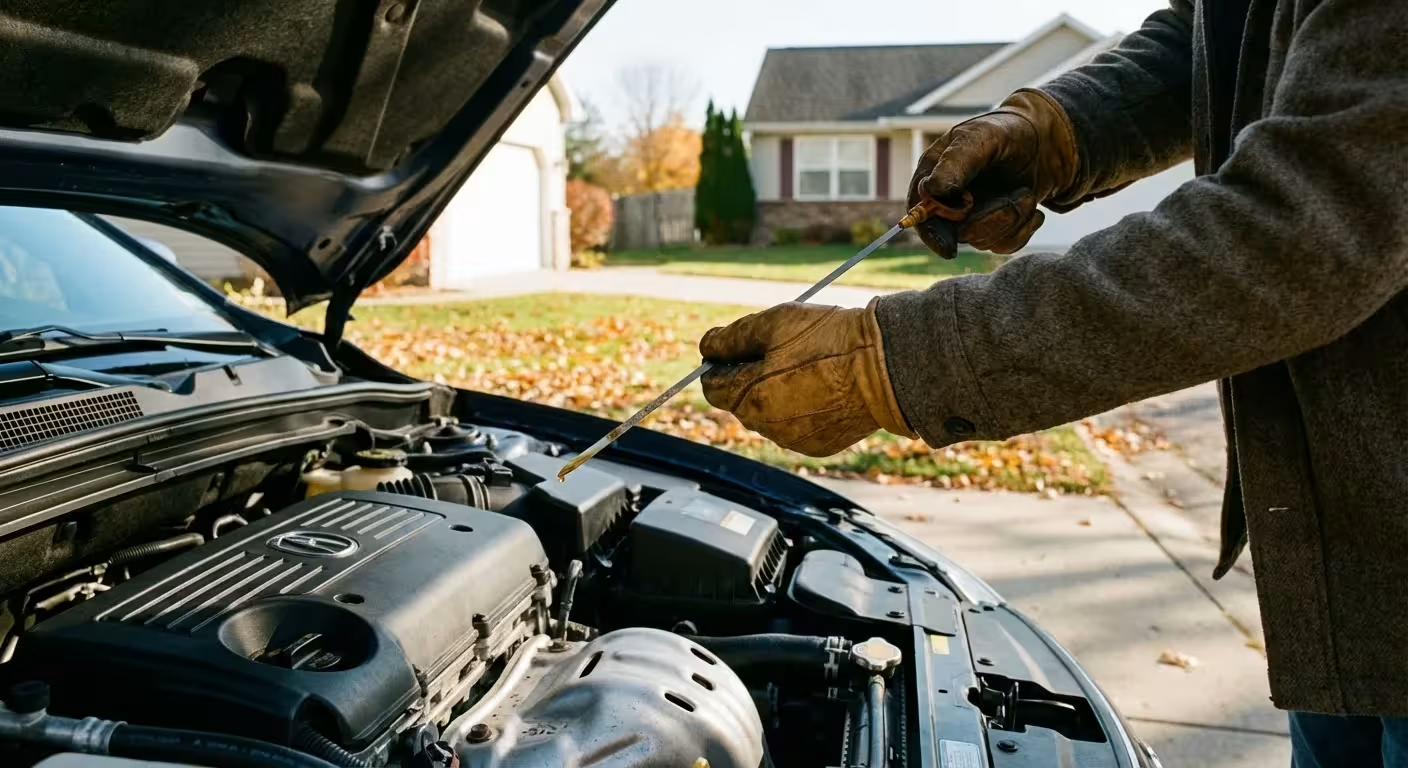
Most drivers make a critical mistake the moment they open their owner’s manual: they look at the “Normal” maintenance schedule. In reality, almost everyone drives under what manufacturers define as “Severe Service” conditions. If you live in a city with stop-and-go traffic, reside in an area with extreme heat or cold, or frequently take short trips under five miles, your car is under severe stress.
Under these conditions, your oil breaks down faster due to fuel dilution and moisture buildup. Short trips prevent the engine from reaching full operating temperature; this means the water vapor produced during combustion doesn’t evaporate, leading to sludge formation. To hit 200,000 miles, you must ignore the 10,000-mile oil change intervals often advertised for marketing purposes. Instead, aim for every 5,000 miles or six months—whichever comes first. This ensures the additives in your oil remain potent enough to protect critical engine components like timing chains and cam phasers.
A consistent vehicle maintenance schedule is your primary defense against mechanical heart failure. According to Consumer Reports, regular oil and filter changes are the single most important factor in car longevity. Do not wait for the “Maintenance Required” light to tell you what to do; be proactive based on the Severe Service guidelines in your manual.
Secret 2: The Myth of “Lifetime” Fluids
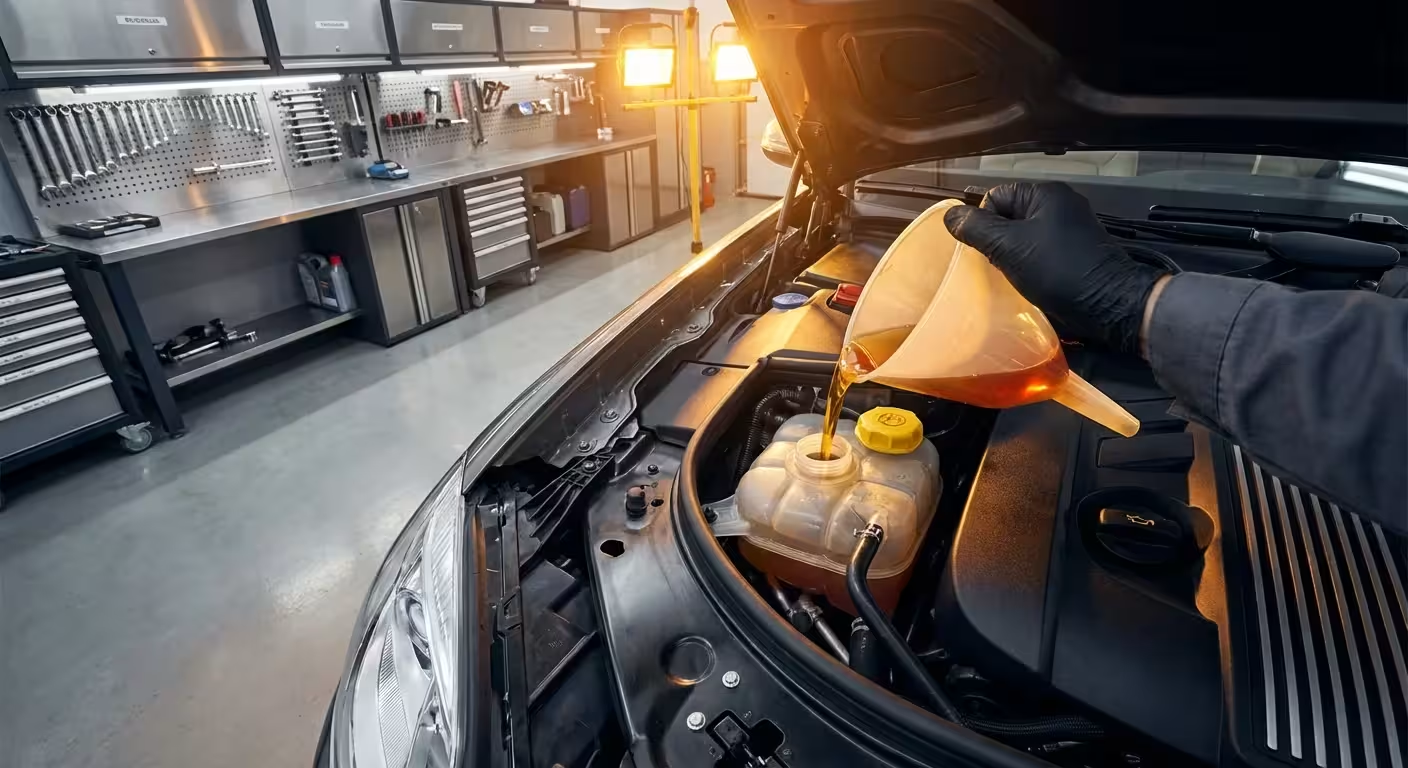
Modern marketing has introduced a dangerous phrase into the automotive world: “Lifetime Fluid.” You will often see this applied to transmission fluid, coolant, and differential oil. However, “lifetime” to a manufacturer usually means the life of the warranty—typically 60,000 to 100,000 miles. To a High-Mileage Club member, “lifetime” means 200,000 miles and beyond. These two definitions are not the same.
Transmission fluid is a complex hydraulic oil that deals with immense heat and friction. Over time, the friction modifiers in the fluid wear out, leading to slipping clutches and internal wear. To make your car last, you should perform a transmission fluid “drain and fill” every 45,000 to 60,000 miles. Avoid high-pressure flushes, which can dislodge debris and clog small valves; a simple drain and refill is much safer for older gearboxes.
Similarly, your engine coolant (antifreeze) does more than just prevent freezing. It contains corrosion inhibitors that protect the water pump and the delicate aluminum passages inside your engine. As these inhibitors break down, the fluid becomes acidic, leading to “electrolysis”—a process where the fluid actually starts eating the metal from the inside out. Changing your coolant every five years ensures your cooling system remains chemically balanced and prevents catastrophic head gasket failures.
- Brake Fluid: This fluid is hygroscopic, meaning it absorbs moisture from the air. This moisture can rust your brake lines from the inside and lower the boiling point of the fluid. Flush it every 3 years.
- Power Steering Fluid: If your car has hydraulic steering, this fluid can get contaminated with metal shavings. Replacing it every 50,000 miles protects the expensive steering rack.
- Differential Oil: Often ignored in SUVs and trucks, this lubricates the gears that turn your wheels. Change it every 60,000 miles to prevent “gear whine” and failure.
Secret 3: Proactive Cooling System Overhauls
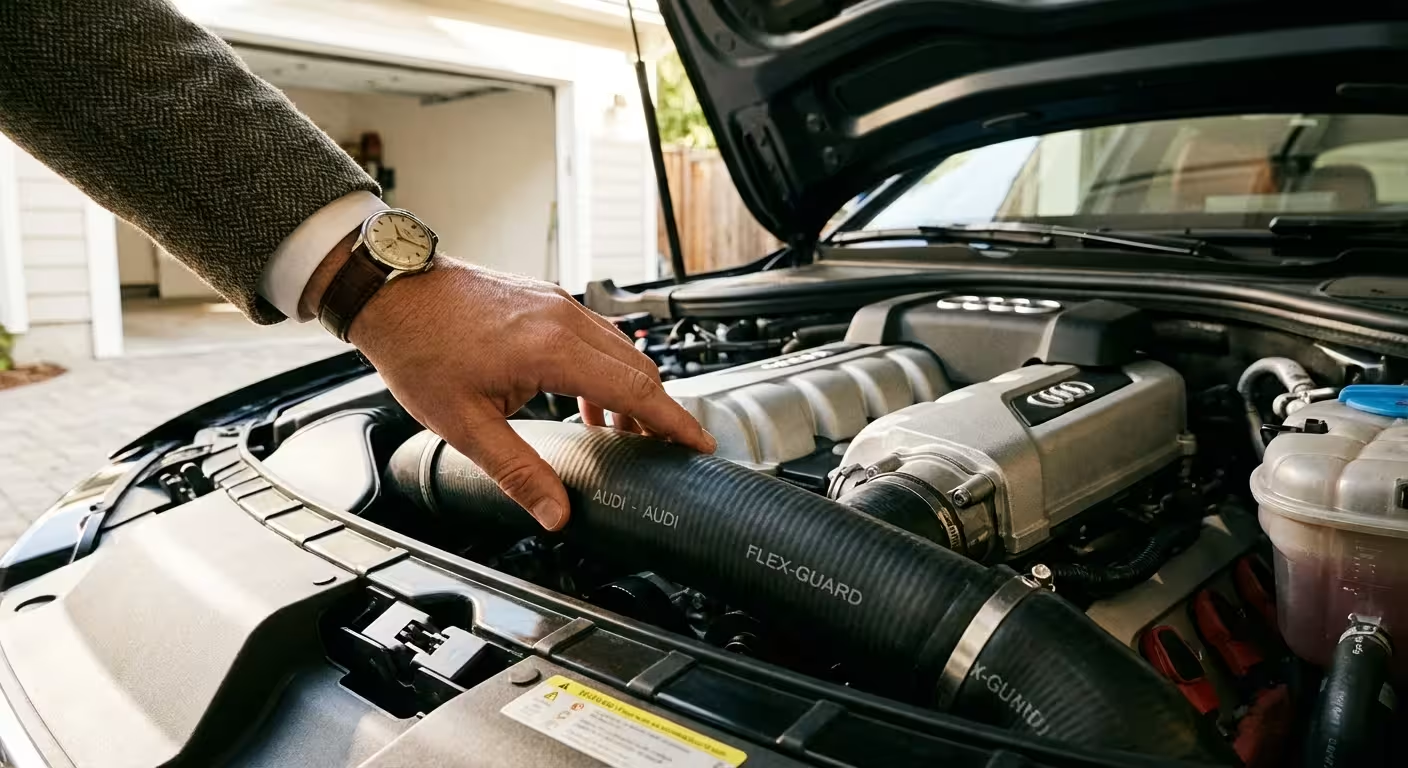
If the engine is the heart of your car, the cooling system is the radiator that keeps it from a “heat stroke.” Most 200k-mile cars die not because of a bad piston, but because a $15 rubber hose burst, caused the engine to overheat, and warped the cylinder head. Plastic and rubber components have a finite lifespan; they become brittle after years of heat cycles.
Once your car hits the 100,000 to 120,000-mile mark, you should consider a “preventive strike” on the cooling system. This includes replacing the water pump, the thermostat, and all major coolant hoses. Many vehicles use timing belts to drive the water pump; if this is the case for your car, you must replace both at the same time. If a timing belt snaps, the engine’s valves can collide with the pistons, effectively totaling the vehicle in a split second.
Check your radiator for debris as well. Over time, leaves and dirt can clog the exterior fins, reducing its ability to shed heat. A quick spray with a garden hose (not a high-pressure power washer, which can bend the fins) can improve cooling efficiency during those brutal summer months.
Secret 4: Protecting the Undercarriage and Suspension
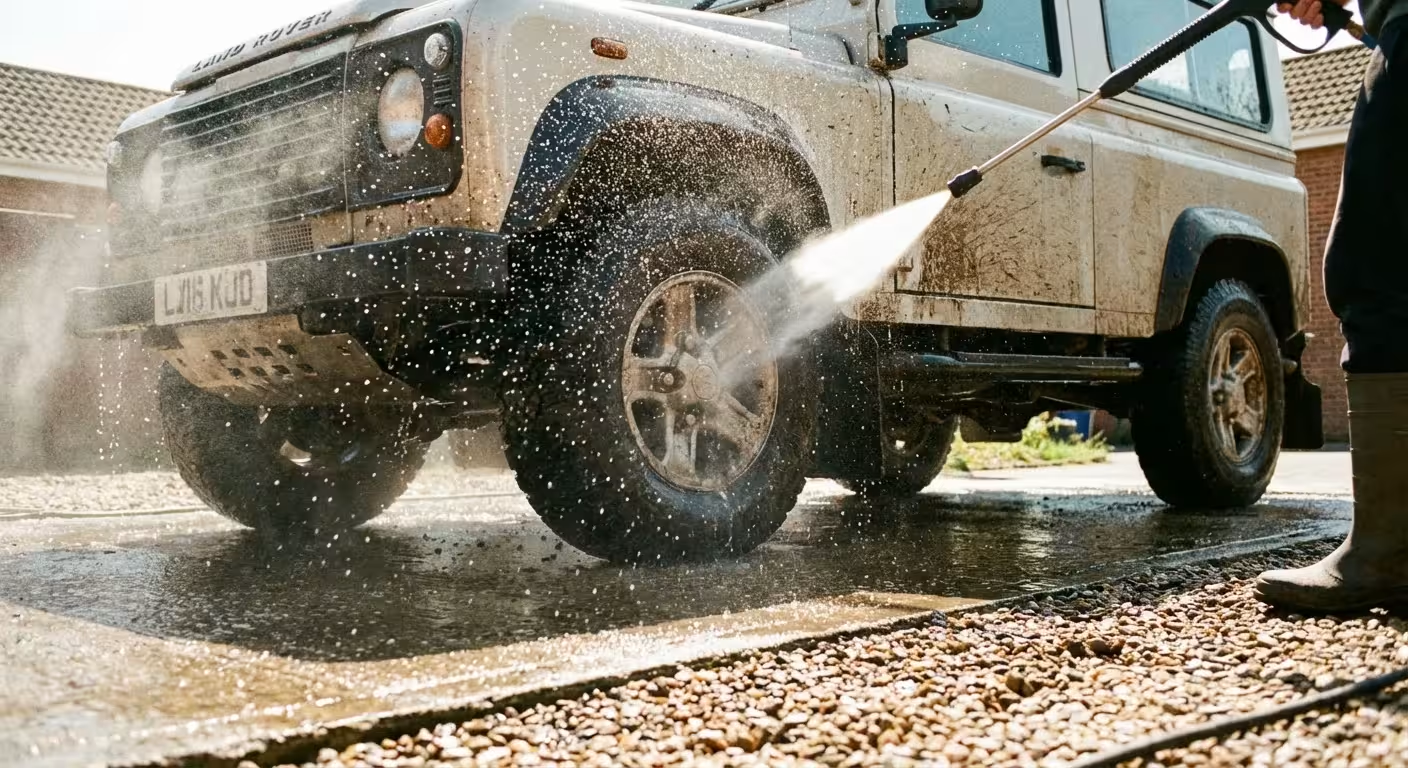
A car with a perfect engine is still useless if the frame is rotted through or the suspension is so worn that the car is unsafe to drive. If you live in the “Salt Belt,” road salt is your car’s greatest enemy. It acts as a catalyst for rust, which can consume a vehicle in less than a decade.
To reach 200,000 miles, you must wash the undercarriage regularly during the winter. Even better, consider an annual oil-based rustproofing treatment. These treatments creep into the crevices of the metal and create a barrier against moisture and salt. Avoid “rubberized” undercoatings, as they can crack, trap moisture against the metal, and actually accelerate rot.
Your suspension also needs attention. By 150,000 miles, your shocks and struts are likely “tired,” even if they aren’t leaking. Worn suspension components don’t just make the ride uncomfortable; they cause uneven tire wear and put extra stress on your wheel bearings and steering linkages. Replacing these parts might cost $1,000, but it restores the “new car feel” and ensures your vehicle remains stable during emergency maneuvers. Keeping your car aligned is another small investment that pays off—a $100 alignment can prevent you from prematurely burning through a $800 set of tires.

Secret 5: The “Cold Start” and Driving Habits
How you drive in the first five minutes of your day determines how many years you get out of your engine. Most engine wear occurs during a cold start when the oil is at the bottom of the pan and hasn’t yet reached the top of the engine. To maximize car longevity, you should start the car and wait about 30 seconds for the oil pressure to stabilize. However, do not let it idle for ten minutes; the fastest way to warm up an engine is to drive it gently.
Avoid “flooring it” or hard acceleration until the temperature gauge reaches the middle. Until the engine is warm, the metal components haven’t expanded to their intended tolerances, and the oil hasn’t reached its optimal flow rate. Treat your car like an athlete; it needs a warm-up before it performs a sprint.
Smoothness is the key to the 200,000-mile club. Rapid acceleration and hard braking don’t just burn more fuel—they stress the engine mounts, the transmission clutches, and the brake rotors. By anticipating traffic and coasting to stops, you reduce the physical load on every moving part in the vehicle. This “intentional” driving style can extend the life of your brake pads by years and keep your transmission shifting smoothly well into the second decade of ownership.

When It’s Worth Paying
Not all maintenance is created equal. While it’s tempting to save money by buying the cheapest parts available, high-mileage cars require quality components to stay reliable. There are specific areas where you should never “cheap out.”
- Sensors: Modern engines rely on Oxygen (O2) sensors and Mass Airflow (MAF) sensors to regulate fuel. Cheap “no-name” sensors from online marketplaces often provide incorrect data, leading to poor gas mileage and potentially damaging your expensive catalytic converter. Stick with OEM (Original Equipment Manufacturer) brands like Bosch or Denso.
- Tires: Your tires are the only thing connecting 4,000 pounds of steel to the pavement. High-quality tires provide better braking distances and handle road imperfections better, which saves your suspension from taking a beating. Check Kelley Blue Book for recommendations on tires that maintain vehicle value and safety.
- Synthetic Oil: If your car doesn’t already require it, switching to a high-quality full synthetic oil is the best investment you can make. Synthetic oil resists breaking down under heat and flows better in the cold, providing superior protection for tight engine tolerances.
Don’t Fall For These
The quest for car longevity often leads people to buy products that offer “miracle” results. Be skeptical of the following:
Oil Additives that “Repair” Engines: If your engine has a mechanical knock or a blown head gasket, no liquid in a bottle will fix it. These additives often contain thickeners that can clog small oil passages, doing more harm than good.
High-Octane Fuel for Non-Performance Cars: Unless your owner’s manual specifically requires “Premium” or 91/93 octane, you are wasting money by putting it in a car designed for “Regular” 87 octane. It does not make the engine cleaner or “stronger.” Use that extra $10 per tank to buy a better oil filter instead.
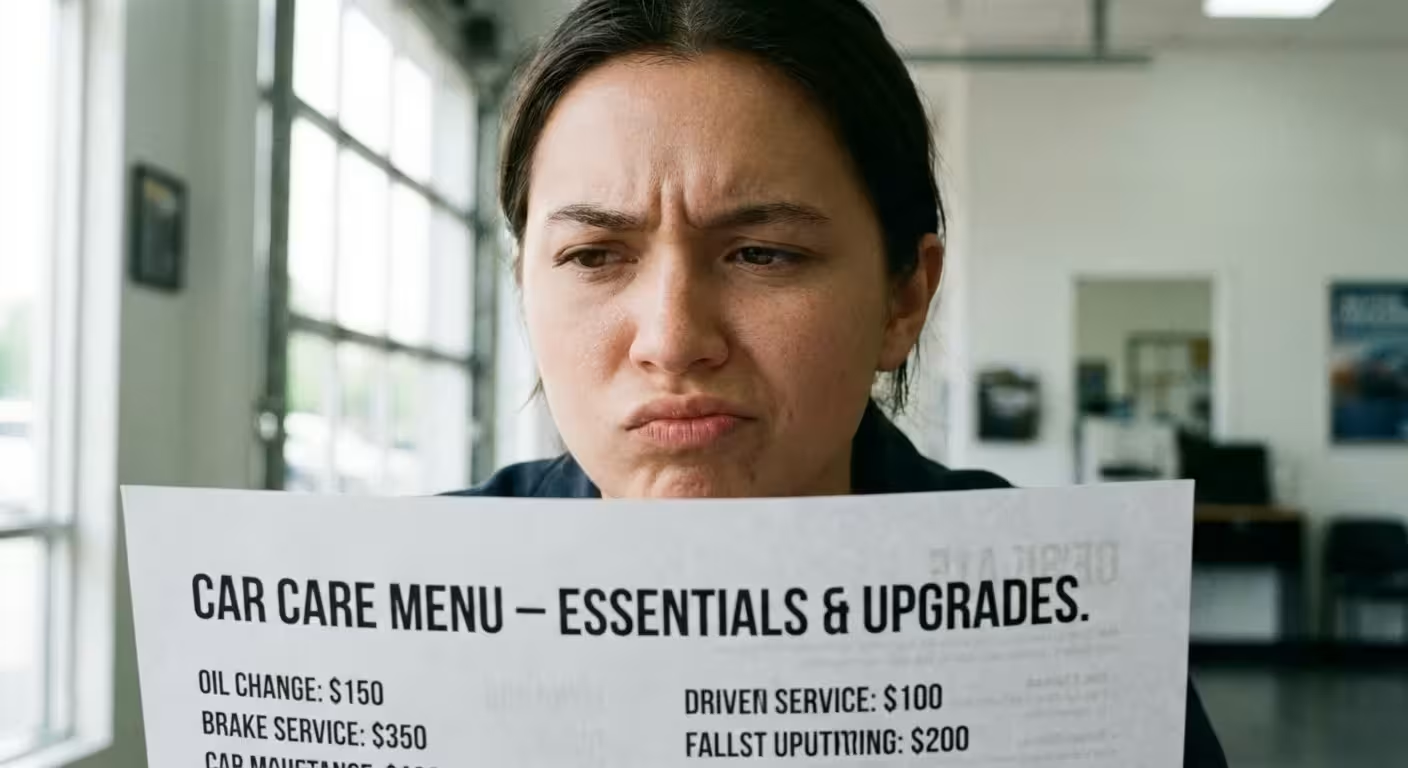
Flushes for Everything: Many shops suggest power flushes for power steering, brakes, and transmissions as a high-profit add-on. As mentioned earlier, a “drain and fill” is usually safer and more effective for older cars. If your fluid looks like coffee, a high-pressure flush might actually cause a failure by moving sludge into a sensitive valve.
Frequently Asked Questions
Is synthetic oil worth the extra cost for an old car?
Yes. Synthetic oil provides better film strength and resists thermal breakdown. For an older engine with 150,000 miles, a “High Mileage” synthetic oil is even better, as it contains seal conditioners that help prevent small leaks from becoming big ones.
Can any car really make it to 200,000 miles?
While some brands have better reputations for reliability, almost any modern car can hit 200,000 miles with strict maintenance. The main reason cars don’t make it is that the cost of a major repair (like a transmission) eventually exceeds the “book value” of the car, leading the owner to scrap it. By following these secrets, you delay those major failures indefinitely.
Should I keep my car if it needs a $2,000 repair?
If the car is otherwise in good shape and the repair will keep it on the road for another two years, the answer is almost always yes. A $2,000 repair is roughly three months of new car payments. If the repair gets you 24 months of driving, you’ve saved over $14,000 in potential car payments.
How often should I check my fluids?
Check your oil and coolant levels at every other gas fill-up. Low oil is the fastest way to kill an engine, and many older cars “consume” a little oil between changes. Catching a leak early is the difference between a $20 gasket and a $5,000 engine replacement.
Your Roadmap to the 200k Club
Making your car last 200,000 miles is the ultimate “frugal flex.” It proves that you prioritize long-term wealth over short-term status symbols. Start by pulling your owner’s manual out of the glovebox tonight. Look up the maintenance schedule for “Severe Service” and see what you’ve missed. Whether it’s a long-overdue transmission service or a set of fresh spark plugs, taking action today is the only way to ensure your vehicle remains a reliable asset for years to come.
Maintenance is an investment, not an expense. Every dollar you spend on high-quality oil and preventive cooling system care returns itself multiple times over by keeping you out of the car loan office. Stay intentional, drive smoothly, and welcome the satisfaction of watching that odometer roll over to 200,000.
Prices and availability mentioned reflect research at the time of writing and may vary by location and retailer. Your actual savings will depend on your specific situation and shopping habits.
Last updated: February 2026. Prices change frequently—verify current costs before purchasing.








Leave a Reply