
You are standing on the shoulder of a busy interstate, steam billowing from your hood while semi-trucks roar past at 70 miles per hour. In this moment, the value of roadside assistance isn’t theoretical; it is the difference between a minor inconvenience and a $250 towing bill that ruins your monthly budget. According to data from Consumer Reports, the average cost of a short-distance tow now ranges from $75 to $125 just for the hookup, with additional mileage fees quickly pushing that total higher.
For decades, AAA (the American Automobile Association) stood as the undisputed king of the breakdown. Today, however, your wallet faces a more complex choice. Your car insurance provider likely offers a roadside add-on for the price of a few lattes per year. Your premium credit card might promise “free” towing as a cardholder perk. Even your cell phone provider or vehicle manufacturer wants in on the action. Deciding whether AAA is worth the membership fee requires looking beyond the tow truck and calculating the true cost of convenience versus the risk of hidden insurance penalties.

The AAA Value Proposition: More Than Just a Tow
AAA operates as a federation of regional clubs, meaning your specific benefits and costs might fluctuate slightly depending on whether you live in Florida or Oregon. However, the core structure generally remains the same across three tiers: Classic, Plus, and Premier. Most members pay between $60 and $160 annually.
The “Classic” tier often lures people in with its low price point, but it contains a significant trap: the towing limit. Many Classic memberships only cover towing for three to five miles. If your preferred mechanic or your home is ten miles away, you will pay out-of-pocket for those extra miles at a premium rate. To find true value, most drivers look toward the Plus level, which typically extends towing to 100 miles.
The real secret to making AAA “worth it” lies in the secondary benefits that many members ignore. AAA isn’t just a roadside service; it is a massive discount network. You can often save 10% or more at major hotel chains like Marriott, Hilton, and Best Western. If you spend $1,000 a year on travel, that $100 in savings effectively pays for your membership. Additionally, many regional clubs offer DMV services, allowing you to skip the lines at the state office for registration renewals or title transfers.
“It’s not your salary that makes you rich, it’s your spending habits.” — Charles A. Jaffe

Roadside Help Cost: Comparing the Major Players
To determine the best path for your budget, you must compare the annual cost against the level of service provided. While AAA is a standalone subscription, insurance-based programs are add-ons to an existing expense. Credit card perks are often “invisible” until you need them.
| Provider Type | Estimated Annual Cost | Towing Distance | Key Advantage |
|---|---|---|---|
| AAA (Classic/Basic) | $60 – $80 | 3–7 miles | DMV services and extensive retail discounts |
| AAA (Plus) | $90 – $120 | Up to 100 miles | Long-distance towing and fuel delivery |
| Auto Insurance Add-on | $10 – $25 | Varies (often 10–15 miles) | Extremely low cost and integrated billing |
| Premium Credit Cards | $0 (with annual fee) | Varies (often 5–10 miles) | No extra monthly cost if you already own the card |
| Manufacturer Roadside | $0 (during warranty) | To nearest dealership | Specialized care for new vehicles |

The Insurance Trap: Why Cheap Towing Might Cost You Thousands
Adding roadside assistance to your GEICO, Progressive, or State Farm policy seems like a “no-brainer.” At roughly $15 per year, it is significantly cheaper than a standalone AAA membership. However, you must consider how insurance companies track these requests. In many states, a call for roadside assistance is recorded as a “claim” on your CLUE (Comprehensive Loss Underwriting Exchange) report.
While a single tow for a dead battery rarely causes a premium hike, multiple roadside claims can signal to an insurer that you are a high-risk driver with an unreliable vehicle. If you have two roadside assistance calls and then experience a minor fender-bender, your insurer might view the pattern of claims as a reason to increase your rates or even decline your policy renewal. According to the Consumer Financial Protection Bureau (CFPB), maintaining a clean insurance record is vital for accessing the lowest possible premiums. Using a third-party service like AAA keeps these minor mechanical hiccups off your insurance record entirely.

Credit Card Roadside Perks: The Hidden Safety Net
Before you sign up for a new service, check your wallet. High-end travel cards, such as the Chase Sapphire Reserve or the American Express Platinum, often include roadside assistance. However, the industry is shifting. Many cards that previously offered free towing have moved to a “dispatch” model. In this scenario, the credit card company provides a dedicated phone line to find you a tow truck, but you pay the full negotiated rate for the service yourself.
If you carry a card that still offers a complimentary benefit, pay close attention to the fine print. These services typically cap the benefit at $50 per incident. Given that the hookup fee alone often exceeds $75, your “free” benefit might only cover a fraction of the actual cost. For a list of current card benefits and comparisons, resources like NerdWallet provide updated tracking of which issuers still offer true roadside coverage.

Savings Killers: Where Money Leaks Out of Your Auto Budget
Managing your roadside assistance isn’t a “set it and forget it” task. Many consumers fall into common traps that turn a helpful service into a financial drain.
- Double Coverage: You might be paying for roadside assistance through your insurance, while also paying for AAA, while also being covered by a new car warranty. Audit your accounts once a year to ensure you aren’t paying three times for the same tow truck.
- Auto-Renewal Inertia: AAA and other clubs rely on auto-renewals. If you no longer drive long distances or have switched to a vehicle with a comprehensive manufacturer’s warranty, cancel the subscription.
- The “Free” Towing Distance: Many people choose the cheapest tier and end up paying $5 per mile for a 20-mile tow. If you live in a rural area, the “cheap” basic plan is a mathematical mistake.
- Ignoring the Perks: If you pay for AAA but don’t use the 10% discount at the pharmacy, the airport parking lot, or the hotel, you are leaving money on the table. AAA members can even check local fuel costs via AAA Gas Prices to optimize their spending.

DIY vs. Professional: When Should You Call?
Not every roadside issue requires a professional. In fact, calling for a tow when a simple fix is available can waste hours of your time. However, safety should always dictate your choice.
The DIY Scenario: If you have a flat tire and are in a safe, flat, well-lit parking lot, changing the tire yourself takes 15 minutes. Waiting for a tow truck can take two hours. Similarly, if you run out of gas near a station, walking with a gas can (if safe) is significantly faster than waiting for a dispatch.
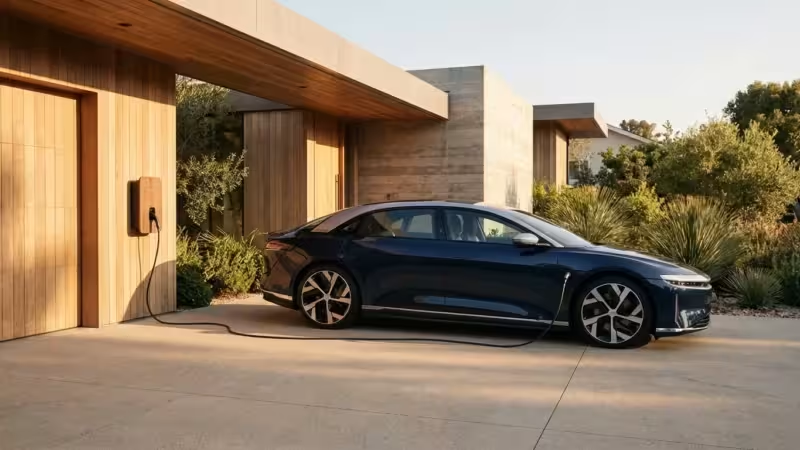
The Professional Scenario: You should always call for professional help if you are on the shoulder of a high-speed highway. The “Move Over” laws exist for a reason—working on a vehicle inches away from traffic is incredibly dangerous. Additionally, if your car is an electric vehicle (EV) or has an all-wheel-drive (AWD) system, you generally cannot tow it with a standard dolly. You need a flatbed truck to avoid destroying the drivetrain. In these cases, the expertise of a professional service is worth every penny.

Is AAA Worth It for You? The Decision Matrix
To decide if you should stick with AAA or switch to a cheaper insurance-based option, ask yourself these three questions:
1. How old is your vehicle? If you drive a car that is less than three years old, your manufacturer likely provides free roadside assistance. Check your owner’s manual or the sticker on your driver-side window. If you drive a 10-year-old vehicle with 150,000 miles, the higher reliability risk makes a standalone service like AAA much more attractive.
2. Do you travel frequently? AAA shines for travelers. Beyond the towing, the maps (yes, they still print them!), TripTik planners, and hotel discounts provide tangible value that insurance add-ons do not. If you stay in a hotel at least three nights a year, the discounts usually cover the cost of a basic membership.
3. Are you worried about your insurance premiums? If you are already in a high-risk category or have had previous claims, do not add roadside assistance to your insurance policy. Keep your insurance for “the big stuff” (accidents and liability) and use a third party for “the small stuff” (flat tires and lockouts).
“Beware of little expenses; a small leak will sink a great ship.” — Benjamin Franklin

How to Maximize Your Membership
If you decide to keep or join AAA, treat it like a tool, not just a safety net. Download the mobile app immediately. Most clubs now offer real-time tracking of your service vehicle, similar to Uber or DoorDash. This reduces the anxiety of waiting in a dark parking lot wondering when help will arrive.
Furthermore, look into the “Plus” or “Premier” tiers if you have children or family members who don’t live with you. Many AAA plans allow you to add “Associate Members” for a fraction of the cost of a full membership. This ensures that your college student has coverage even if they are driving an older car hundreds of miles away from home.
Finally, utilize the battery replacement service. AAA service vehicles often carry replacement batteries and can test your alternator on the spot. If your battery is failing, they can install a new one right there, usually with a 3-year nationwide warranty. This saves you the additional trip to an auto parts store or a mechanic.

Final Thoughts on Choosing Your Roadside Strategy
AAA is worth the investment if you value a “firewall” between your car’s mechanical issues and your insurance record, or if you actively use their travel and retail discounts. However, if you drive a brand-new car and rarely travel, you are likely wasting money on a redundant service. Audit your current credit card benefits and your insurance policy today to see where you are already covered. If you find you are unprotected, compare the cost of a “Plus” level membership against the $200 you would spend on a single emergency tow.
Being intentional with your roadside coverage ensures that when the “Check Engine” light or a shredded tire threatens your day, your bank account remains protected. Choose the plan that fits your driving habits, not just the one with the most recognizable name.
This article provides general money-saving guidance. Individual results vary based on location, household size, and spending patterns. Verify current prices before making purchasing decisions.
Last updated: February 2026. Prices change frequently—verify current costs before purchasing.








Leave a Reply