
You pull into your driveway after a long day at work and look at your house. Does it greet you with a sense of pride, or do you find yourself focusing on the peeling paint on the shutters and the overgrown weeds in the flower beds? Most homeowners assume that “curb appeal” is a luxury reserved for those with thousands of dollars to spend on professional landscaping and contractor-led renovations. However, the reality of the real estate market tells a different story. According to research from Michigan State University, a home with high curb appeal can sell for up to 11% more than a similar home with an unattractive exterior.
The secret to a stunning home exterior isn’t a massive bank account; it is intentionality and a bit of “sweat equity.” You can transform the face of your property without dipping into your retirement savings or taking out a home equity line of credit. If you have $100 and a free Saturday, you have everything you need to make your neighbors stop and take notice. Here are ten practical, budget-friendly ways to maximize your home’s first impression.
1. Give Your Front Door a Statement Color
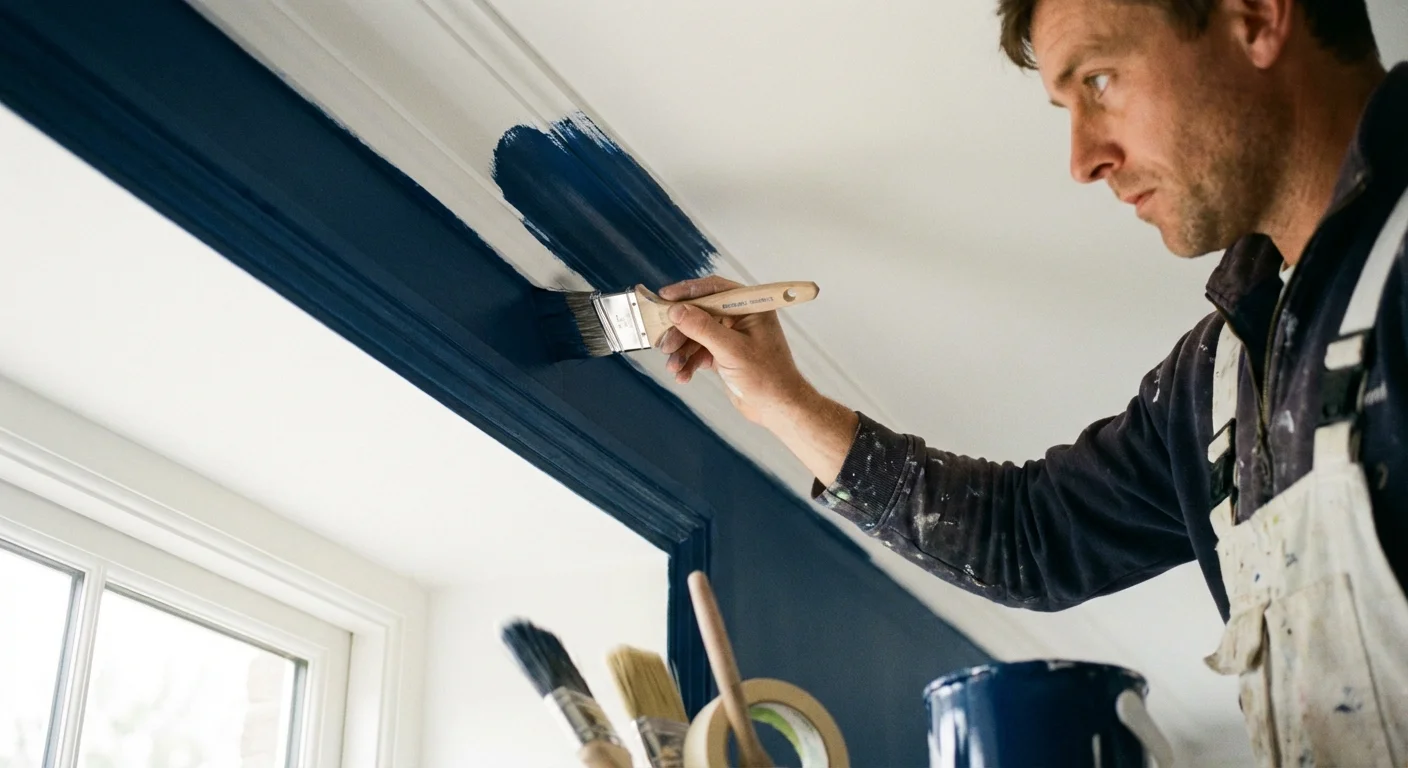
Your front door serves as the focal point of your home’s exterior. It is the first thing guests see and the primary element that defines the “mood” of the house. If your door is faded, chipped, or a generic shade of beige, you are missing a massive opportunity. A fresh coat of high-quality exterior paint is perhaps the most cost-effective DIY landscaping and home improvement project you can undertake.
For roughly $35 to $50, you can purchase a quart of premium exterior latex paint and a high-quality brush. Choose a color that contrasts with your siding—think deep navy, sage green, or even a bold “heritage” red. Before you start, clean the door thoroughly with a TSP (trisodium phosphate) solution to remove grease and grime; this ensures the paint bonds correctly. Remove the hardware rather than taping around it for a truly professional finish. This small investment often provides the highest return on investment (ROI) because it instantly refreshes the entire facade.
“It’s not your salary that makes you rich, it’s your spending habits.” — Charles A. Jaffe
2. Define Your Lawns with Crisp Edging
A lawn can be mowed perfectly, but if the grass bleeds into the driveway or the flower beds, it looks messy. Edging creates a visual boundary that signals “this home is well-maintained.” You do not need a motorized edger for this task. A manual “half-moon” edger costs about $25 at most big-box hardware stores. By physically cutting a clean line between your grass and your hardscaping, you create a manicured look that rivals professional services.
Once you have cut the edge, use a string trimmer to keep it sharp. This step costs nothing but time and effort, yet it provides a “frame” for your yard. Well-defined lines satisfy the human eye’s desire for order and symmetry, making even a small yard look more expansive and deliberate.
3. Replace Dated House Numbers
Look at your house numbers. Are they the standard 2-inch plastic digits that came with the house twenty years ago? Upgrading your house numbers is a “micro-improvement” that yields “macro-results.” Modern, high-visibility numbers help delivery drivers find you and signal to passersby that you care about the details.
Search for 5-inch or 6-inch numbers in finishes like brushed nickel, matte black, or oil-rubbed bronze. You can find high-end floating house numbers for about $8 to $12 per digit. For a home with a four-digit address, your total cost stays well under $50. Ensure you mount them in a spot that is visible from the street, preferably near a light source. This simple swap adds a touch of contemporary sophistication to an older exterior.
4. Refresh Your Garden Beds with New Mulch
If your garden beds look tired and the soil is exposed, mulch is your best friend. Mulch performs a dual role: it suppresses weeds and retains moisture for your plants, while also providing a rich, dark backdrop that makes greenery “pop.” A layer of fresh mulch acts like a fresh coat of paint for your soil.
You can typically find 2-cubic-foot bags of mulch on sale for $2 to $4 each during the spring and fall seasons. For a standard front yard, 10 to 15 bags are usually sufficient, keeping your total cost between $30 and $60. Avoid “free” mulch from unknown sources, as it may contain pests or weed seeds. Instead, look for hardwood mulch in dark brown or black. Avoid bright red dyed mulch, as it can look artificial and distract from your home’s natural beauty.
5. Deep Clean with a Pressure Washer
Years of pollen, dust, and spider webs can dull your siding, driveway, and walkways. You might be surprised to find that your “dingy” concrete is actually bright white underneath a layer of grime. If you don’t own a pressure washer, don’t worry—you don’t need to buy one. Many local hardware stores or equipment centers rent professional-grade pressure washers for around $40 to $70 per day.
Focus on the “high-traffic” areas: the sidewalk leading to the door, the front porch, and the driveway. Be careful when spraying your siding; high pressure can damage wood or force water behind vinyl panels. When used correctly, pressure washing can make a ten-year-old driveway look brand new. To save even more, check sites like Slickdeals for sales on entry-level electric pressure washers, which often drop below the $100 mark.

6. Upgrade Your Mailbox Hardware
Your mailbox is often the first thing people see when they pull up to your curb. If yours is rusted, leaning, or covered in algae, it’s dragging down your home’s value. If the post is sturdy, you can simply replace the box itself for $20 to $40. If the post is looking rough, a quick sanding and a coat of exterior stain or paint (often left over from your front door project) will revitalize it.
To take it a step further, add a few bags of “quick-set” concrete for $6 each to level the post if it has started to lean. Adding a small “mailbox garden” with a few $5 perennials at the base creates a charming vignette that connects the mailbox to the rest of the landscape.
7. Clean the Windows and Screens
This tip costs almost nothing but a few hours of work, yet the impact on curb appeal is massive. Dirty windows reflect light poorly and make a house look abandoned. Remove the screens and scrub them with soapy water. Use a professional-grade squeegee and a mixture of water and a few drops of dish soap to clean the glass. According to Consumer Reports, keeping your home clean—including the windows—is one of the simplest ways to maintain its value and prevent long-term damage from environmental debris.
When you finish, the glass will sparkle and allow more natural light into your home, improving your interior experience as well. This is a classic “cheap home improvement” that people often overlook because it requires physical effort rather than a trip to the store.
8. Install Symmetrical Porch Planters
Human psychology is wired to appreciate symmetry. It suggests balance and stability. By placing two identical planters on either side of your front door or at the top of your porch steps, you create an inviting entrance. You can find stylish resin or plastic planters that mimic the look of stone or ceramic for $15 to $20 each at discount retailers.
Fill them with “thrillers, fillers, and spillers”—a tall focal plant, some medium-height flowering plants, and something that hangs over the edge. In the spring, pansies or petunias are affordable and vibrant. In the fall, mums are a budget-friendly staple. This adds life and color to your porch for a total cost of about $60 to $80 including the soil and plants.

9. Use Solar Path Lighting for Safety and Ambience
Curb appeal doesn’t stop when the sun goes down. Lighting adds a layer of safety and makes your home look “expensive” at night. Low-voltage wired systems are pricey and difficult to install, but modern solar lighting has become incredibly efficient and affordable. You can purchase a pack of six to eight stainless steel solar path lights for $30 to $50.
Space them evenly along your front walkway. These lights harvest energy during the day and automatically illuminate your path at night. For the best look, don’t just line them up like “airport runways.” Place them near interesting landscape features or at the base of small trees to create “uplighting” effects. According to Energy.gov, switching to outdoor solar lighting is a smart way to enhance your property without increasing your monthly utility bill.

10. Polish or Swap Entry Hardware
The handle and lockset on your front door are the “jewelry” of your home. If your current handle is pitted, tarnished, or a dated “shiny gold” from the 90s, it’s time for an upgrade. A standard, high-quality deadbolt and handle set in a modern finish like satin nickel or matte black can be found for $40 to $80.
If your budget is extremely tight, you can even “refinish” your existing hardware. Remove the handle, sand it lightly, and use a high-quality metallic spray paint designed for outdoor metal. This DIY landscaping trick can make an old handle look brand new for the $7 cost of a can of spray paint.
DIY vs. Professional: Where You Save
Many homeowners call a professional for these tasks because they assume they are “too difficult.” However, for these ten projects, the labor cost far outweighs the material cost. By doing it yourself, you keep hundreds of dollars in your pocket.
| Project | Professional Estimate | DIY Cost (Under $100) | Your Savings |
|---|---|---|---|
| Front Door Painting | $250 – $400 | $45 | $205 – $355 |
| Pressure Washing Driveway | $150 – $300 | $50 (Rental) | $100 – $250 |
| Garden Bed Mulching | $200 – $500 | $60 | $140 – $440 |
| Window Cleaning (Exterior) | $100 – $250 | $10 (Supplies) | $90 – $240 |

Savings Killers: Avoid These Common Mistakes
While trying to save money, it is easy to fall into traps that actually cost more in the long run. To keep your budget curb appeal project successful, watch out for these “savings killers”:
- Buying the Cheapest Paint: Cheap exterior paint will peel within a year. Spend the extra $15 on a “premium” gallon that includes a primer. It will last five times longer.
- Neglecting Preparation: You might be tempted to skip cleaning or sanding to save an hour. Don’t do it. Paint won’t stick to dirt, and mulch won’t look good over a pile of weeds. Preparation is 90% of a professional-looking job.
- Over-Mulching: Don’t pile mulch up against the trunk of your trees (known as “mulch volcanoes”). This traps moisture against the bark and can rot the tree, leading to a multi-thousand-dollar removal bill later. Keep mulch a few inches away from trunks and stems.
- Ignoring Sightlines: Before you start, walk across the street and look at your house. Identify the biggest eyesores first. Don’t spend $50 on flowers if there is a giant pile of scrap wood in the corner of your yard that needs hauling away for free.
Make Your Plan of Attack
You don’t have to tackle all ten of these projects this weekend. Pick the two that will have the biggest impact on your specific home. Perhaps your windows are filthy and your door is a dull color—start there. By being intentional with your spending and focusing on “cheap home improvements” that offer high visual impact, you increase home value without straining your budget.
Building wealth and maintaining a beautiful home is about small, consistent choices. As Benjamin Franklin famously said, “Beware of little expenses; a small leak will sink a great ship.” Conversely, small, smart investments in your home can build a “great ship” of equity and pride. Grab your gloves, head to the hardware store, and start making your home the best-looking one on the block.
The savings estimates in this article are based on typical costs and may differ in your area. Always compare current prices and consider your household’s specific needs.
Last updated: February 2026. Prices change frequently—verify current costs before purchasing.




Leave a Reply