You probably know the frustration of a vacuum cleaner that loses suction after fourteen months or a “non-stick” frying pan that begins peeling before the year is out. This cycle of planned obsolescence creates a constant drain on your bank account. While a $30 toaster feels like a bargain at the checkout counter, replacing it every two years means you will spend hundreds of dollars over a decade on a mediocre product that rarely performs well.
The “Buy It For Life” (BIFL) philosophy suggests a different path. By shifting your mindset from the lowest sticker price to the lowest total cost of ownership, you can reclaim thousands of dollars in long-term savings. This isn’t about luxury for the sake of status; it is about durability, repairability, and the math of quality vs price. When you invest in an item built to last thirty years instead of three, you effectively “retire” that expense from your future budget.
“The goal isn’t to be cheap—it’s to be intentional.”

The Real Math of Long-Term Savings
To understand the BIFL advantage, you must look at the “Cost Per Use” or “Cost Per Year.” According to data from the Bureau of Labor Statistics, the average American household spends significant portions of their annual budget on “housewares” and “major appliances.” Much of this spending stems from the premature failure of low-quality goods.
Consider the humble work boot. If you spend $60 on a pair of synthetic boots that fall apart in six months, your annual cost is $120. If you spend $300 on high-quality, resoleable leather boots that last ten years with two $50 resoles, your annual cost drops to $40. Over a decade, the “expensive” choice saves you $800. This logic applies across your entire home.
| Item Category | Disposable Option (20 Years) | BIFL Option (20 Years) | Estimated Savings |
|---|---|---|---|
| Cookware (Skillets) | $350 (7 replacements) | $120 (1 purchase) | $230 |
| Vacuum Cleaner | $1,200 (6 replacements) | $600 (1 purchase + bags) | $600 |
| Office Chair | $1,500 (5 replacements) | $1,200 (1 purchase) | $300 + Back Health |
| Winter Coat | $800 (8 replacements) | $400 (1 purchase) | $400 |
| Kitchen Mixer | $450 (3 replacements) | $350 (1 purchase) | $100 |

1. Cast Iron and Multi-Clad Stainless Steel Cookware
The kitchen is the most common place where people fall into the “replacement trap.” Most non-stick pans rely on a chemical coating that inevitably degrades, regardless of how carefully you wash it. Once that coating chips, the pan becomes a health hazard and must be discarded.
Switching to a seasoned cast iron skillet or a high-quality 3-ply stainless steel pan changes the game. A Lodge cast iron skillet costs roughly $30 and is virtually indestructible. You can find these at estate sales from fifty years ago that still perform perfectly today. If you prefer the versatility of stainless steel, brands like All-Clad offer bonded metal construction that won’t warp or delaminate under high heat. You buy these once, and you leave them to your children in your will.

2. High-End Vacuum Cleaners (Miele or Sebo)
Most department store vacuums are made of thin, brittle plastic and utilize “bagless” systems that actually shorten the motor’s life. Fine dust escapes the filters and enters the mechanical housing, leading to burnout in three to five years. Furthermore, many of these brands do not sell replacement parts, meaning a broken $5 plastic clip can render the entire $200 machine useless.
BIFL advocates point toward German engineering—specifically Miele or Sebo. These machines are tested to last 20 years of regular use. They use sealed systems and thick, high-density plastics. More importantly, they are fully repairable. You can buy every single screw, gasket, and motor component individually. While you might pay $600 to $900 upfront, the superior suction preserves your expensive carpets (saving you even more money) and prevents the “disposable vacuum” cycle.

3. Goodyear Welted Footwear
The footwear industry has moved almost entirely to “cemented” construction, where the sole is simply glued to the upper. When the tread wears down or the glue fails, the shoe goes in the trash. You are essentially renting your shoes for a few months at a time.
Look for the term “Goodyear Welt.” This refers to a specific method of stitching the sole to a leather rib on the bottom of the shoe. This allows a cobbler to remove a worn-out sole and stitch on a brand-new one without damaging the upper. Brands like Allen Edmonds, Red Wing, or Alden use full-grain leather that molds to your feet over time. Instead of buying a new pair of $100 boots every year, you spend $350 once and $60 every few years for a resole. Your feet will thank you for the better support, and your wallet will thank you for the $1,000+ saved over the next decade.
4. Solid Wood Furniture vs. Particle Board
Modern “fast furniture” relies on medium-density fiberboard (MDF) or particle board covered in a thin veneer. This material absorbs moisture, swells, and cannot be easily repaired if it chips or scratches. Moving house is often the death knell for these items, as the cam-lock fasteners tear through the sawdust-like interior during transit.
True BIFL furniture is made of solid hardwoods (oak, maple, walnut, or cherry) with joinery techniques like dovetails or mortise-and-tenon. These pieces are incredibly heavy and stable. If the finish gets scratched, you can sand it down and refinish it. You can find these pieces for pennies on the dollar at thrift stores or antique malls because people today often value “light and cheap” over “heavy and permanent.” Investing in solid wood means you never have to buy a dresser or dining table ever again.

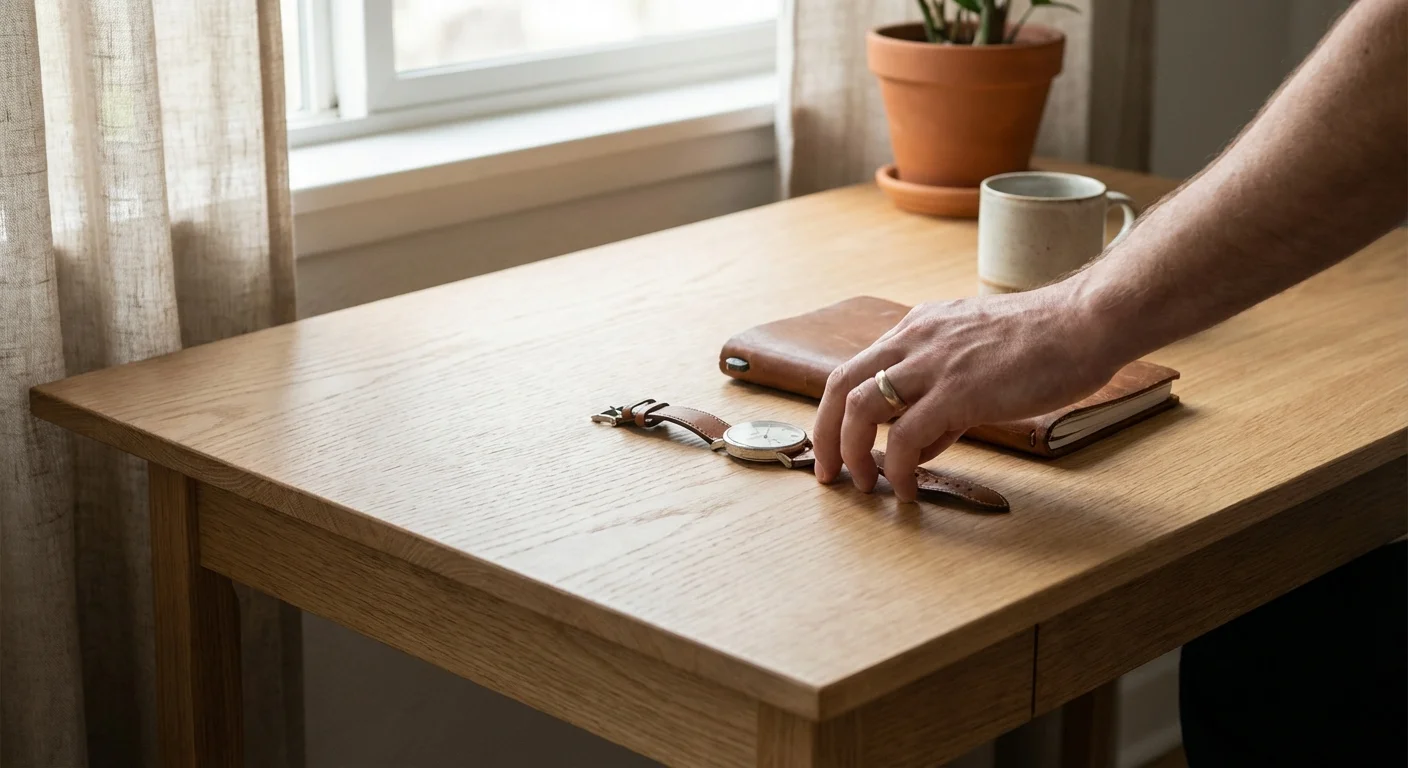
5. Mechanical Watches and High-Quality Timepieces
While smartwatches offer incredible features, they are the antithesis of BIFL. Their batteries degrade, and their software becomes obsolete within five years. If you want a piece of jewelry that tells time and lasts a lifetime, a mechanical watch is the standard. These devices run on springs and gears rather than microchips. A well-maintained Seiko or Hamilton can last eighty years or more. While a $400 mechanical watch seems like a luxury, it maintains a significant portion of its resale value—unlike a dead Apple Watch which eventually becomes a paperweight.
6. Professional-Grade Kitchen Mixers
If you bake often, a cheap stand mixer is a liability. The internal gears in budget models are often made of plastic. When you try to knead a heavy bread dough, those plastic teeth can strip, rendering the motor useless. The KitchenAid Artisan or Professional series has long been the gold standard because of its all-metal gear construction and its “power hub” that accepts dozens of attachments.
According to Consumer Reports, KitchenAid stand mixers consistently rank at the top for both performance and longevity. Because these machines have been around for decades, finding a local repair shop or an online tutorial to fix a minor issue is easy. They are designed to be serviced, not replaced.

7. Heavy-Duty Gardening Tools
Cheap shovels and rakes often snap at the handle or bend at the blade when they hit a stubborn root. This is because they use thin-gauge stamped steel and low-quality wood handles with knots. A BIFL tool uses forged steel and fiberglass or straight-grain ash handles. Brands like Bully Tools or Fiskars (specifically their higher-end lines) often offer lifetime warranties. If you manage to break a forged steel spade, they send you a new one. Spending $60 on a shovel once is significantly better than spending $20 four times over the same period.
8. Ergonomic Office Chairs (Herman Miller / Steelcase)
With more people working from home, the “office chair” has become a vital health tool. The $150 “racing style” chairs sold at big-box retailers typically use cheap foam that bottoms out within a year and faux leather that peels. More importantly, they offer poor lumbar support, which can lead to expensive physical therapy bills for back pain.
Companies like Herman Miller and Steelcase design their chairs (like the Aeron or Leap) for 24/7 call center use. They carry 12-year warranties that cover everything, including moving parts and fabric. These chairs are designed to be anatomically correct. You can often find these “used” from office liquidators for $400 (down from $1,200 retail). Even at the higher price point, the cost per year is negligible compared to the comfort and durability provided.

9. Vitamix Blenders
A standard $40 blender might handle a fruit smoothie, but it will struggle with frozen fruit, nuts, or tough greens, eventually burning out the motor. A Vitamix uses a high-horsepower motor and a cooling system designed to prevent overheating even under extreme loads. These blenders are famous for lasting 20+ years in commercial environments. They also offer a 7 to 10-year full warranty. If you use a blender daily, the Vitamix is a prime example of where spending more upfront eliminates the need for any future purchases in that category.
10. Wool and High-Quality Natural Fibers
Fast fashion relies on polyester and acrylic blends that pill, stretch, and lose their shape after a few washes. Synthetic fibers also trap odors and shed microplastics into the water supply. Investing in 100% Merino wool, cashmere, or heavy-weight cotton canvas provides a different experience. Wool is naturally antimicrobial and durable. A well-made wool coat or sweater can last decades if protected from moths. Look for “heritage” brands or check labels for 100% natural fiber content to ensure your wardrobe doesn’t end up in a landfill next season.
“Beware of little expenses; a small leak will sink a great ship.” — Benjamin Franklin
When It’s Worth Paying (and When It’s Not)
Not every expensive item is a BIFL item. You must distinguish between “luxury markup” and “quality construction.” To determine if an item is worth the higher price, ask these four questions:
- Is it repairable? Does the manufacturer sell individual replacement parts? Can a local professional fix it?
- What is the warranty? Does the company offer a “Lifetime” or at least a 10-year warranty? Beware of “limited” warranties that only cover “manufacturer defects” for 90 days.
- What are the materials? Is it full-grain leather or “genuine” leather (which is actually a low-grade composite)? Is it solid wood or veneer? Is it forged steel or stamped?
- Is there a community? Look at forums like Reddit’s “Buy It For Life” community. If thousands of people are bragging about a 30-year-old toaster, you have found a winner.
Avoid paying more for technology that will become obsolete. For example, a “smart” refrigerator with a giant touchscreen is a poor BIFL investment. The screen or the software will likely fail or become outdated long before the compressor dies. In those cases, “spending more” actually increases your risk of failure.

Don’t Fall For These Marketing Traps
Marketing departments know that “durability” sells, so they use specific buzzwords to trick you. Do not let these phrases convince you to spend more without verifying the construction:
- “Military Grade”: This is a vague term that often means nothing in the consumer world. It usually refers to a rugged look rather than actual durability.
- “Genuine Leather”: This is actually one of the lowest grades of leather. It is made of several layers of low-quality leather bonded together with glue. Look for “Full Grain” or “Top Grain” instead.
- “Professional Series”: Unless it is sold by a restaurant or industrial supply house, this is often just a marketing label applied to the same plastic components found in the base model.
- “Planned Obsolescence”: Be wary of items that require proprietary batteries or apps to function. If the company goes out of business or stops updating the app, your “high-quality” item becomes a brick.
How to Transition to a BIFL Lifestyle on a Budget
You do not need to replace everything in your home today. In fact, that would be the opposite of the BIFL philosophy. The most sustainable and cost-effective approach is to wait for your current items to fail, then replace them with a “forever” version. You can also utilize these strategies to save money on high-end goods:
- The Secondary Market: Because BIFL items are built to last, they are perfect for buying used. Check Facebook Marketplace, eBay, or local estate sales. A 20-year-old KitchenAid mixer for $50 is a much better deal than a brand-new $100 budget mixer.
- Wait for Seasonal Sales: High-end brands like All-Clad or Patagonia have predictable annual sales. Use tools like CamelCamelCamel to track price history and ensure you are getting a genuine discount.
- Focus on High-Frequency Items: Prioritize the items you use every single day—your bed, your office chair, your primary cooking pan, and your daily shoes. Savings on these items compound much faster.
The Environmental Impact of Buying Less
While the primary focus of this guide is your wallet, the BIFL movement has a massive positive impact on the environment. The EPA and other environmental agencies note that household waste from furniture and appliances is a growing problem. When you buy a toaster that lasts 30 years instead of 15 toasters that last two years each, you keep 14 machines out of the landfill and reduce the carbon footprint associated with manufacturing and shipping those replacements. Saving money and saving the planet often go hand-in-hand.
Frequently Asked Questions
Is “Buy It For Life” just for wealthy people?
Actually, the BIFL strategy is most beneficial for those on a tight budget. While the upfront cost is higher, it prevents the “poverty trap” of having to spend money you don’t have to replace essential items. Buying used BIFL items is the best way to bridge the gap if you cannot afford new retail prices.
What if I lose the item or it gets stolen?
This is a valid risk. For items you carry with you (like pocket knives or high-end pens), consider your personal habits. If you frequently lose small items, the BIFL math may not work for you in those specific categories. Focus on “stationary” household items first.
Does a lifetime warranty always mean the company will fix it?
Not always. Read the fine print. Some companies require you to pay for shipping, which can be expensive for heavy items. Others only offer a “limited” lifetime warranty. Stick with companies that have a proven track record of honoring their promises, such as Patagonia, Leatherman, or Briggs & Riley.
Where can I find reliable BIFL reviews?
Resources like Wirecutter provide excellent deep dives into durability. Additionally, enthusiast communities on forums and social media are great for finding out how products perform after five or ten years of real-world use.
By shifting your focus toward quality, you stop being a victim of the “replacement cycle.” You begin to see your household items as investments rather than expenses. Over time, your home fills with reliable, high-performing tools that never need to be thought about again. That peace of mind, combined with the thousands of dollars you’ll save, makes the Buy It For Life approach one of the smartest financial moves you can make.
This article provides general money-saving guidance. Individual results vary based on location, household size, and spending patterns. Verify current prices before making purchasing decisions.
Last updated: February 2026. Prices change frequently—verify current costs before purchasing.








Leave a Reply