
You know the feeling: you brought your car in for a simple oil change, and twenty minutes later, a service advisor walks into the waiting room holding a dirty air filter and a three-page printout. Suddenly, your $60 maintenance visit has ballooned into a $1,200 “urgent” repair list. Your heart sinks because you aren’t sure which items are critical for safety and which are simply padding the shop’s monthly revenue. This information gap costs American car owners billions of dollars every year in unnecessary maintenance and inflated labor rates.
Understanding how to read a mechanic’s quote is the single most effective way to save on car repairs. When you speak the language of the garage, you transform from a target into a customer. Mechanics and service advisors treat informed drivers differently; they know they cannot easily push a “fuel system cleaning” on someone who understands their vehicle’s manufacturer-recommended service interval. This guide provides the tools to decode the jargon, spot the red flags, and negotiate your bill with confidence.
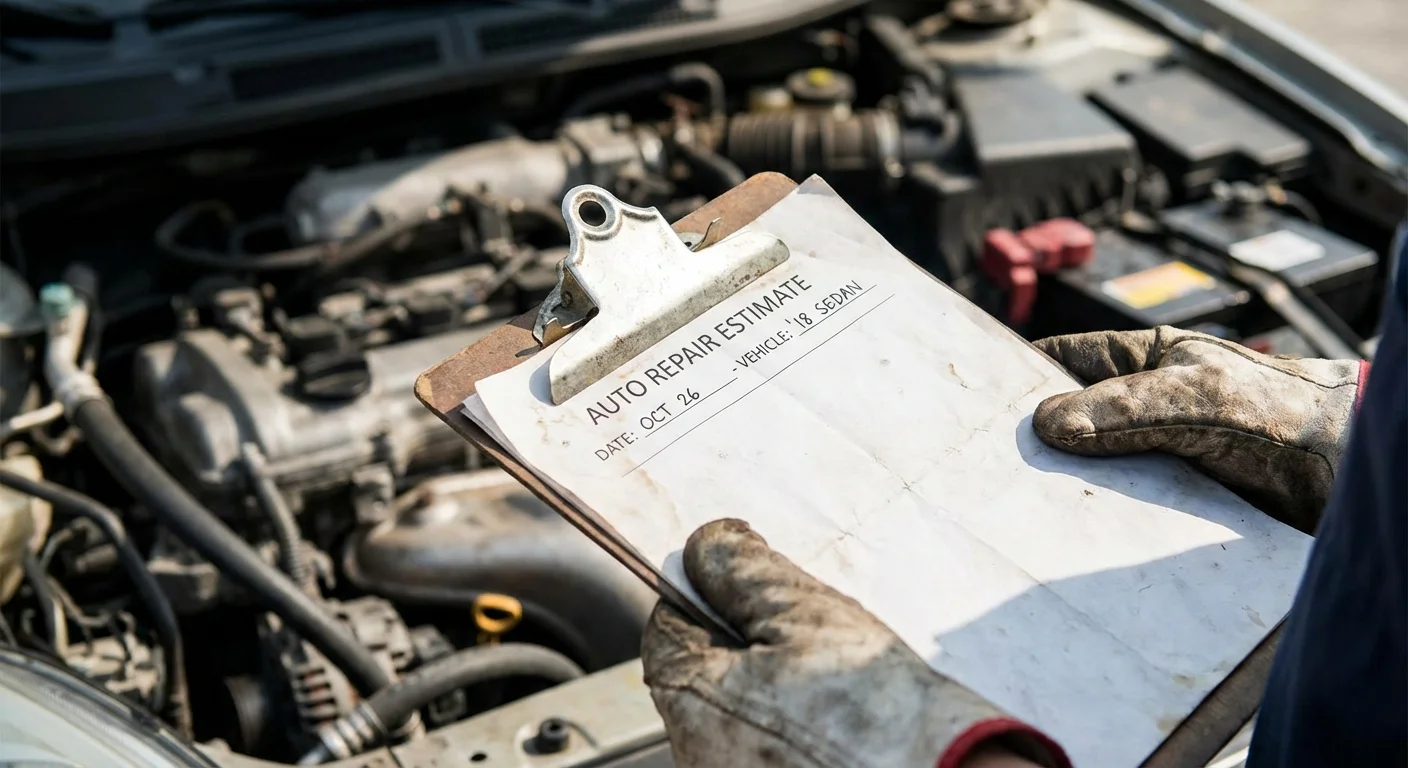
The Anatomy of a Repair Estimate
A professional repair estimate usually contains four primary components: parts, labor, shop supplies, and taxes. While the layout varies from shop to shop, the data remains the same. Understanding how these figures are calculated allows you to spot where the shop might be overcharging you.
Labor Rates and “Book Time”
Most shops do not charge you for the actual minutes a mechanic spends under your hood. Instead, they use “flat-rate” or “book time.” This is a standardized estimate of how long a specific job should take according to industry databases like Mitchell 1 or AllData. If the book says a water pump takes three hours to replace, you pay for three hours of labor, even if a master technician finishes it in ninety minutes. Conversely, if a bolt snaps and the job takes five hours, you usually still only pay for three. Always ask what the shop’s hourly labor rate is before authorizing work. In major metropolitan areas, this can range from $120 to $250 per hour.
Parts Markup
Expect the shop to charge more for a part than you would pay at a local auto parts store. Shops view parts as a profit center, and they also provide a warranty on those parts. A 30% to 50% markup is standard. However, if you see a $400 charge for an alternator that costs $150 at a retail store, you have room for car repair negotiation. You can ask if they offer an “aftermarket” equivalent rather than an “OEM” (Original Equipment Manufacturer) part to save significantly.
Shop Supplies and Environmental Fees
This is a catch-all category for things like rags, brake cleaner, lubricants, and hazardous waste disposal. Often, this is calculated as a percentage of the total labor (usually 5% to 10%) rather than an itemized list of what was actually used. If this fee exceeds $50 for a minor repair, ask for an itemized breakdown. You should not pay a $40 “shop supply fee” for a job that only required a screwdriver and five minutes of time.

Common Mechanic Upsells to Watch Out For
Service advisors are often paid on commission. Their job is to find additional work your car might need—or work they can convince you it needs. While some “while-we-are-in-there” suggestions are legitimate and save you money in the long run, others are pure profit padding. Use resources like the Federal Trade Commission (FTC) consumer advice pages to understand your rights regarding repair authorizations.
- Fluid Flushes: Transmission flushes, coolant flushes, and power steering flushes are the bread and butter of upsells. Unless your fluid is burnt, contaminated, or you have reached the mileage interval specified in your owner’s manual, these are often unnecessary. Modern synthetic fluids last much longer than they did twenty years ago.
- Cabin and Engine Air Filters: Shops often charge $50 to $90 to replace these. In most cars, you can access these filters in less than two minutes without tools. The parts cost $15 to $25 online. This is one of the easiest ways to save on car repairs instantly.
- Fuel System Cleanings: Unless your car is idling roughly or throwing a specific diagnostic code, “fuel induction services” are rarely necessary. High-quality gasoline already contains detergents that keep your injectors clean.
- Nitrogen Tire Fill: Some shops will offer to fill your tires with nitrogen for a fee, claiming better fuel economy and pressure stability. For the average driver, the benefits are negligible compared to standard compressed air, which is already 78% nitrogen.
“Beware of little expenses; a small leak will sink a great ship.” — Benjamin Franklin
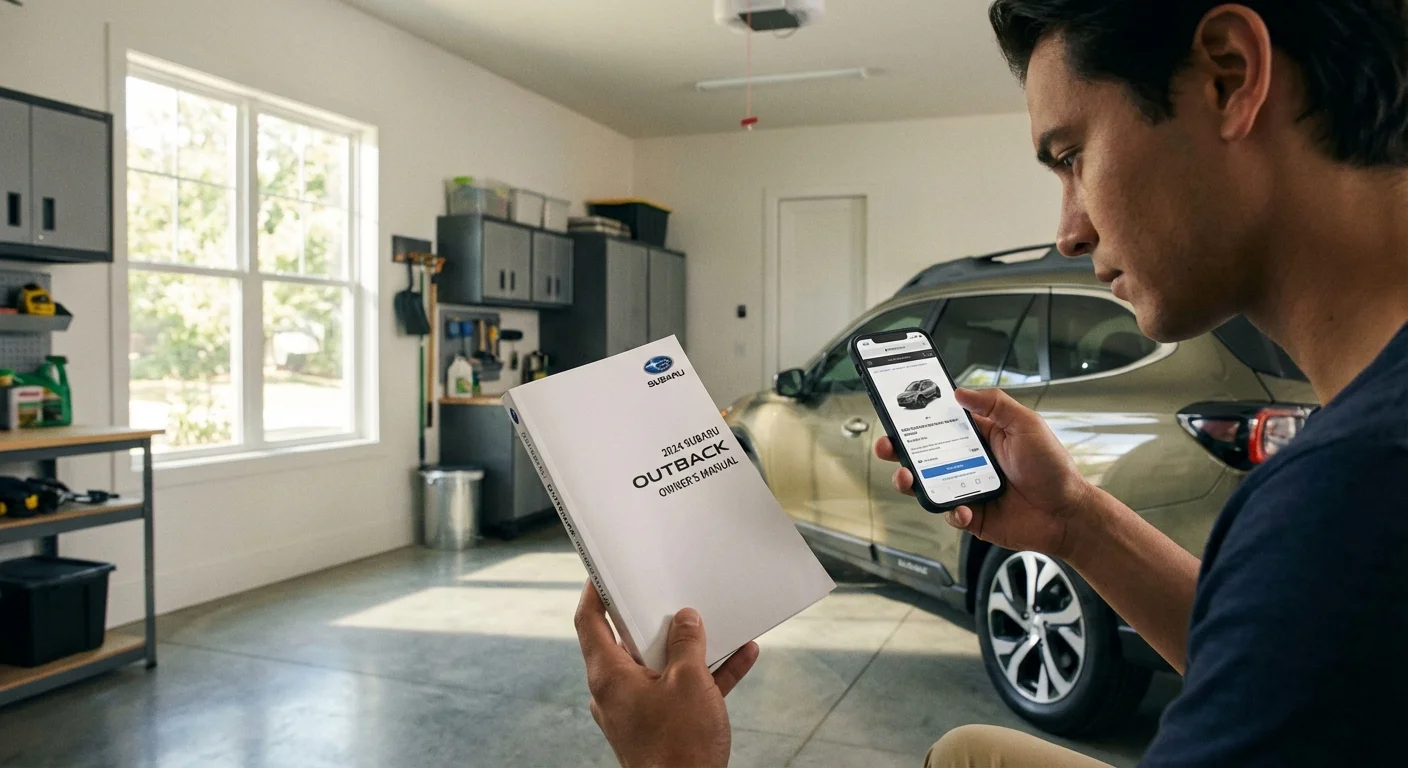
How to Verify the Necessity of Repairs
Before you sign a quote, you must distinguish between “safety critical,” “preventative,” and “cosmetic” repairs. A leaking brake line is safety critical; a slightly worn belt is preventative; a squeaky interior trim piece is cosmetic. If you feel pressured, use the “Show Me” technique. Ask the mechanic to bring you into the bay and show you the failed part. A legitimate mechanic will have no problem pointing out a leaking strut, a torn CV boot, or brake pads worn down to the wear indicators.
Comparison shopping is your strongest leverage. If a quote seems high, call another shop and ask for their price on the specific job listed. Websites like Kelley Blue Book and Consumer Reports provide repair pricing estimators based on your ZIP code. If your quote is $200 higher than the local average, ask the shop why. They may be using higher-quality parts, or they may simply be overcharging.

DIY vs. Professional: Knowing When to Pay
You can save thousands of dollars over the life of a vehicle by performing basic tasks yourself. However, modern cars are rolling computers, and some jobs require specialized diagnostic tools or safety equipment. Using the right tool for the job is essential for both your safety and the health of your vehicle.
| Task | Difficulty | Estimated Savings | Recommendation |
|---|---|---|---|
| Air Filter Replacement | Very Low | $40 – $70 | DIY – Usually requires no tools. |
| Windshield Wipers | Very Low | $20 – $40 | DIY – Click-in installation. |
| Light Bulbs (External) | Low | $30 – $60 | DIY – Check YouTube for your specific model. |
| Oil and Filter Change | Moderate | $20 – $40 | DIY if you have the space and tools; Pro for convenience. |
| Brake Pads | Moderate | $150 – $300 | DIY only if you have a jack, stands, and mechanical experience. |
| Timing Belt | High | $400+ | Professional – Critical engine timing is at stake. |
| Transmission Internal Repair | Very High | N/A | Professional – Requires specialized clean-room conditions. |

Savings Killers: Mistakes That Inflate Your Bill
The biggest “savings killer” in the automotive world is deferred maintenance. While it seems counterintuitive to spend money to save money, ignoring a $150 coolant leak today can lead to a $3,000 head gasket failure tomorrow. Following the manufacturer’s maintenance schedule found in your glovebox is the only way to avoid catastrophic repair bills. Do not rely on the shop’s “recommended” schedule; they often suggest services twice as often as the manufacturer requires.
Another common mistake is authorized “open-ended” diagnostics. If your car has a mysterious noise, some shops will charge you hourly to “find” it. Instead, agree to a one-hour diagnostic limit. If they haven’t found the issue in an hour, they must call you with their progress before spending more of your money. This prevents you from receiving a surprise $400 bill just for “looking at” the vehicle.

Negotiation Tactics That Actually Work
Negotiation does not have to be confrontational. You are simply seeking a fair price for a necessary service. When you receive a quote, start by asking, “Which of these items are absolutely necessary to keep the car safe for the next three months?” This forces the advisor to prioritize the list. Once you have the essential list, use these strategies:
- The “Loyalty” Request: If you are a repeat customer, ask if they can waive the diagnostic fee if you have the repair performed at their shop. Most shops will credit the $100 diagnostic fee toward the final bill.
- Bundle the Labor: If you are getting two repairs done in the same area—such as a water pump and a timing belt—the labor should not be the sum of both individual book times. Since the mechanic already has the engine disassembled for the timing belt, the water pump should only add a few minutes of labor. Make sure they aren’t double-charging you for “getting there.”
- Request Refurbished Parts: For older vehicles, ask about “remanufactured” parts. Items like alternators, starters, and AC compressors are often available as remanufactured units that carry the same warranty as new ones but cost 40% less.
- Bring Your Own Parts (With Caution): Some shops allow you to bring your own parts, though many refuse because they lose the profit margin and cannot warranty the labor if the part fails. If you choose this route, confirm the shop’s policy first.
“It’s not your salary that makes you rich, it’s your spending habits.” — Charles A. Jaffe
Frequently Asked Questions
Should I always go to the dealership for repairs?
No. While dealerships are essential for warranty work and complex recalls, independent shops generally offer labor rates that are 20% to 40% lower. For routine maintenance and common repairs, a highly rated independent mechanic is usually the more cost-effective choice.
Is a “Free Inspection” really free?
Often, a free inspection is a lead-generation tool. The shop provides the inspection for free with the expectation that they will find enough “necessary” repairs to make the time worth their while. Always take “free” findings with a grain of salt and get a second opinion for major repairs.
What should I do if the final bill is higher than the quote?
In many states, laws prevent shops from exceeding an estimate by more than 10% without your prior consent. Always get your estimate in writing. If the bill is significantly higher and you didn’t authorize the extra work, you have the right to dispute the charges. Check the USA.gov Consumer Resources for state-specific car repair laws.
How do I know if my mechanic is honest?
Transparency is the best indicator. An honest mechanic will show you the old parts, explain the “why” behind every recommendation, and tell you which repairs can wait. Look for certifications like ASE (Automotive Service Excellence), which indicates the technicians have met industry standards for knowledge and skill.
The Final Word on Smart Car Maintenance
Taking control of your car repair experience requires a small investment of time but yields a massive return in savings. Before you visit the shop, read your owner’s manual to know your maintenance intervals. When you receive a quote, read every line item—don’t just look at the total at the bottom. By asking the right questions and verifying the need for every service, you ensure that your hard-earned money goes toward keeping your car on the road rather than padding a service department’s bottom line.
The next time your mechanic suggests a “standard 60,000-mile service package” for $800, ask for an itemized list. You might find that $400 of that package consists of inspections and “cleanings” you don’t actually need. Be intentional with your spending, and your car—and your wallet—will last much longer.
The savings estimates in this article are based on typical costs and may differ in your area. Always compare current prices and consider your household’s specific needs.
Last updated: February 2026. Prices change frequently—verify current costs before purchasing.








Leave a Reply