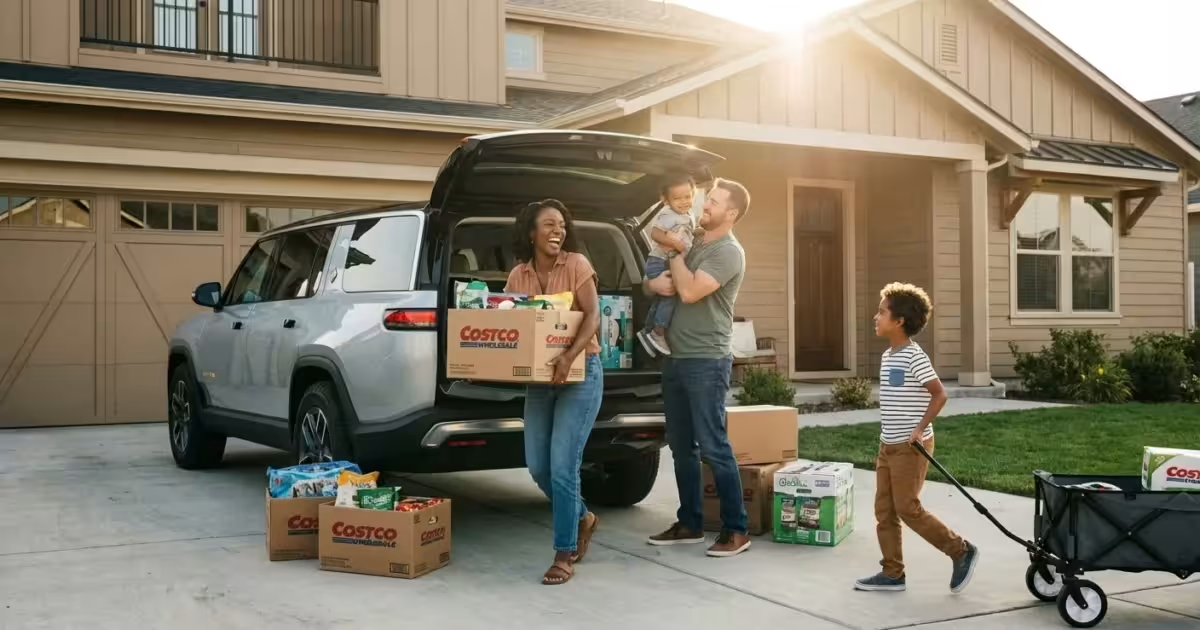
Feeding a family of four in today’s economy feels like a full-time job in financial management. Between two growing children who treat the pantry like a self-service buffet and two adults trying to maintain a budget, your monthly grocery bill likely represents your largest discretionary expense. According to data from the Bureau of Labor Statistics, the average American household spends thousands of dollars annually on food at home, and for families, that number scales quickly. This financial pressure leads most parents to the same crossroads: the warehouse club entrance.
Choosing between Costco and Sam’s Club isn’t just about which logo you prefer on your membership card. For a family of four, the decision impacts your monthly cash flow, your Saturday morning sanity, and the quality of the food on your table. While both retailers promise savings through bulk shopping, they cater to different priorities. One focuses on curated high-end quality, while the other leans into convenience and rock-bottom entry prices.

The Membership Math: Entry Costs and Reward Tiers
Before you even place a single gallon of milk in your cart, you have to pay for the privilege of walking through the door. This “pay to play” model is how warehouse clubs keep their margins thin on products while remaining profitable. Recently, both clubs adjusted their pricing, making the math even more critical for a family of four.
Costco offers two primary tiers: the Gold Star membership at $65 per year and the Executive membership at $130 per year. The Executive tier provides a 2% annual reward on most purchases, capped at $1,250. For a family of four spending $500 a month on groceries and household essentials—a very conservative estimate—you would earn $120 back annually. This nearly pays for the membership itself, making the Executive tier the logical choice for most families.
Sam’s Club positions itself as the more budget-friendly entry point. Their Club membership costs $50, while the Sam’s Plus membership costs $110. Like Costco, the Plus tier offers rewards (2% back in “Sam’s Cash”), but it adds a significant perk that Costco lacks: free shipping on most online orders and early shopping hours. If you live 20 minutes away from the warehouse, that free shipping on diapers and wipes becomes a massive value-add for a busy parent.
| Feature | Costco (Executive) | Sam’s Club (Plus) |
|---|---|---|
| Annual Fee | $130 | $110 |
| Cash Back Reward | 2% (up to $1,250) | 2% (up to $500) | Free Shipping | Only on select items | Yes, on most items |
| Early Access | No | Yes |
Quality vs. Quantity: Kirkland Signature vs. Member’s Mark
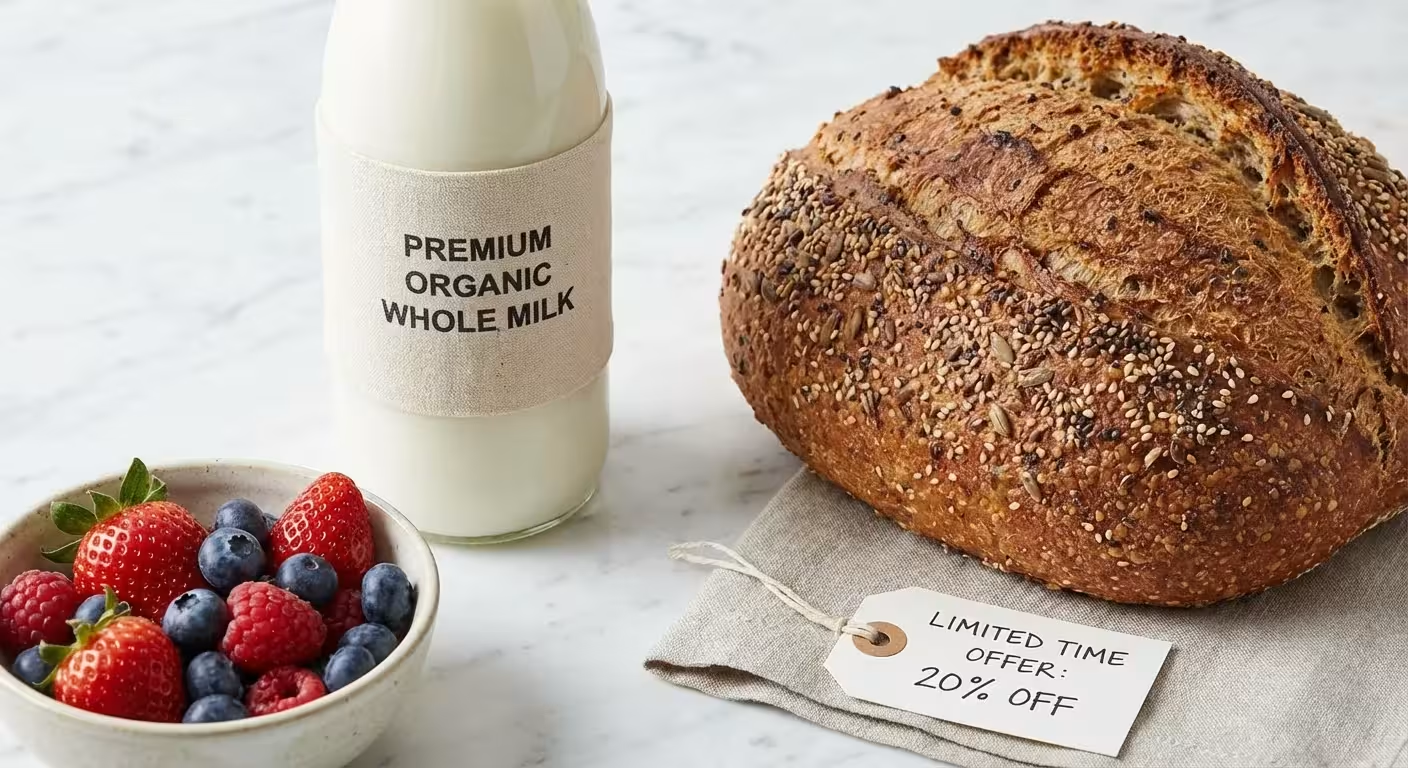
When you shop for a family of four, private labels become your best friends. Costco’s Kirkland Signature brand has achieved a cult-like status for a reason. Costco often sources these products from top-tier manufacturers—rumors and some confirmations suggest big names like Starbucks, Duracell, and Grey Goose—and sells them at a fraction of the name-brand price. For the family that prioritizes organic milk, grass-fed beef, and high-quality olive oil, Costco generally wins on product integrity.
Sam’s Club counters with Member’s Mark. While Kirkland focuses on “premium at a discount,” Member’s Mark focuses on “utility at a discount.” You will find a wider variety of name brands at Sam’s Club, which appeals to families with kids who are picky about specific cereal or snack brands. However, Sam’s Club has made significant strides in their private label quality recently, particularly in their frozen food and meat departments.
“The goal isn’t to be cheap—it’s to be intentional.”
Think about your family’s eating habits. If you prefer buying organic produce and specialty cheeses, Costco’s inventory will feel like a playground. If you need a 50-count variety pack of Frito-Lay chips for school lunches and a 3-pound tub of name-brand peanut butter, Sam’s Club often carries the specific labels your kids already recognize.

The Convenience Factor: Technology and the Checkout Experience
Time is a currency every parent values. If a shopping trip takes three hours because of long lines, the $20 you saved on bulk chicken doesn’t feel like a win. This is where the two clubs diverge most sharply. Sam’s Club is objectively years ahead of Costco in retail technology. Their “Scan & Go” feature allows you to scan items with your phone as you place them in your cart, pay inside the app, and walk right past the checkout lines to the exit. For a parent with two restless kids in the cart, bypassing a 15-minute checkout line is priceless.
Costco remains stubbornly traditional. While they have introduced self-checkout kiosks in most locations, you still have to wait in a physical line, unload your heavy items (or wait for an attendant to scan them), and manage the receipt process manually. Costco prioritizes the “treasure hunt” experience, encouraging you to walk every aisle to see what’s new. While this is great for discovering a new outdoor furniture set, it can be frustrating when you just need milk and toilet paper on a Tuesday evening.
The Household Staples Face-Off
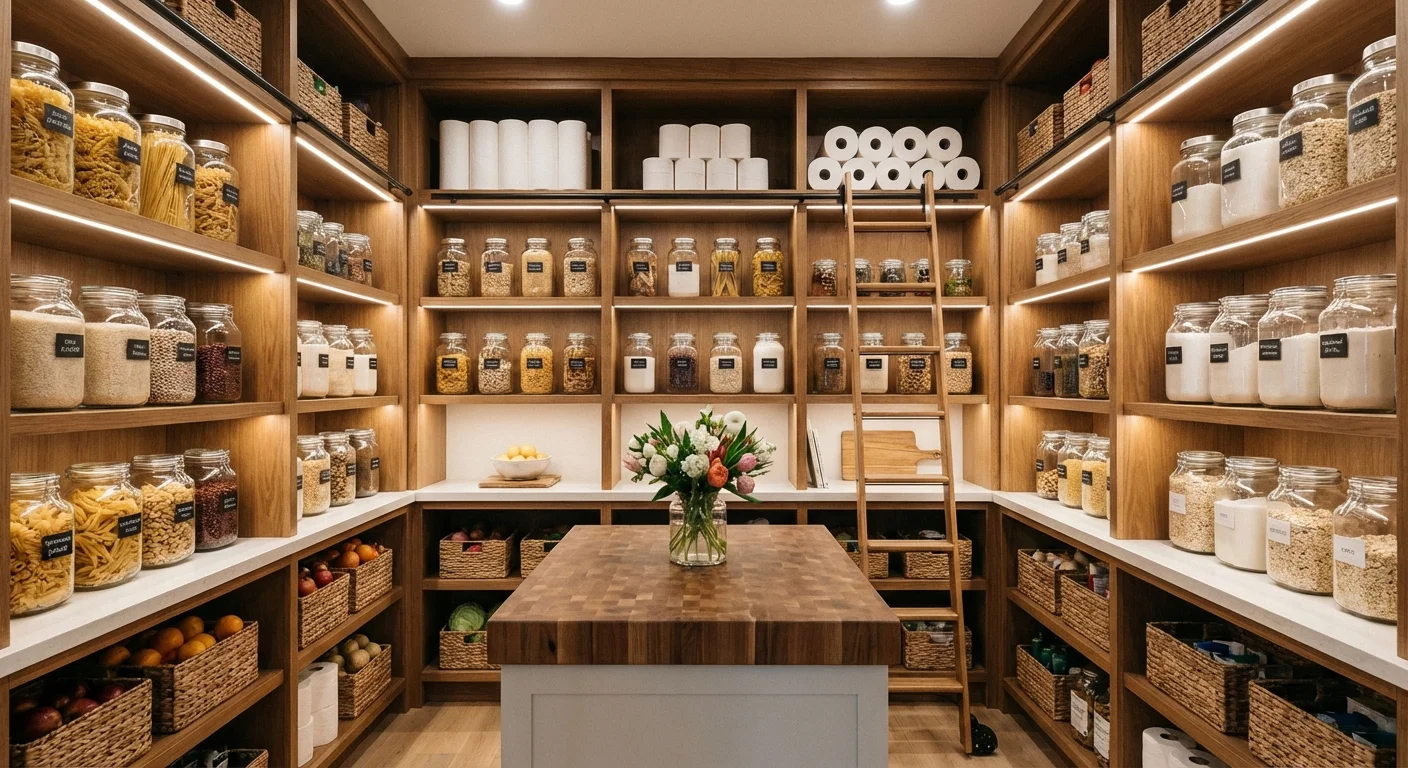
For a family of four, certain items are non-negotiable. Let’s look at how the costs typically break down for the items that likely dominate your list. Price data often fluctuates by region, but these trends hold steady across most of the United States.
- Rotisserie Chicken: Costco’s $4.99 chicken is a loss leader that hasn’t changed price in decades. Sam’s Club usually prices theirs slightly lower, often at $4.84. Both are exceptional values for a quick Tuesday night dinner.
- Milk and Eggs: Both clubs offer massive savings over traditional supermarkets. However, Costco’s packaging (two-packs of milk jugs) can be cumbersome compared to the individual gallons sold at Sam’s.
- Produce: Costco excels in organic options, but the quantities are large. If your family can’t finish five pounds of organic Honeycrisp apples before they go soft, the savings vanish. Sam’s Club often offers slightly smaller bulk sizes in the produce aisle.
- Diapers and Wipes: Kirkland Signature diapers are widely considered comparable to Huggies (and some say they are manufactured by the same company). Member’s Mark diapers are significantly cheaper but sometimes receive mixed reviews on absorbency for overnight use.
According to the USDA Food and Nutrition reports, a “thrifty” food plan for a family of four still requires strategic bulk buying. By purchasing your proteins and dairy at either club, you typically save 25% to 40% compared to a standard grocery store like Kroger or Publix.

When It’s Worth Paying: Services Beyond the Aisles
The true value of a membership for a family of four often lies in the services located at the perimeter of the warehouse. Both clubs offer optical centers, pharmacies, and tire shops, but the “winner” depends on your specific needs.
Gasoline: Both clubs offer high-quality fuel at prices often $0.20 to $0.40 lower than nearby stations. For a family with a minivan and an SUV, the gas savings alone can pay for the membership in less than six months. You can track these differences in real-time using GasBuddy to see which club in your specific zip code offers the better deal.
Tires: Costco offers a robust tire warranty that includes road hazard protection and lifetime rotations. Sam’s Club offers similar perks, but Costco’s frequent $100-off promotions on a set of four tires (alternating between Michelin and Bridgestone) are legendary for saving families significant money on vehicle maintenance.
Travel and Insurance: Costco Travel is a massive benefit for families planning vacations. Their packages for Disney, cruises, and all-inclusive resorts often include “shop cards” (store credit) that can total hundreds of dollars. Sam’s Club offers travel discounts as well, but their platform is generally less comprehensive than Costco’s in-house travel agency.

Don’t Fall For These: Common Bulk Shopping Mistakes
Warehouse shopping can actually lead to overspending if you aren’t careful. The “bulk trap” is real, and it can sink a family budget faster than a leaky ship. Avoid these common pitfalls to ensure your membership remains an asset, not a liability.
The “Per Unit” Ignorance: Not everything in a warehouse club is a deal. Sometimes, the 24-pack of soda is actually more expensive per can than the 12-packs on sale at your local grocery store. Always check the unit price on the shelf tag. If you aren’t saving at least 10-15% over the supermarket, the bulk commitment isn’t worth it.
The Perishable Pivot: Buying a massive container of spinach feels like a healthy, frugal choice until you throw half of it away four days later. For a family of four, bulk buying works best for “shelf-stable” or “freezer-friendly” items. If you find yourself throwing away food, you are literally tossing cash into the garbage.
The Impulse “Treasure”: Costco is the king of the impulse buy. You went in for bread and eggs and walked out with a $400 7-piece mixing bowl set and a giant plush bear. Stick to a list. If it isn’t on the list, it doesn’t go in the cart—no matter how cool the seasonal aisle looks.

The Final Verdict: Which One Should Your Family Choose?
After analyzing the data, the “winner” depends on your family’s lifestyle. We can break it down into two distinct personas.
Choose Costco if: You prioritize food quality, organic options, and employee treatment. If your family eats a lot of fresh, high-end ingredients and you plan on using the travel or tire services, the $130 Executive membership is the gold standard. You are paying for a curated selection where you can almost guarantee the quality of anything with a Kirkland label.
Choose Sam’s Club if: You are on a strict budget and value your time above all else. The Scan & Go app is a game-changer for parents with young children. If your kids prefer name-brand snacks and you want the convenience of free shipping on bulky items like toilet paper and diapers, Sam’s Club offers a more frictionless experience at a lower entry price.
If you are lucky enough to live near both, consider the “dual membership” strategy for one year. Use the Sam’s Club membership for your household staples and “dry” goods via shipping, and use Costco for your fresh meats, dairy, and produce. After twelve months, check your rewards balances. The numbers won’t lie—they will show you exactly where your family spends the most and which club earns its keep.
Frequently Asked Questions
Can I shop at Costco or Sam’s Club without a membership?
At Costco, you can use a Costco Shop Card (gift card) given to you by a member, or you can use the pharmacy without a membership. At Sam’s Club, you can often shop online as a guest for a 10% surcharge, and like Costco, the pharmacy and liquor store (in some states) are open to the public.
Which club has a better return policy for families?
Costco has one of the most generous return policies in retail history. With few exceptions (like electronics, which have a 90-day window), you can return almost anything at any time if you are unsatisfied. Sam’s Club also has a solid return policy, but Costco’s “no questions asked” reputation is superior for families who might realize a bulk item didn’t work out months later.
Do both clubs offer a credit card?
Yes. The Costco Anywhere Visa by Citi offers 4% back on gas and 3% on travel. The Sam’s Club Mastercard offers 5% back on gas and 3% on dining. If you drive a lot, the Sam’s Club card technically offers a higher percentage back on fuel, but both are excellent tools for maximizing your family’s spending.
Making your dollars stretch requires more than just showing up; it requires a strategy. Whether you choose the curated aisles of Costco or the high-tech convenience of Sam’s Club, your family of four can save thousands annually by sticking to the bulk-buy basics and avoiding the siren song of the impulse aisle.
The savings estimates in this article are based on typical costs and may differ in your area. Always compare current prices and consider your household’s specific needs.
Last updated: February 2026. Prices change frequently—verify current costs before purchasing.








Leave a Reply