
The honeymoon phase of your internet service usually ends with a quiet, expensive thud. One month your bill is a manageable $45; the next, it jumps to $85 without warning. This price hike signals the expiration of your introductory promotion, a tactic Internet Service Providers (ISPs) use to hook customers before switching them to “standard” rates. Most people simply grumble and pay the higher price, assuming it is a fixed cost of modern life. However, your internet bill is one of the most negotiable expenses in your monthly budget.
ISPs operate in a high-competition environment where acquiring a new customer costs significantly more than keeping an existing one. This creates a massive opportunity for you to reclaim your promotional pricing or secure an even better deal. By following a structured negotiation strategy and using a prepared script, you can often save between $200 and $600 per year on a single utility. This guide provides the data, the psychological leverage, and the exact words you need to lower your rate today.

The Financial Reality of ISP Pricing
According to research from the Federal Trade Commission (FTC), many consumers pay more than necessary due to lack of competition or confusing billing practices. However, even in areas with limited providers, the “retention department” of your ISP has the authority to grant discounts that the front-line billing agents cannot see. These departments are measured by “churn”—the percentage of customers who cancel their service—and they are authorized to offer credits, speed upgrades, or price-matching to keep you from leaving.
Consider the math of your loyalty. If you have been with a provider for three years at $80 a month, you have already handed them $2,880. If they lose you to a competitor, they lose thousands of dollars in future revenue. If they drop your bill by $20 a month to keep you, they still secure $720 a year from your household. This is why negotiation works; you are not asking for a favor, you are offering them a reason to keep a profitable customer on their books.
“Beware of little expenses; a small leak will sink a great ship.” — Benjamin Franklin

Preparation: Your 15-Minute Pre-Call Checklist
Never call your provider without a plan. The representative on the other end of the line follows a script designed to keep you paying as much as possible; you need a script designed to pay as little as possible. Before you dial the number, gather these three pieces of information.
1. Know Your Local Competition
Search for every provider available at your specific address. Note their current “new customer” promotions for speeds similar to yours. If a competitor offers 300 Mbps for $40 while you are paying $80 for the same speed, that $40 figure is your primary weapon. Even if you have no intention of switching, the representative doesn’t know that. Write down the name of the competitor, the exact price, and any “extras” they offer, such as free professional installation or a $100 gift card.
2. Analyze Your Actual Usage
Many households pay for “Gigabit” speeds (1,000 Mbps) because it sounds superior, but the average family of four rarely utilizes more than 200–300 Mbps simultaneously. If you spend your time streaming 4K video and attending Zoom calls, 300 Mbps is usually more than enough. Check your data usage on your ISP’s portal. If you are consistently using less than your plan allows, you have the option to “negotiate down” to a lower, cheaper tier that still meets your needs.
3. Identify Your Current Total Costs
Look at your most recent PDF statement—not just the total balance on the app. Look for equipment rental fees. Many providers charge $10 to $15 a month just to use their modem and router. Over two years, you pay $360 for a piece of hardware you could buy for $120. Identifying these “hidden” fees gives you more points to negotiate or eliminate entirely.

The Hierarchy of Negotiation: Who to Talk To
When you call the main customer service number, the first person you speak with is usually a general billing agent. This person has very little power. Their job is to explain the bill, not change it. To get a real discount, you must reach the Retention Department (sometimes called the Loyalty Department or the Cancellations Department).
When the automated system asks why you are calling, do not say “billing question.” Instead, say “cancel service” or “discontinue internet.” This triggers a transfer to a specialist whose sole job is to prevent you from leaving. These agents have access to “retention offers” that do not appear on the website and are not available to the general public. Use your polite but firm tone here; the retention agent is your partner in finding a way to keep you as a customer without breaking your budget.
The Bill Negotiation Script: Exactly What to Say
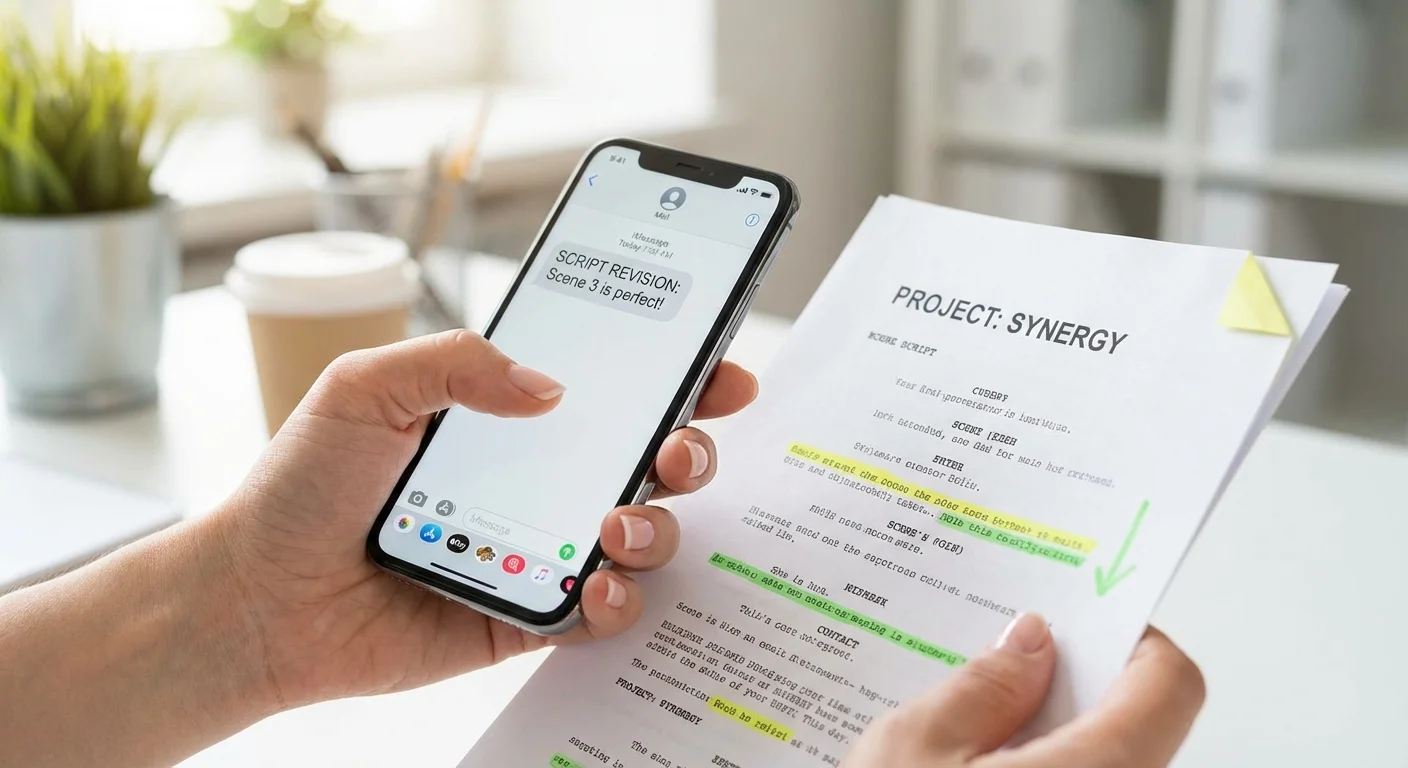
Use the following script as your roadmap. You do not need to read it word-for-word, but hit these specific points to maintain leverage. Remember to remain friendly; a hostile caller gives the agent no incentive to help.
Step 1: The Opening
“Hi, my name is [Your Name]. I’ve been looking at my budget and realized my internet bill has increased significantly lately. I’ve been a loyal customer for [Number] years, but I’m now seeing offers from [Competitor] for much lower rates. I’m calling to see what we can do to get my bill back down to a more competitive price so I don’t have to switch providers.”
Step 2: Handling the First “No”
The agent might say, “I’m sorry, but that was a promotional rate and it has expired. There are no other offers at this time.”
Your Response: “I understand the promotion ended, but the current ‘standard’ price is no longer within my budget. I see that [Competitor] is offering [Speed] for [Price] per month. I’d much rather stay with you than deal with the hassle of switching, but I simply can’t justify paying [Your Current Price] anymore. Is there a loyalty discount or a different package we can look at?”
The Comparison of Common Internet Tiers
| Service Type | Average “Intro” Price | Average “Standard” Price | Negotiation Target |
|---|---|---|---|
| Cable (300 Mbps) | $39.99 – $49.99 | $79.99 – $89.99 | $55.00 – $60.00 |
| Fiber (500 Mbps) | $50.00 – $60.00 | $75.00 – $95.00 | $65.00 – $70.00 |
| 5G Home Internet | $35.00 – $50.00 | $50.00 – $60.00 | Price Match Intro |
Step 3: The “Wait for It” Strategy
Once you state your price target or mention the competitor, stop talking. Silence is a powerful negotiation tool. The agent needs a moment to search their system for available codes. Let them fill the silence. They may come back with a small discount or a speed upgrade. If they offer a speed upgrade for the same price, remember that this doesn’t save you money—it just gives you more of something you might not need. Stay focused on the monthly cost.
Step 4: The Final Pivot
“I appreciate that offer, but it’s still higher than what I was hoping for. If we can’t match the [Competitor] price, can we look at removing the equipment rental fee or applying a long-term loyalty credit to the account?”

Advanced Internet Service Provider Hacks
If the standard script doesn’t yield the results you want, you can employ more strategic maneuvers. These require a bit more effort but can lead to long-term savings.
- The Spouse Swap: If your provider refuses to give you the “new customer” rate, you can technically cancel your service and have your spouse or roommate sign up as a “new” customer the next day. This usually requires returning the old equipment and getting a new setup, but it guarantees the lowest possible rate for another 12–24 months.
- Buy Your Own Hardware: Stop paying the $15 monthly modem rental fee. You can purchase a high-quality cable modem and Wi-Fi router for roughly $120. This pays for itself in eight months. Check Wirecutter for their latest recommendations on compatible hardware for your specific ISP.
- Check for “Low Income” Programs: While the Affordable Connectivity Program (ACP) has seen funding changes, many ISPs like Comcast (Internet Essentials) and Spectrum (Internet Assist) have their own internal low-cost programs for seniors, students, or families receiving government assistance.
- 5G Home Internet Leverage: T-Mobile and Verizon offer 5G home internet often for a flat $50 with no contracts. Mentioning that you are ready to switch to 5G home internet is currently one of the most effective ways to get a cable company to lower their price, as they are losing thousands of customers to these wireless services.

Costly Mistakes to Avoid
Negotiating is an art, and a few common errors can shut down the conversation before you get a discount. Avoid these pitfalls to keep your leverage intact.
Don’t Be Rude: The agent has the power to help you or to make your life difficult. If you are aggressive or insulting, they will do the bare minimum required. Treat them like an ally who is helping you navigate a corporate system. Phrases like “I know it’s not your fault, but the price is just too high” work wonders.
Don’t Bluff Without a Backup: If you tell the agent you are going to cancel today, be prepared for them to say “Okay, what date should we shut off the service?” If you don’t actually have a competitor’s offer ready to go, you will be left without internet or forced to back down, which destroys your credibility for future negotiations. Check NerdWallet or similar sites to ensure your “backup plan” is actually available in your zip code.
Don’t Forget the Confirmation: If you successfully negotiate a lower rate, ask the agent to email you a confirmation of the new price and the duration of the discount. Often, these “verbal agreements” fail to show up on the next bill, and having a reference number or an email is essential for getting the credit applied later.
Skip DIY When…
While most people can handle this call in 20 minutes, there are scenarios where you might want to skip the DIY route. If you find the process of phone negotiation anxiety-inducing or if you simply do not have the time to sit on hold, consider using a bill negotiation service. These services, such as Rocket Money or Billshark, take a percentage of the savings they find for you. If they save you $200, they might take $80 as a fee. You save $120 without lifting a finger. This is a “set it and forget it” option that works well for busy professionals.
Additionally, if you are an enterprise or small business customer, do not use these consumer scripts. Business accounts have different contract structures and often require a dedicated account manager to change rates. In those cases, looking for a local broker might be more effective than calling a general support line.
“It’s not your salary that makes you rich, it’s your spending habits.” — Charles A. Jaffe

Alternative Savings: Beyond the Negotiation
If the ISP absolutely will not budge on the price, look at your service bundle. Many people still pay for “Basic Cable” or a landline telephone that they never use because it was part of a “Triple Play” bundle that was cheaper three years ago. In today’s market, these bundles are almost always more expensive than “unbundling.”
Switch to “Internet Only” service. You can get your news and entertainment through a combination of an over-the-air antenna (for local channels) and targeted streaming services. According to Consumer Reports, cord-cutters save an average of over $100 a month by moving away from traditional cable bundles. Even if your internet price stays at $80, removing a $100 cable package is a massive win for your household budget.
Frequently Asked Questions
How often should I negotiate my internet bill?
You should review your bill every 12 months. Most promotional rates last for one year. Mark your calendar for 11 months from your last negotiation so you can call before the price jump actually hits your bank account.
Can I negotiate if I’m under a contract?
Yes, but your leverage is lower. If you are in the middle of a two-year contract, the ISP knows you would have to pay an Early Termination Fee (ETF) to leave. However, you can still ask for loyalty credits or equipment fee waivers, especially if you have been experiencing service outages.
What if there is only one provider in my area?
This is the “monopoly” scenario. Even here, you have leverage. You can still mention 5G home internet (which is available almost everywhere) or satellite options like Starlink. Furthermore, retention agents have “standard” discounts they can apply even if there isn’t a direct local competitor, simply to keep their churn numbers low.
Does “threatening to cancel” actually work?
It is the most effective tool, but it shouldn’t be a “threat.” It should be a statement of fact: “I cannot afford this price, so I will have to cancel if we can’t find a better rate.” This signals to the computer system that you are a “high-risk” customer, which often triggers the best available offers.
Taking Action for Immediate Savings
Lowering your internet bill is one of the highest-ROI activities you can do for your personal finances. A 20-minute phone call that saves you $30 a month is the equivalent of a $360 tax-free raise. Start by looking at your latest bill and identifying exactly when your current rate expires. If you are already paying “standard” pricing, there is no reason to wait—call your provider today.
Approach the conversation with confidence and the data you’ve gathered about your local competitors. Remember that the goal isn’t to be “cheap”—it’s to be intentional with where your money goes. By reclaiming these dollars from a multi-billion dollar corporation, you can redirect that money toward your savings, debt repayment, or other household needs. The savings estimates in this article are based on typical costs and may differ in your area. Always compare current prices and consider your household’s specific needs.
Last updated: February 2026. Prices change frequently—verify current costs before purchasing.









Leave a Reply