
Every time you press the “Start” button on your washing machine, you trigger a sequence of events that costs you more than just the price of detergent. For many American households, laundry represents a significant portion of the monthly utility bill. Between the electricity required to heat gallons of water and the massive energy draw of a tumble dryer, your laundry routine might be one of the most expensive chores in your home. However, you can slash these costs by making two fundamental shifts: switching to cold water cycles and embracing the drying rack.
Modern laundry technology has evolved far beyond the old-fashioned “hot water for whites” rule. In fact, sticking to high-heat settings often does more harm than good for your clothes—and your wallet. By understanding the mechanics of how clothes actually get clean and how moisture leaves fabric, you can reclaim hundreds of dollars every year while extending the life of your favorite garments.
The Hidden Cost of Every Load
Most people view laundry as a necessary but minor expense. You buy the detergent, maybe some fabric softener, and pay the electric bill. But when you break down the data, the numbers become eye-opening. According to Energy.gov, the average American family washes about 300 loads of laundry per year. If you use hot or warm water for the majority of those loads, you are paying a “heating tax” on every single cycle.
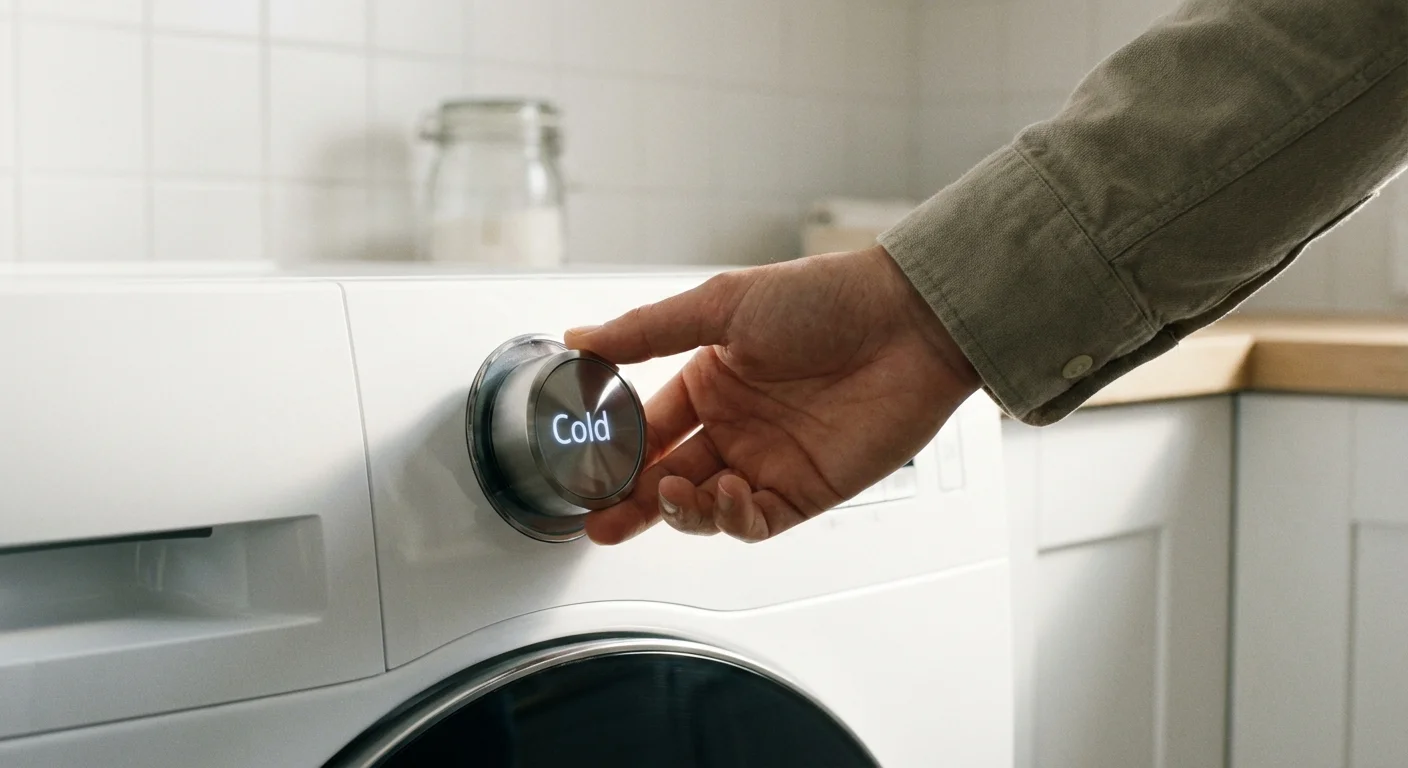
Heating the water accounts for about 75% to 90% of the total energy a washing machine consumes. When you select a “Hot” cycle, your water heater must work overtime to deliver that water, often losing heat as it travels through your pipes. This energy doesn’t even contribute to the mechanical action of the machine—it is purely dedicated to temperature. In contrast, a cold-water cycle uses electricity only to power the motor that turns the drum and the pump that drains the water.
The savings become even more dramatic when you look at the dryer. A standard electric clothes dryer is often the second-most energy-hungry appliance in a home, trailing only the refrigerator or the air conditioning unit. On average, a dryer costs between $0.45 and $0.75 per load, depending on your local utility rates. Over 300 loads, that is $135 to $225 annually just for the luxury of tumbling clothes in hot air.
The Cold Water Revolution: Why Heat is No Longer Mandatory
The “hot water” myth persists because, 30 years ago, it was true. Older laundry detergents relied on chemical reactions that required high temperatures to activate. If you used cold water in 1985, your powder detergent likely wouldn’t even dissolve, leaving white streaks across your denim. Today, the chemistry has changed entirely.
Modern detergents—especially liquid versions and high-efficiency (HE) formulas—use enzymes specifically engineered to work in cold water. These enzymes target proteins, fats, and starches at temperatures as low as 60 degrees Fahrenheit. Consumer Reports testing consistently shows that for standard daily soil, cold water performs just as well as warm or hot water when paired with a quality detergent.
Beyond the energy savings, cold water offers several protective benefits for your wardrobe:
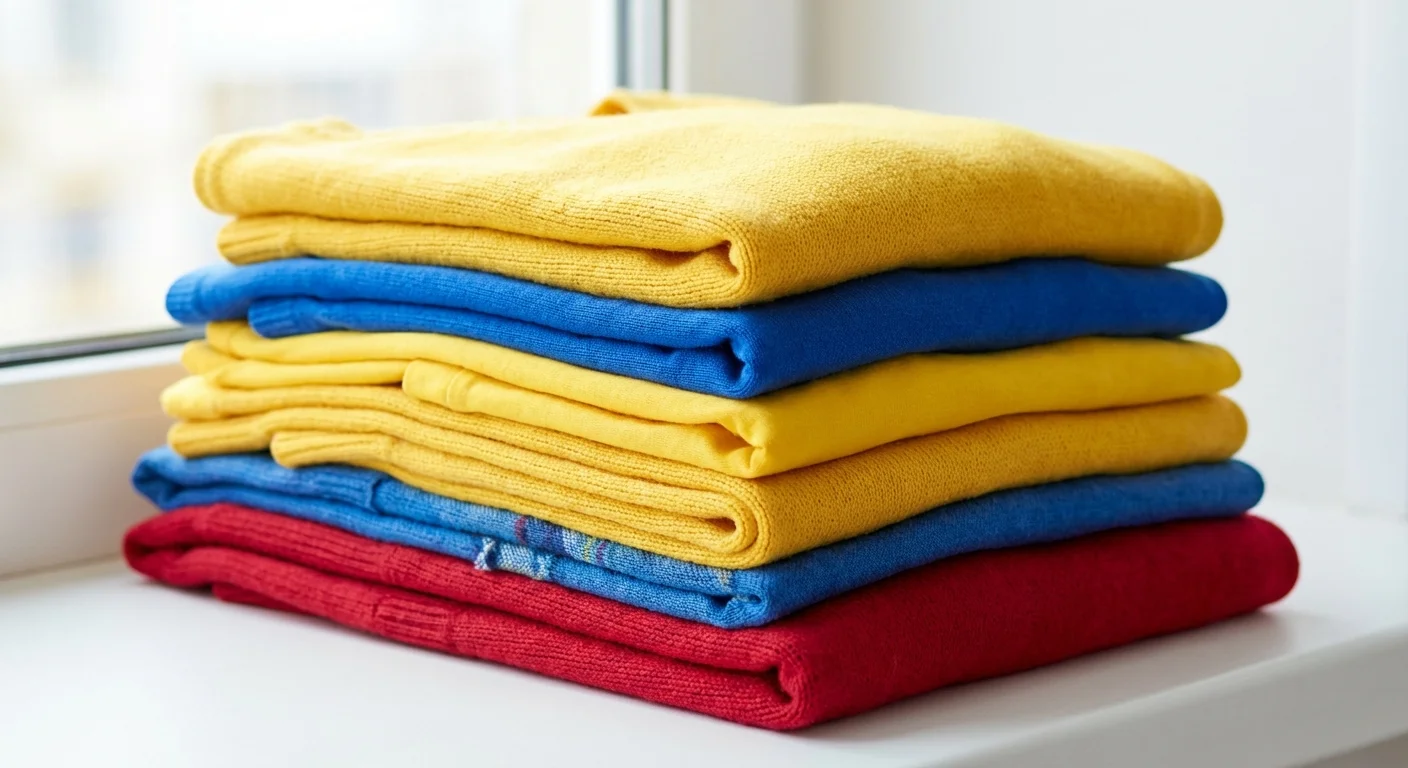
- Reduced Color Fading: High heat breaks down the chemical bonds in fabric dyes, causing your darks to turn gray and your brights to look dull. Cold water keeps the dye locked in the fibers.
- Prevention of Shrinkage: Heat is the primary cause of fiber contraction. If you have ever pulled a “shrunken” sweater out of the wash, the hot water (or the dryer) was likely the culprit.
- Fabric Integrity: Heat weakens the structural integrity of fibers like spandex, lace, and fine cotton. Washing in cold water ensures your clothes maintain their shape and elasticity for years rather than months.
“It’s not your salary that makes you rich, it’s your spending habits.” — Charles A. Jaffe
The High Cost of Heat: Dryer Reality Check
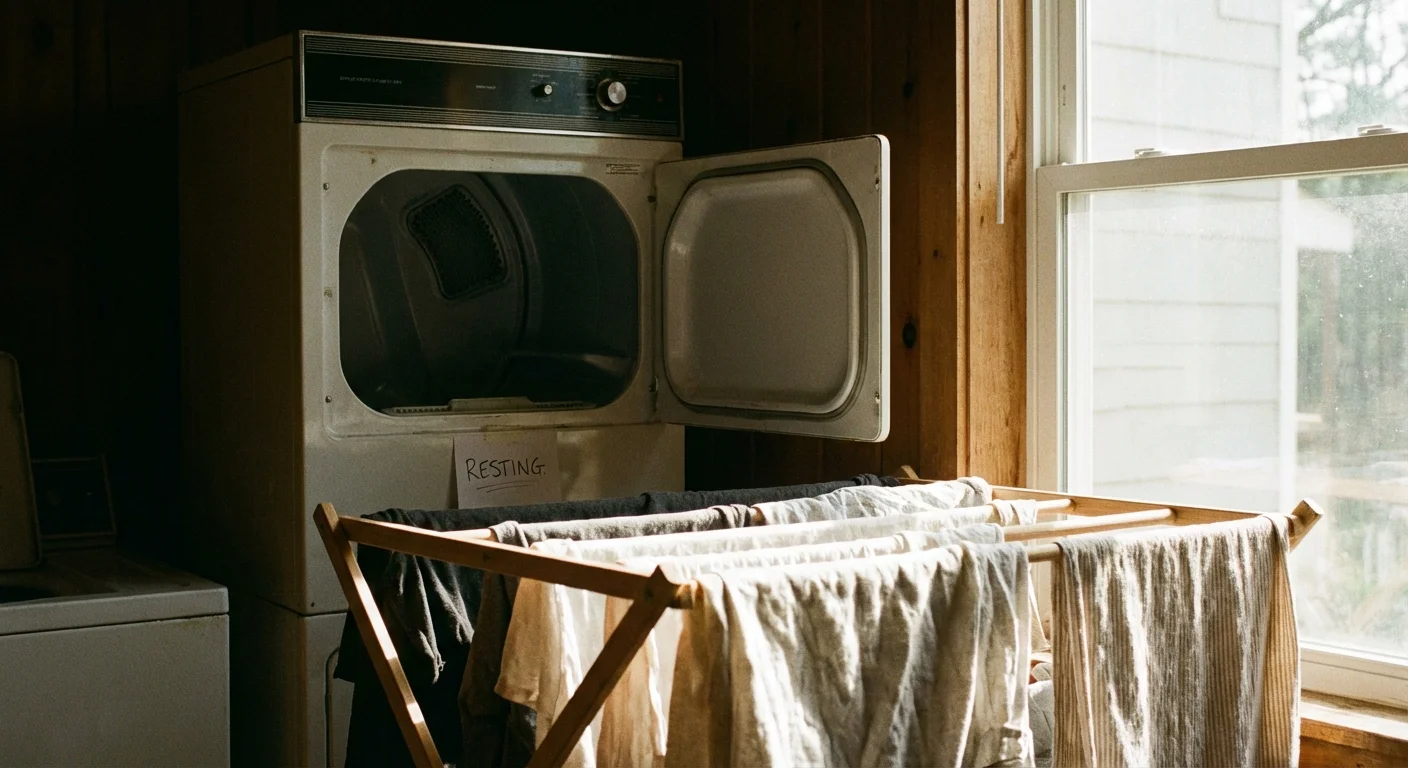
While the washing machine uses energy to heat water, the dryer uses energy to create an artificial desert environment inside a metal drum. This process is inherently inefficient. To dry your clothes, the machine must heat the air, rotate a heavy load, and vent the moist air outside. This means you are essentially paying to heat air and then immediately blowing that heat out of your house.
Furthermore, the dryer is the primary cause of “lint.” Many people think lint is just stray dust, but it is actually the disintegrated fibers of your clothing. The friction and high heat of the tumble cycle literally tear microscopic layers off your shirts and towels. If you want your clothes to last twice as long, you must stop subjecting them to the high-heat friction of a dryer drum.
Switching to a drying rack eliminates this wear and tear entirely. Air drying is a passive process that uses the ambient energy of your home’s environment (or the sun, if you dry outdoors). Even if you only air-dry half of your loads—such as your jeans, gym clothes, and delicates—you will see a noticeable drop in your monthly utility costs.

What You’ll Save: The Annual Breakdown
To help you visualize the impact of these changes, consider the following comparison based on average U.S. utility rates of $0.16 per kWh. These figures assume a standard household performing roughly 300 loads per year.
| Laundry Method | Est. Cost Per Load | Annual Cost (300 Loads) | 10-Year Savings |
|---|---|---|---|
| Hot Wash / High Heat Dryer | $1.15 | $345.00 | $0.00 (Baseline) |
| Warm Wash / Medium Heat Dryer | $0.85 | $255.00 | $900.00 |
| Cold Wash / High Heat Dryer | $0.60 | $180.00 | $1,650.00 |
| Cold Wash / Drying Rack | $0.12 | $36.00 | $3,090.00 |
By simply moving from a “Hot/Hot” mindset to a “Cold/Rack” strategy, you can save over $3,000 across a decade. This doesn’t even account for the hundreds of dollars saved by not having to replace prematurely worn-out clothing.

Where People Overspend in the Laundry Room
Efficiency isn’t just about water temperature; it’s about the entire ecosystem of your laundry room. Many Americans fall into spending traps that add up to hundreds of dollars in wasted money every year. Here is where the “small leaks” Benjamin Franklin warned about usually occur:
Overusing Detergent: This is the most common mistake. Modern washing machines, especially HE models, require very little detergent. Using too much creates excessive suds that the machine must work harder to rinse away, often triggering an extra rinse cycle that wastes gallons of water. Furthermore, excess detergent builds up inside the machine’s drum and pipes, leading to mold, odors, and eventual mechanical failure. You usually only need one to two tablespoons of liquid detergent for a standard load.
Buying “Specialty” Add-ons: Fabric softeners and dryer sheets are largely unnecessary marketing triumphs. Fabric softener works by coating your clothes in a thin layer of wax-like chemicals. This reduces the absorbency of your towels and can actually ruin the moisture-wicking properties of athletic gear. Dryer sheets are equally problematic, as they can coat the moisture sensor in your dryer, causing it to run longer than necessary because it “thinks” the clothes are still wet.
Running Half-Loads: Your washing machine uses roughly the same amount of mechanical energy whether it is half-full or at its recommended capacity. If you run two small loads instead of one full load, you effectively double your costs. Wait until you have a full basket before starting the cycle, but be careful not to overstuff the machine, which can strain the motor.
Mastering the Drying Rack: Tips for Success
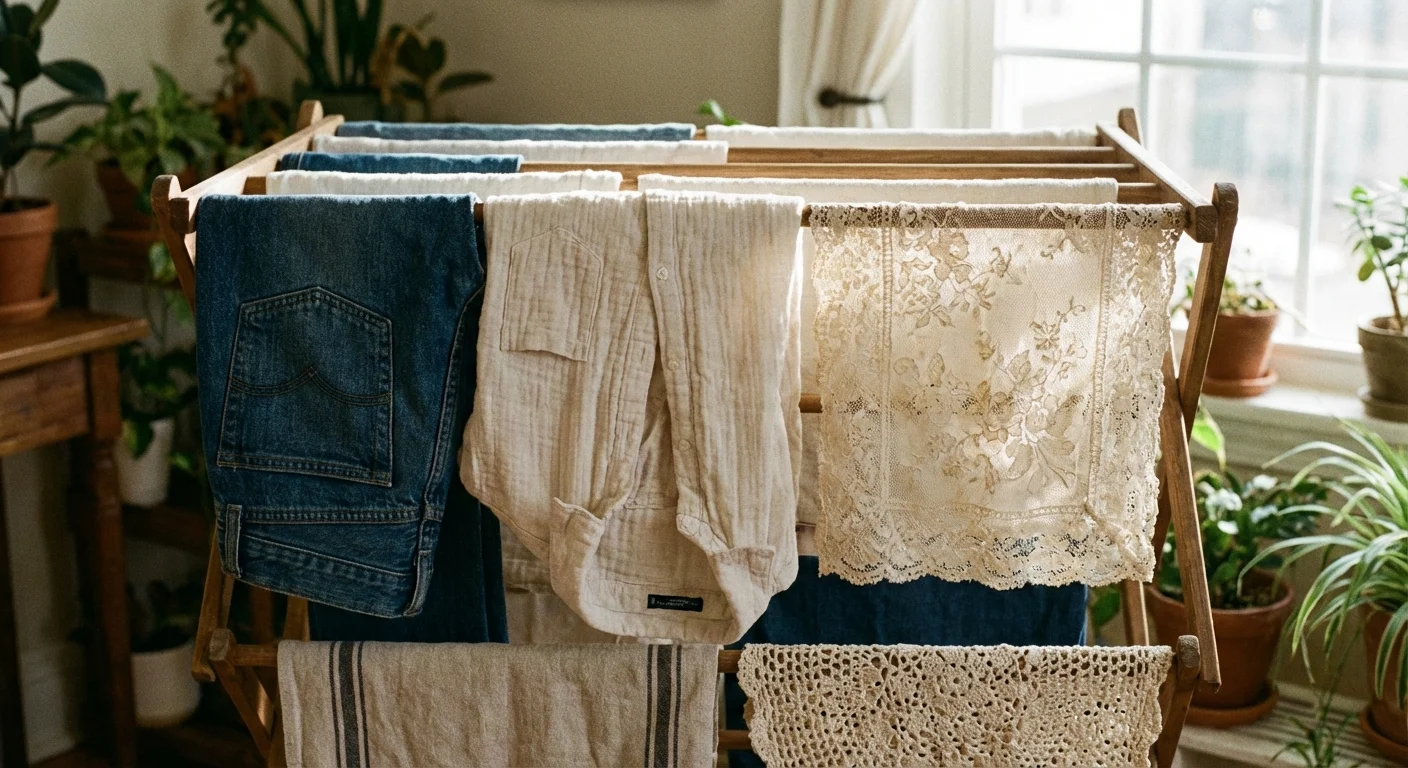
The biggest hurdle to air drying is often space and time. If you live in an apartment or a busy household, you might feel you don’t have the room to hang-dry every shirt. However, with the right equipment and strategy, air drying becomes a seamless part of your routine.
Invest in Quality Racks: Forget the flimsy wooden racks that collapse under the weight of wet jeans. Look for “gullwing” racks or tiered stainless steel towers. These offer significantly more linear hanging space in a small footprint. If you have a dedicated laundry room, consider installing a retractable wall-mounted rack or a ceiling-mounted “pulley” system that keeps clothes out of the way while they dry.
Maximize Airflow: Clothes don’t dry because of heat; they dry because of evaporation. If you place your drying rack in a cramped, windowless corner, your clothes will take forever to dry and may develop a musty smell. Position your rack near a window, a ceiling fan, or an HVAC vent. Even a small floor fan set on low can cut drying time in half by keeping the air moving.
The “Towels” Exception: One common complaint about air drying is that towels can feel “crunchy.” To avoid this, you can air-dry your towels until they are 90% dry, then toss them in the dryer on a “fluff” or “no heat” setting for five minutes. This softens the fibers without the high energy cost of a full heated cycle.
When to Call a Pro
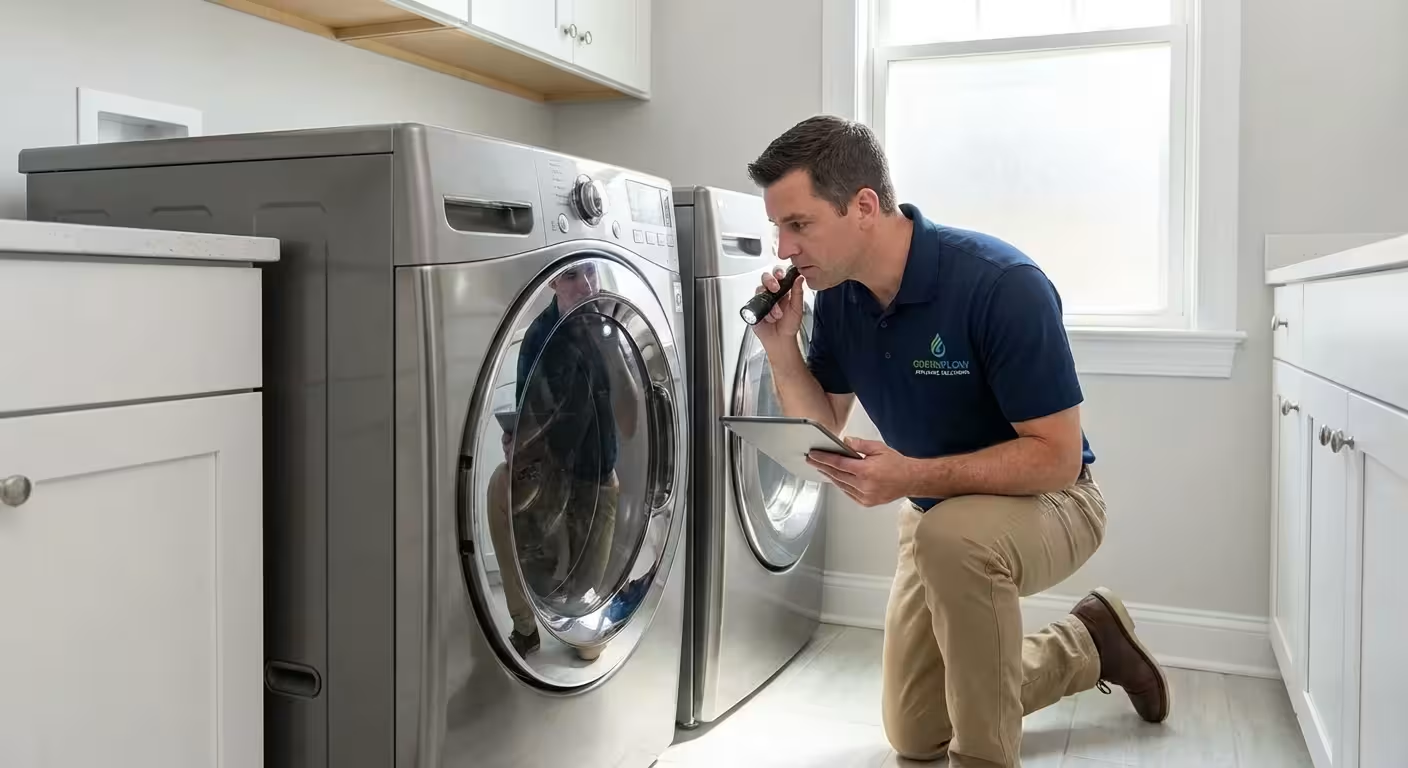
While most laundry efficiency comes down to your habits, sometimes mechanical issues hinder your savings. You should contact an appliance repair professional if you notice the following:
- Extended Drying Times: If your dryer takes more than one cycle to dry a load, your vent is likely clogged with lint. This is a major fire hazard and an energy drain. If cleaning the lint trap doesn’t fix it, call a pro to snake the entire vent line to the exterior of your house.
- Water Leaks: Even a small drip from your supply hoses can lead to massive water bills and structural damage. Replace rubber hoses with stainless steel braided hoses every five years to prevent catastrophic bursts.
- Excessive Vibration: If your machine “walks” across the floor, it is likely unlevel. This puts immense strain on the bearings and motor, leading to a premature (and expensive) replacement.

Practical Steps to Start Today
You don’t have to overhaul your entire life this afternoon. Start with these three steps to build momentum:
- Turn the Dial to Cold: For your next load of darks or casual wear, select the cold water setting. You will notice no difference in cleanliness, but you will immediately stop paying for that water to be heated.
- Buy One Sturdy Rack: Purchase a high-quality drying rack from a reputable brand (check Wirecutter for their latest durability tests). Place it in a high-airflow area of your home.
- Audit Your Detergent: Look at the “fill line” on your detergent cap. If you have been filling it to the top, try filling it to the lowest mark instead. Your clothes will be just as clean, and your bottle will last four times longer.
Efficiency in the laundry room is about intentionality. By removing the default reliance on heat—both in the wash and the dry—you protect your clothes, reduce your carbon footprint, and keep more of your hard-earned money in your bank account.
This article provides general money-saving guidance. Individual results vary based on location, household size, and spending patterns. Verify current prices before making purchasing decisions.
Last updated: February 2026. Prices change frequently—verify current costs before purchasing.









Leave a Reply