
You open your monthly utility bill and feel that familiar sting. Despite your best efforts to turn off the lights when you leave a room, the total amount due continues to climb. Most homeowners view their electric bill as a fixed tax on modern life—an inevitable expense that fluctuates only with the seasons. However, there is a hidden mechanism in many modern utility plans that allows you to seize control of these costs without necessarily using less power. It involves shifting when you use electricity rather than just how much you use.
This strategy centers on Time-of-Use (TOU) rates. Unlike traditional flat-rate plans where every kilowatt-hour costs the same regardless of the time of day, TOU plans vary the price based on demand. When the grid is stressed—typically during the late afternoon and early evening—prices skyrocket. When demand is low, prices plummet. By treating your home like a game where the goal is to move “energy-heavy missions” into low-cost windows, you can slash your monthly expenses by 10% to 30% without replacing a single appliance.
The Mechanics of Time-of-Use Rates
Utility companies face a massive challenge: they must generate enough electricity to meet the “peak” demand of the hottest summer afternoons. To do this, they often fire up “peaker plants,” which are expensive and less efficient to operate. To discourage usage during these times, utilities implement TOU structures. These plans generally break the day into three distinct categories:
- Peak Hours: The most expensive window, often occurring between 4:00 PM and 9:00 PM. This is when people return home, turn on air conditioners, cook dinner, and start laundry.
- Off-Peak Hours: Lower-cost periods, usually late at night, early morning, or all day on weekends and holidays.
- Super Off-Peak: Some utilities offer ultra-low rates during the middle of the night (e.g., midnight to 6:00 AM) or midday when solar production is at its highest.
The price difference is staggering. In some regions, peak electricity can cost three to four times more than off-peak power. If you run your dishwasher at 6:00 PM, you might pay $0.45 per kilowatt-hour; if you wait until 11:00 PM, that same load might cost only $0.12. Understanding this delta is the first step in gamifying your home’s energy profile.
“Beware of little expenses; a small leak will sink a great ship.” — Benjamin Franklin
Mapping Your Utility Schedule
Before you can win the game, you need to know the rules. Every utility has a different TOU schedule, and many change their windows between summer and winter. Log in to your utility provider’s online portal and look for your “Rate Plan” or “Tariff” details. If you are currently on a standard flat-rate plan, you may need to manually opt-in to a TOU plan to see these savings.
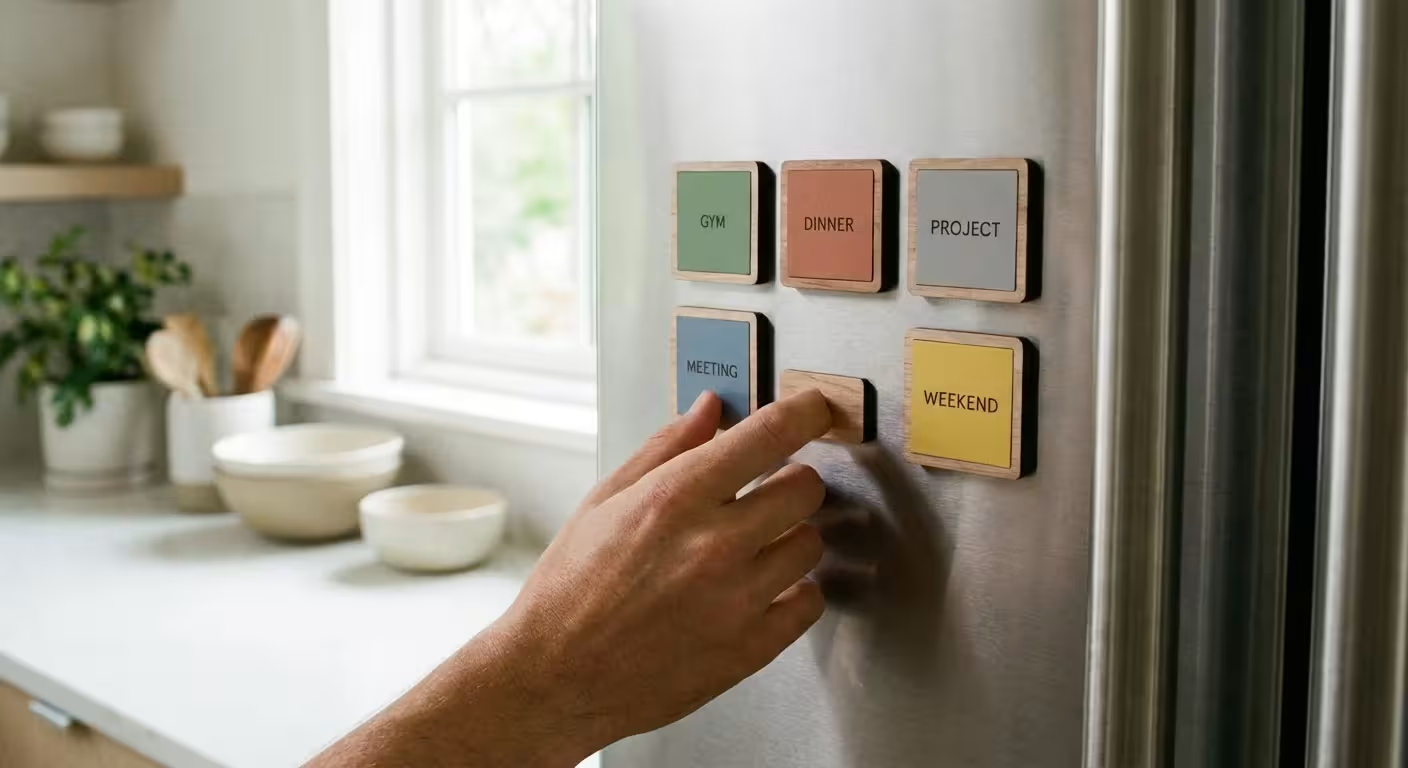
When reviewing your plan, pay attention to “demand charges” and “seasonal shifts.” For example, a utility in Arizona might have peak hours from 3:00 PM to 8:00 PM in the summer, but shift those hours in the winter when heating demand peaks in the morning. Use this information to create a simple “Cheat Sheet” for your household. Post it on the refrigerator so everyone knows when the “Red Zone” begins and ends.
You can find helpful tools and regional energy data through resources like Energy.gov Savings Tips to see how your local rates compare to national averages. Knowledge of your specific rate schedule is the foundation of this entire strategy.
Identifying the Heavy Hitters
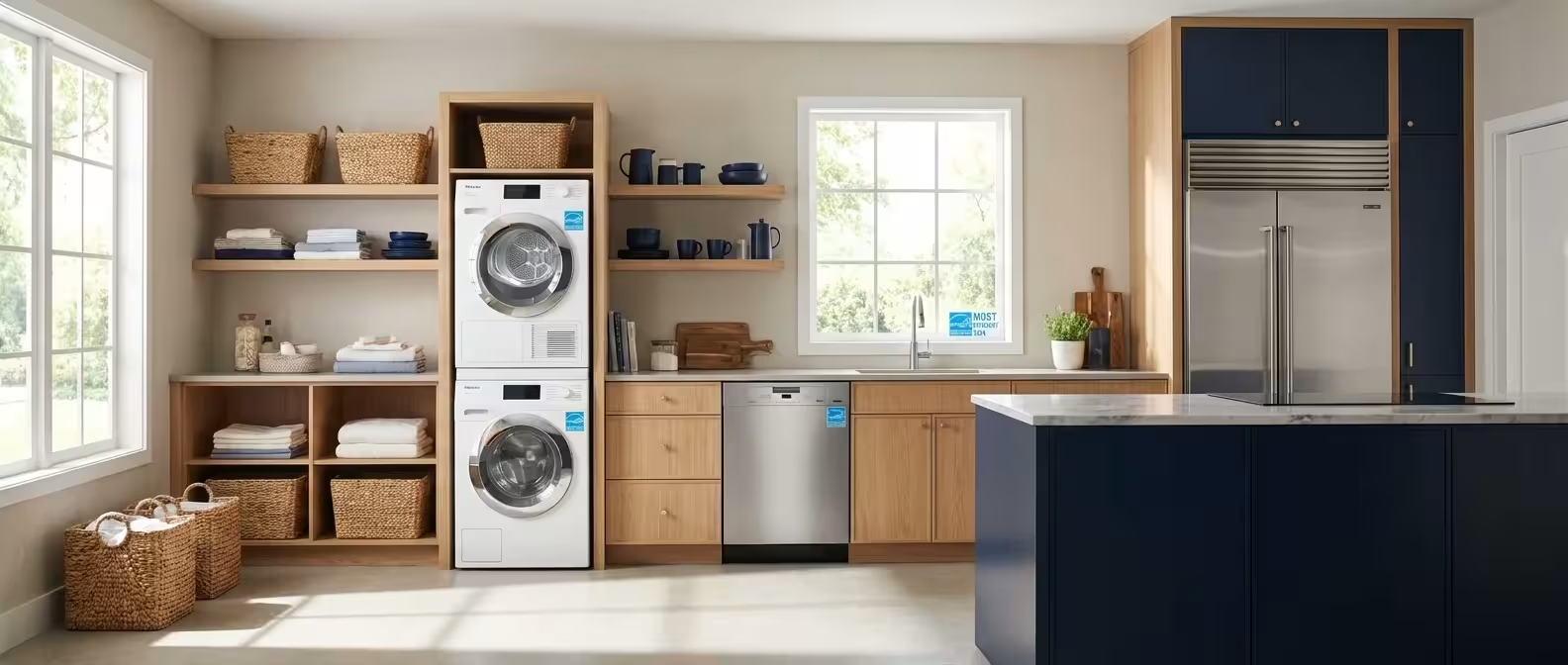
Not all appliances are created equal. To effectively gamify your bill, you must prioritize the machines that consume the most juice. Trying to save money by unplugging a phone charger during peak hours is like trying to empty a swimming pool with a teaspoon; it won’t move the needle. You need to focus on the “Heavy Hitters.”
| Appliance | Average Wattage | Priority Level | Primary Strategy |
|---|---|---|---|
| Central AC/Heat Pump | 3,000 – 5,000W | Critical | Pre-cooling and thermostat setbacks |
| Electric Water Heater | 4,500W | High | Timer installation or manual shifting |
| Clothes Dryer | 3,000W | High | Delayed starts; midnight cycles |
| Electric Oven/Range | 2,000 – 5,000W | Medium | Meal prepping; air fryer substitution |
| Dishwasher | 1,200 – 1,500W | Medium | “Delay Start” button usage |
| EV Charger (Level 2) | 7,000 – 10,000W | Critical | Scheduled charging via vehicle or app |
According to the ENERGY STAR program, heating and cooling typically account for nearly half of a home’s total energy use. This makes the HVAC system your primary target. Water heating usually comes in second, followed by large appliances and lighting. By shifting just the top three items—HVAC, Water Heater, and Dryer—away from peak hours, you address nearly 70% of your potential savings.
Level 1: The Kitchen and Laundry Room
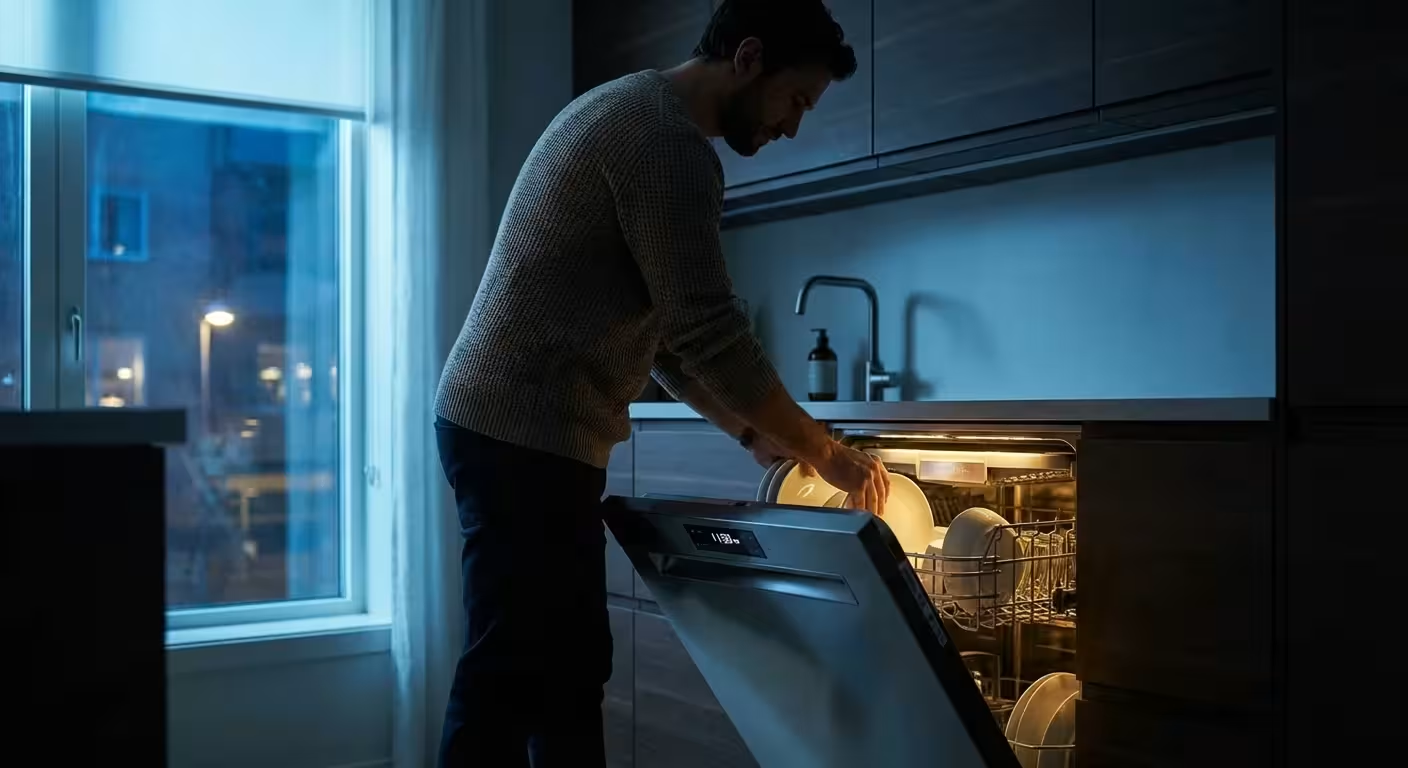
The easiest wins come from the appliances that already have built-in timers. Most modern dishwashers feature a “Delay Start” button. Instead of hitting “Start” immediately after dinner at 7:00 PM (peak time), set the delay for four hours. The machine will run while you sleep, using the cheapest possible electricity. This single habit can save you $50 to $100 per year depending on your local rates.
Laundry follows a similar logic. The dryer is one of the most energy-intensive appliances in the home because it must generate massive amounts of heat. If you have an electric dryer, running it during peak hours is a financial mistake. Shift your laundry schedule to Saturday mornings or late weeknights. If you find it difficult to remember, use a smart plug with a high-wattage rating for your washing machine—though never for the dryer, which requires a specialized 240V outlet—to prevent it from running during peak times.
Consider the “Cold Water Challenge.” Heating the water accounts for about 90% of the energy used by a washing machine. By switching to cold water cycles, you reduce the draw on your water heater, providing a double layer of savings during those off-peak hours.
Level 2: Mastering the Thermostat
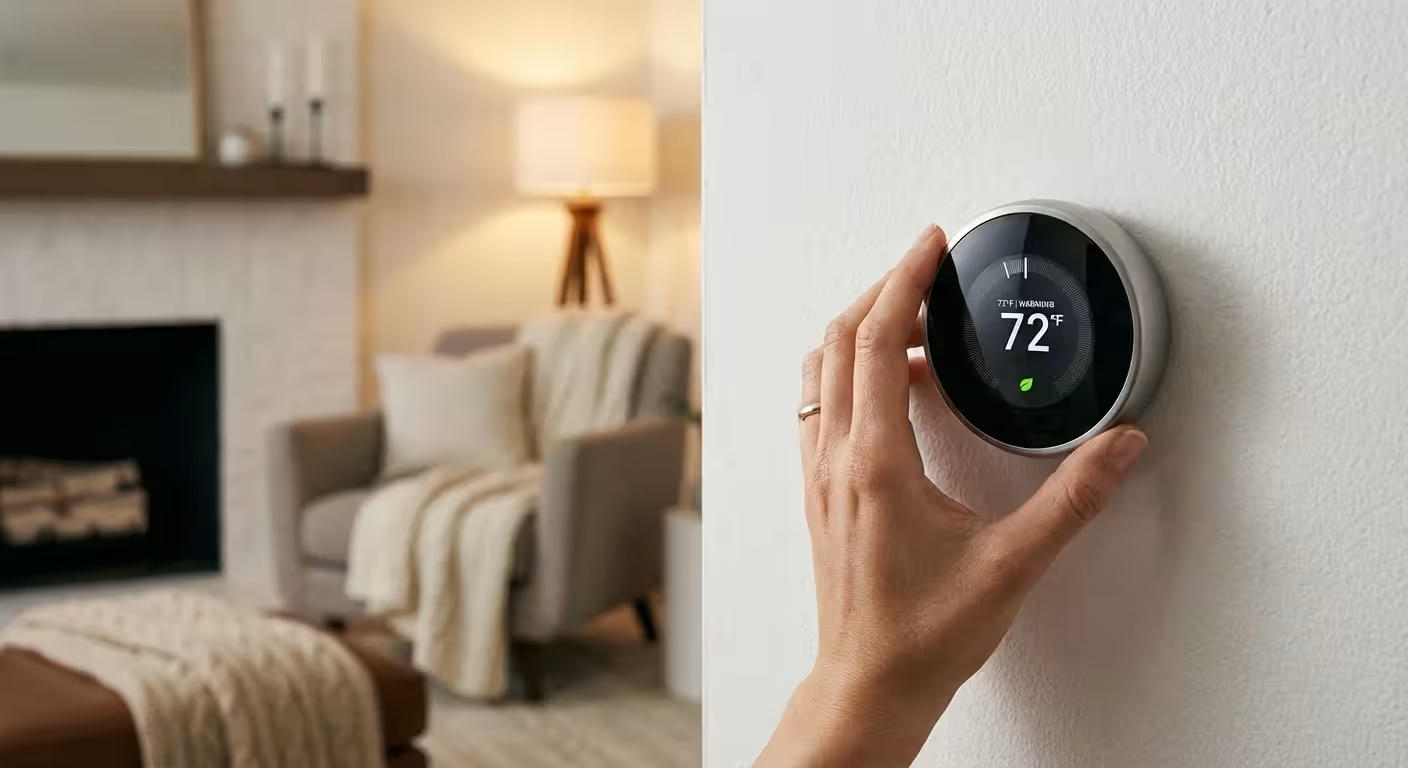
Your HVAC system is the “Final Boss” of the energy game. Shifting its usage requires a technique called “Pre-cooling” or “Pre-heating.” If your peak hours begin at 4:00 PM, you want to drive your home’s temperature down 3 or 4 degrees before that window starts.
Set your thermostat to 68°F (in summer) starting at 1:00 PM. By 4:00 PM, your home’s thermal mass—the walls, furniture, and floors—will be cold. When the peak window hits, turn your thermostat up to 78°F. Because the house is already “charged” with cold air, the AC unit may not need to kick on at all during the expensive five-hour window. This strategy effectively uses your home as a thermal battery.
Smart thermostats make this process effortless. Devices from brands like Nest or Ecobee allow you to program “TOU-aware” schedules. Some even sync directly with your utility provider to automate these shifts based on real-time pricing. If you are shopping for a new thermostat, look for the ENERGY STAR label to ensure the device meets high efficiency and automation standards.
Level 3: The Water Heater Strategy
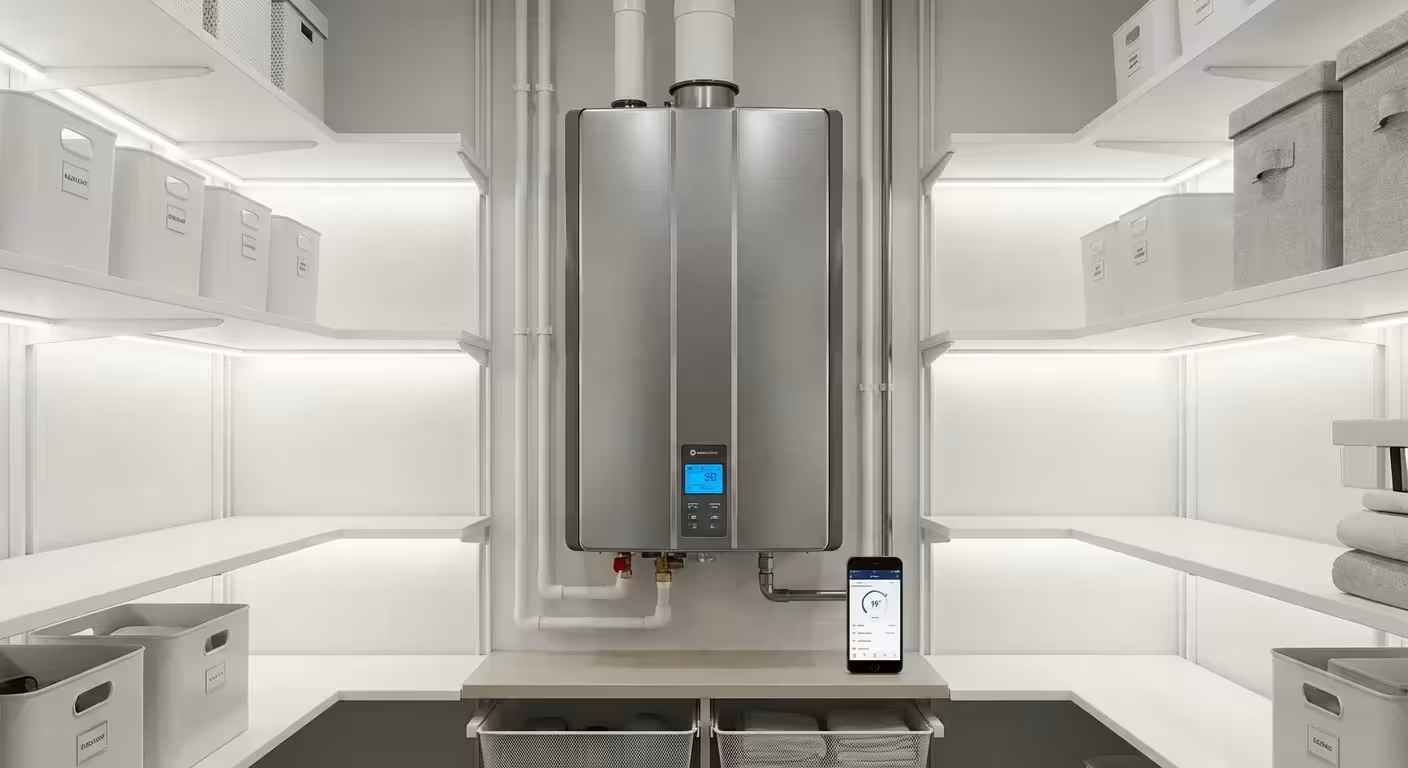
Electric water heaters are often the most overlooked energy hogs. They cycle on and off all day to keep a tank of water at a specific temperature, regardless of whether you are home or asleep. If your water heater fires up at 5:30 PM to recover from a load of dishes, you are paying peak prices for that hot water.
You have two options for gamifying the water heater. The first is a DIY approach: wrap your heater in an insulated “blanket” to reduce standby heat loss. The second is more advanced: install a heavy-duty timer or a smart water heater controller. These devices prevent the heating elements from engaging during peak hours. As long as you have a standard 40- or 50-gallon tank, you likely have enough “stored” hot water to get through the evening peak window for handwashing and quick tasks without the unit needing to reheat until the off-peak period begins at night.
Savings Killers: Common Mistakes to Avoid
While gamifying your appliances is rewarding, certain “traps” can reset your progress. Avoid these common pitfalls to keep your bill trending downward:
- The “Vampire” Mistake: Many people focus so hard on big appliances that they ignore “phantom loads.” Electronics like game consoles, cable boxes, and standby coffee makers can draw significant power 24/7. Use smart power strips to cut power to these devices entirely when not in use.
- Overriding the Schedule: It is tempting to “just do one load” of laundry at 5:00 PM. In a TOU plan, one peak-hour load can cost as much as four off-peak loads. Discipline is the currency of this game.
- Ignoring Maintenance: A dirty AC filter or a sediment-filled water heater makes the appliance work harder and stay on longer. If your AC runs for 40 minutes to do a job it should do in 20, you lose the TOU advantage.
- Incorrect Rate Comparison: Some TOU plans have a higher “base” rate than flat plans. If you are unable to shift at least 20-30% of your usage to off-peak hours, you might actually end up paying more. Track your data for one month before fully committing.

DIY vs. Professional Upgrades
Most TOU strategies are DIY-friendly. Programming a thermostat, using a dishwasher delay, and shifting laundry times cost zero dollars and require no tools. However, some gamification tactics require a professional touch.
DIY Scenarios:
- Installing a smart thermostat (if C-wire is present).
- Adding weatherstripping to doors to maintain “pre-cooled” air.
- Setting up smart plugs for lamps and small electronics.
- Adjusting appliance settings for “Eco-mode.”
Professional Scenarios:
- Water Heater Timers: Because this involves 240V wiring, hire a licensed electrician. Incorrect installation is a fire hazard.
- Whole-Home Energy Monitors: Devices like Sense or Emporia that clamp onto your main electrical panel should be installed by a pro. These provide real-time data on which appliances are “winning” or “losing” the game.
- EV Charger Installation: Ensuring your home’s electrical panel can handle the load of a fast charger—and setting up its internal scheduling—often requires professional sign-off for insurance purposes.
Advanced Tactics: The Smart Home Ecosystem
If you want to take your energy gamification to the “Pro Level,” consider integrating your appliances into a unified smart home hub. Platforms like Home Assistant or Apple HomeKit allow you to create complex automations. For example, you can program a “Peak Mode” scene that triggers at 4:00 PM: the blinds close to block out the sun, the thermostat rises to 78°F, the water heater turns off, and the smart lights dim by 20%.
Dimming lights might seem minor, but it contributes to a “low-energy” psychology for the household. When the environment changes, it serves as a visual reminder to avoid using the oven or dryer until the peak period ends. This behavioral nudge is often more effective than simply trying to remember the time.

Measuring Your Success
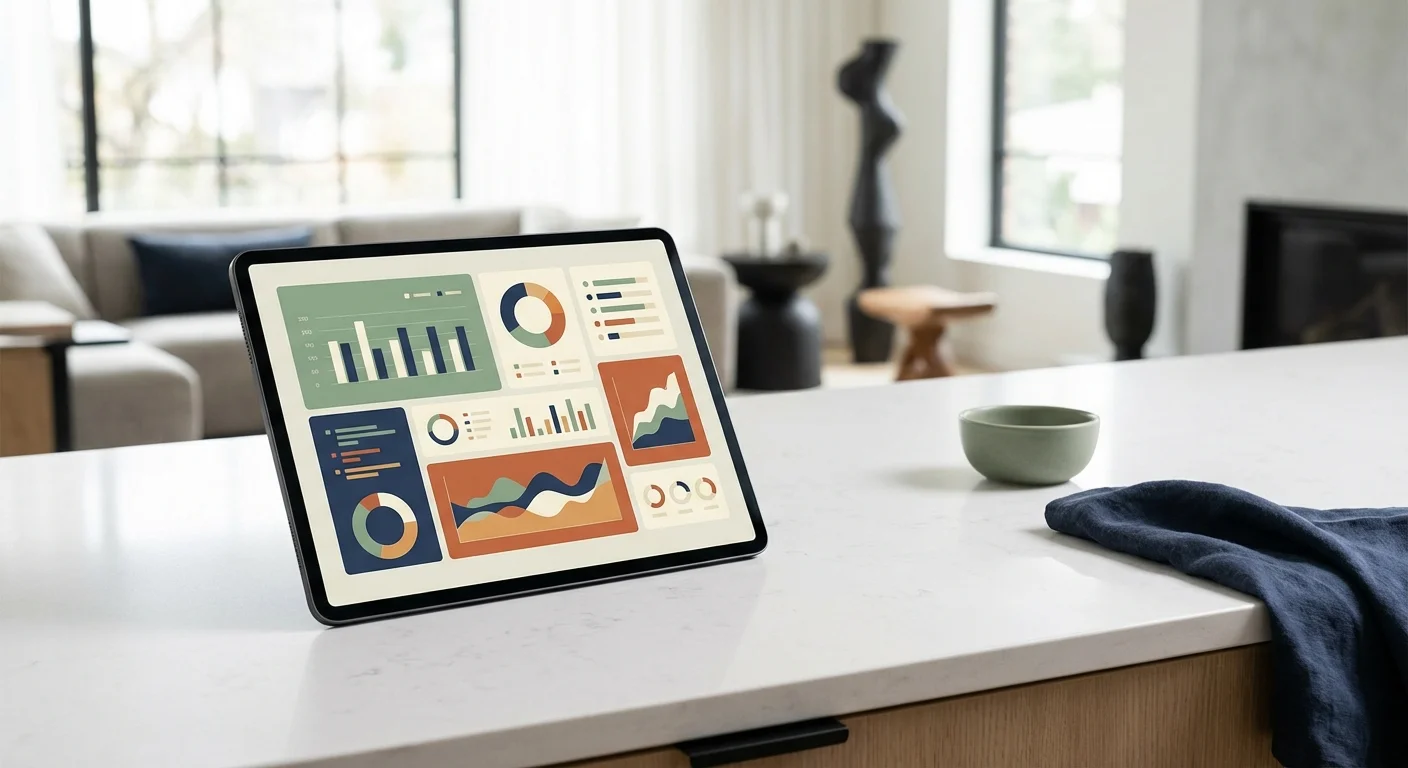
How do you know if you’re winning? Don’t just look at the final dollar amount, as weather fluctuations can mask your progress. Instead, look at the “kWh by Tier” section of your bill. Most TOU bills provide a bar graph showing how much energy you used during peak, off-peak, and super off-peak hours.
Aim for a “Shifting Goal.” In the first month, try to move 10% of your peak usage to off-peak. In the second month, aim for 20%. Many utility portals now offer “Green Button” data, which allows you to download your usage in 15-minute intervals. If you’re a spreadsheet enthusiast, you can map this data to see exactly which appliance spikes are occurring during expensive windows and adjust your “gameplay” accordingly.
Frequently Asked Questions
Is a Time-of-Use plan always cheaper?
Not necessarily. If you work from home and need to run the air conditioning or heavy equipment during the day, a flat-rate plan might be safer. TOU plans reward those who can be flexible. If your household cannot avoid using heavy appliances during the 4:00 PM to 9:00 PM window, you may see higher bills.
Will running appliances at night keep me awake?
Modern dishwashers are incredibly quiet, often operating at 40-45 decibels. However, older washing machines can be loud during the spin cycle. If noise is a concern, prioritize the “Super Off-Peak” morning hours (like 5:00 AM to 7:00 AM) rather than the middle of the night.
Do smart plugs save money on TOU plans?
Yes, by automating the “off” switch. You can set a smart plug to automatically kill power to a group of electronics during peak hours. This ensures you don’t have to manually go around the house every day at 4:00 PM.
What if my utility doesn’t offer TOU rates?
Even without TOU rates, reducing peak demand is helpful for the grid and can help you avoid entering “Tiered Pricing” brackets where the price per kWh increases once you pass a certain threshold of total monthly usage. The habits—like pre-cooling and cold-water washing—still save energy (and money) on any plan.
Winning the Energy Game
Lowering your electric bill doesn’t require sitting in the dark or suffering in a hot house. It requires a shift in perspective. By viewing your home’s energy consumption as a series of tasks that can be scheduled, you move from a passive consumer to an active manager. Start small: pick one appliance this week—the dishwasher is usually the easiest—and commit to only running it during off-peak hours. Once that habit sticks, move on to the thermostat and the laundry room.
The financial rewards of gamifying your appliances are cumulative. A few dollars saved each week on laundry and cooling adds up to hundreds of dollars over the course of a year. More importantly, these strategies empower you to take control of your household budget in an era of rising costs. Turn the “Peak Hour” challenge into a family goal and watch as your utility bill reflects your new, smarter habits.
Prices and availability mentioned reflect research at the time of writing and may vary by location and retailer. Your actual savings will depend on your specific situation and shopping habits.
Last updated: February 2026. Prices change frequently—verify current costs before purchasing.






Leave a Reply