
Your dog leaps for a frisbee and lands with a sharp yelp. Your cat suddenly stops eating and retreats under the bed for two days. In those frantic moments, your primary concern is their health; however, the secondary shock often arrives at the checkout counter of the emergency vet clinic. According to the Bureau of Labor Statistics, Americans spend billions of dollars annually on their pets, with veterinary services representing one of the fastest-growing categories of household expenditure. When a specialized surgery or an intensive care stay carries a price tag of $5,000 or $8,000, you face a gut-wrenching decision between your finances and your family member.
To mitigate this risk, you generally have two paths: paying a monthly premium for pet insurance or diligently building a dedicated pet savings account. Both strategies aim to protect your wallet, but they operate on fundamentally different financial principles. One offers a safety net built on collective risk—the other relies on your personal discipline and the luck of the draw. Understanding the math behind these options is the only way to ensure you aren’t overpaying for peace of mind.

The True Cost of a Wagging Tail
Before choosing a strategy, you must acknowledge the baseline costs. Vet bill savings aren’t just about the catastrophic “what-ifs”—they are about managing the predictable “whens.” A routine visit for a healthy dog might cost $200, but an emergency foreign body ingestion (your dog eating a sock) can easily scale to $3,500 depending on your location and the required imaging.
Data from NerdWallet indicates that the average pet insurance cost for a dog ranges from $30 to $70 per month for accident and illness coverage. For cats, the range is typically lower, between $15 and $30. If you opt for the savings route, you are essentially betting that your pet’s lifetime medical expenses will be less than the total sum of those premiums plus your out-of-pocket deductibles.

How Pet Insurance Really Works
Pet insurance functions similarly to your own health insurance but with a significant twist: most plans operate on a reimbursement model. You pay the vet bill upfront, submit the invoice, and the insurance company cuts you a check for a percentage of the covered costs. This means even with “great” insurance, you still need liquid cash or a credit card to cover the initial hit.
When evaluating a policy, you’ll encounter three main levers that dictate your monthly price:
- The Annual Deductible: This is the amount you pay out of pocket before the insurance kicks in. High deductibles lower your monthly premium but increase your immediate financial burden during a crisis.
- Reimbursement Level: Most plans offer 70%, 80%, or 90% reimbursement. Choosing 90% provides the most protection but significantly hikes the pet insurance cost over the life of the animal.
- Annual Limit: Some plans cap payouts at $5,000 or $10,000 per year, while others offer unlimited coverage.
The biggest hurdle with insurance is the “pre-existing condition” clause. Almost no provider covers a condition that existed before you signed up. If your pet has a history of allergies or a previous knee injury, insurance will not help with those specific issues moving forward. This is why many experts suggest that if you’re going to buy insurance, you must do it when the pet is a puppy or kitten.
“It’s not your salary that makes you rich, it’s your spending habits.” — Charles A. Jaffe

The Power of a Pet Savings Account
If you choose to self-insure by creating a pet savings account, you take full control of your money. Instead of sending $50 a month to an insurance company—money you will never see again if your pet stays healthy—you deposit it into a high-yield savings account (HYSA). This money earns interest and remains yours regardless of your pet’s health status.
The primary advantage here is flexibility. Pet insurance often excludes “wellness” items like dental cleanings, flea and tick prevention, or specialized prescription diets unless you pay for expensive “riders.” A savings fund can be used for anything: a $400 professional teeth cleaning, a $100 bottle of medicated shampoo, or a $2,000 emergency. There are no claims to file, no “adjusters” to argue with, and no waiting periods.
However, the risk is timing. If you start a savings account today and your dog needs a $4,000 surgery next month, you won’t have the funds. You are effectively “naked” until the balance grows large enough to handle a catastrophe.

The Mathematical Showdown: A Lifetime Comparison
Let’s look at a concrete example using a hypothetical dog named Max. We will compare the costs over a 12-year lifespan.
| Scenario Component | Pet Insurance Strategy | Pet Emergency Fund Strategy |
|---|---|---|
| Monthly Contribution | $50 premium (averaging increases over time) | $50 deposit into a HYSA (4% APY) |
| 12-Year Total Outlay | $7,200 in premiums | $7,200 in deposits |
| Account Value at Year 12 | $0 (Sunk cost) | ~$9,300 (Including compound interest) |
| Coverage for a $5,000 Surgery | You pay ~$1,250 (deductible + 10% co-pay) | You pay $5,000 from the fund |
| Residual Cash if Pet Stays Healthy | $0 | $9,300 |
On paper, the savings account looks superior because you keep the money if nothing goes wrong. However, the insurance strategy wins if Max has two major incidents—perhaps a torn ACL in year three and a cancer diagnosis in year eight. In that scenario, the insurance company might pay out $15,000 or more, far exceeding the $7,200 you paid in premiums. Insurance is essentially a hedge against the worst-case scenario.

Where Pet Owners Overspend
The biggest drain on your vet bill savings isn’t actually the emergencies; it’s the inefficient way people handle routine care. Many pet owners fall into these traps:
- Buying “Wellness” Riders: Insurance companies offer add-ons for vaccinations and annual exams. Frequently, the annual cost of the rider is nearly equal to the cost of the services. You are better off paying for these out of pocket and keeping your insurance strictly for catastrophic events.
- Ignoring Bilateral Exclusions: Read the fine print. Some policies state that if your pet injures a ligament in the left leg before the policy starts, they will never cover an injury to the right leg. This is a common way owners think they are protected when they aren’t.
- Waiting for the “Senior Years”: If you wait until your dog is seven years old to get insurance, the premiums will be sky-high, and many conditions will be deemed pre-existing. At that point, you are almost always better off putting that high premium into a savings account instead.
According to the Consumer Financial Protection Bureau (CFPB), understanding the terms of any financial product—including insurance—is the first step to avoiding predatory costs. Many “budget” pet plans have such low payout limits that they fail to cover the very emergencies you bought them for.
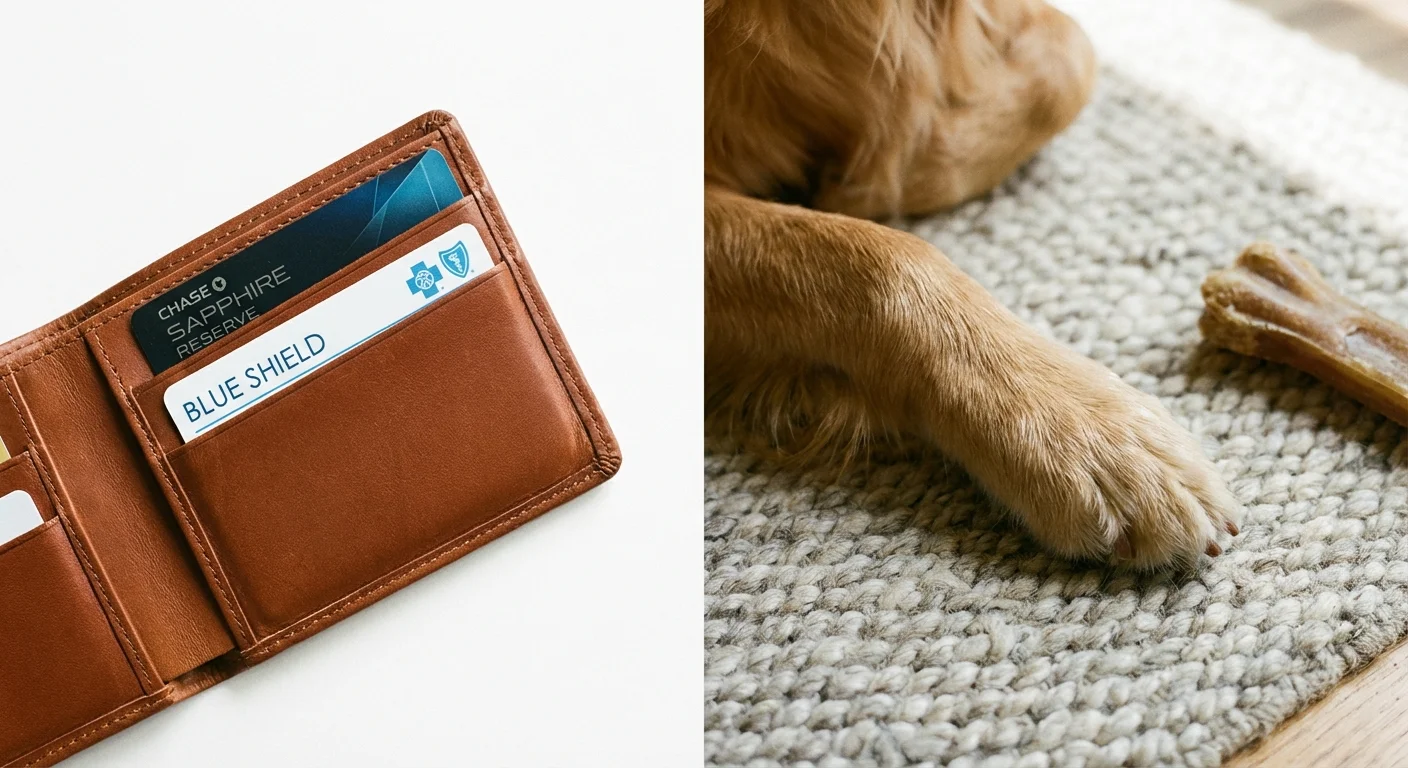
Hybrid Strategies for Maximum Savings
You don’t have to choose just one. Many savvy pet owners use a hybrid approach to balance risk and reward. This is often the most practical way to manage your finances while ensuring your pet’s safety.
Start by choosing a high-deductible insurance plan. By setting your deductible at $1,000, you significantly lower your monthly pet insurance cost. Then, use the money you saved on those premiums to fund a pet savings account until it reaches that $1,000 mark. Now, you are “self-insured” for the small stuff, but you have a safety net for the $10,000 nightmare scenario. This limits your monthly “sunk cost” while providing a buffer for the most common vet visits.

When to Consult Your Vet or a Financial Pro
Financial planning for a pet isn’t just about insurance; it’s about knowing your options before a crisis hits. You should talk to your veterinarian about breed-specific risks. If you own a Golden Retriever, the statistical likelihood of cancer is higher; if you own a Bulldog, respiratory and joint issues are common. This medical insight should dictate your financial strategy.
If you find yourself in an emergency without insurance or a fund, you may need to look at specialized financial tools. The USA.gov Consumer Resources can guide you toward understanding your rights when dealing with medical debt. Many clinics offer third-party financing like CareCredit, but be cautious—these often have high interest rates after an initial promotional period. Use them only as a last resort and have a plan to pay them off aggressively.
FAQ
Is pet insurance a waste of money if my pet never gets sick?
Think of it like homeowners insurance. You don’t “waste” money on fire insurance just because your house didn’t burn down; you paid for the transfer of risk. If you cannot afford a surprise $5,000 bill today, insurance is a necessary expense, not a waste.
Can I use a regular HSA for pet expenses?
No. Standard Health Savings Accounts (HSAs) and Flexible Spending Accounts (FSAs) are strictly for human medical expenses. Using them for vet bills can trigger tax penalties. You should use a standard high-yield savings account for your pet fund.
Does pet insurance cover dental cleanings?
Most standard policies do not. Dental care is typically considered “maintenance” or “wellness.” However, if your pet fractures a tooth in an accident, that specific repair might be covered under an accident-and-illness plan.
What is the average increase for insurance premiums?
You should expect your premiums to rise by 5% to 10% every year as your pet ages. The risk of illness increases with age, and insurance companies pass that cost on to you. Factor these increases into your long-term budget.
The Final Verdict
The decision between insurance and a savings fund boils down to your personal cash flow. If you have $5,000 sitting in an emergency fund right now that you could spend without upending your life, “self-insuring” through a pet savings account will likely save you thousands of dollars over your pet’s lifetime. You keep the interest, you keep the principal, and you aren’t fighting with an insurance company over claims.
On the other hand, if a $2,000 vet bill would force you to take out a high-interest loan or make a heartbreaking decision about your pet’s life, then pet insurance cost is a small price to pay for security. The peace of mind that comes from knowing you can always say “yes” to a life-saving treatment is invaluable.
Start today by looking at your last three vet bills. Use those numbers to project your annual spending. If you choose the savings route, set up an automatic transfer to a dedicated account this afternoon. If you choose insurance, get three quotes and compare the “exclusions” section line-by-line. Your future self—and your pet—will thank you for the foresight.
This article provides general money-saving guidance. Individual results vary based on location, household size, and spending patterns. Verify current prices before making purchasing decisions.
Last updated: February 2026. Prices change frequently—verify current costs before purchasing.









Leave a Reply