A tradesperson setting up a first home faces a cash squeeze between daily job-site gear and kitchen appliances used once a week. Paying extra for every durable upgrade drains cash reserves, while buying cheap on high-wear basics triggers repeat bills.
Across 10 items priced in October 2026, durable picks save $0 to $840 over 20 years, or about $2,220 total ($111 a year). Motorized appliances with bag or container fees shrink to $0 to $60 saved unless heavy daily use kills cheap motors.
Work-shift and yard gear where cheap construction triggers repeat fees
1. Work boots: glued soles that force an annual replacement penalty
Failure and cause: Budget boots glue the sole to the upper, so worn tread ends the boot after one year on concrete. Buying 20 pairs at $110 totals $2,200 over 20 years, losing more than a third of all 10-item savings.
Fix: Buy Goodyear-welted boots at $350, where stitched soles let a cobbler rebuild them without touching the leather upper. Two pairs plus four resoles at Red Wing’s $165 factory repair rate total $1,360 over 20 years, saving $840.
Heel replacements cost $60 at the factory, and local cobblers often charge less to widen your savings past the 3.2-year break-even point. Choose full-grain or top-grain leather instead of lower-grade genuine leather so the uppers survive conditioning.
2. Work socks: worn heels that create a $12-a-year replacement drain
Failure and cause: Thin cotton or basic socks rub through at the heel inside heavy work boots, turning a routine chore into a $12-a-year replacement penalty. Across 20 years, replacing worn socks costs $240 with nothing lasting to show for it.
Fix: Buy six warrantied wool pairs at $25 each ($150 total) to cut your 20-year sock bill by $90. Darn Tough’s lifetime warranty covers socks worn through in normal use, though check who covers shipping before mailing a claim.
3. Winter coats: snapped zippers and outlet-only shells that fail outdoors
Failure and cause: Seven $100 coats over 20 years ($700 total) happen when cheap zippers jam or thin shells rip on outdoor shifts. Labels like commercial grade carry no consumer standard, and outlet versions often use weaker materials.
Fix: Spend $350 on one repairable coat and budget $100 for repairs over 20 years ($450 total, saving $250). Audit outlet tags before buying using our guide to made-for-outlet quality traps, and confirm local tailors can replace zippers and snaps.
4. Garden spades: stamped steel that bends in rocky yard soil
Failure and cause: Cheap $20 stamped spades flex or snap at the neck when prying out roots and rocks around a first yard. Buying five replacements over 20 years costs $100 while stalling weekend outdoor work.
Fix: Wait until a cheap spade fails, then buy one forged steel spade at $60 and keep it all 20 years. You avoid repeat hardware-store runs and save $40 without paying upfront before the old tool wears out.
First-home furniture and cookware where moving damage and rust mislead buyers
5. Dining tables: flat-pack particle board that swells and fails during a move
Failure and cause: Particle board and MDF swell when wet, chip along edges, and pull out at cam-lock fasteners when you move apartments or houses. Replacing three flat-pack tables at $250 over 20 years totals $750.
Fix: Buy a used solid oak, maple, or walnut table with dovetail or mortise-and-tenon joints for $300 plus a $60 refinish ($360 total, saving $390). Compare estate sales and thrift stores for furniture, where heavy solid-wood pieces often sell below flat-pack prices.
6. Office chairs: peeling vinyl and non-transferable commercial warranties
Failure and cause: A $150 gaming-style chair for home invoicing uses foam that compresses and bonded vinyl that peels, costing $1,050 across seven chairs in 20 years. Used commercial chairs fix the build, yet manufacturer warranties often cover only the original buyer.
Fix: Buy two used commercial task chairs from an office liquidator at $400 each ($800 total, saving $250; liquidators typically charge $300 to $500). Before paying, ask whether the warranty transfers and confirm casters, arms, and gas cylinders sell separately.
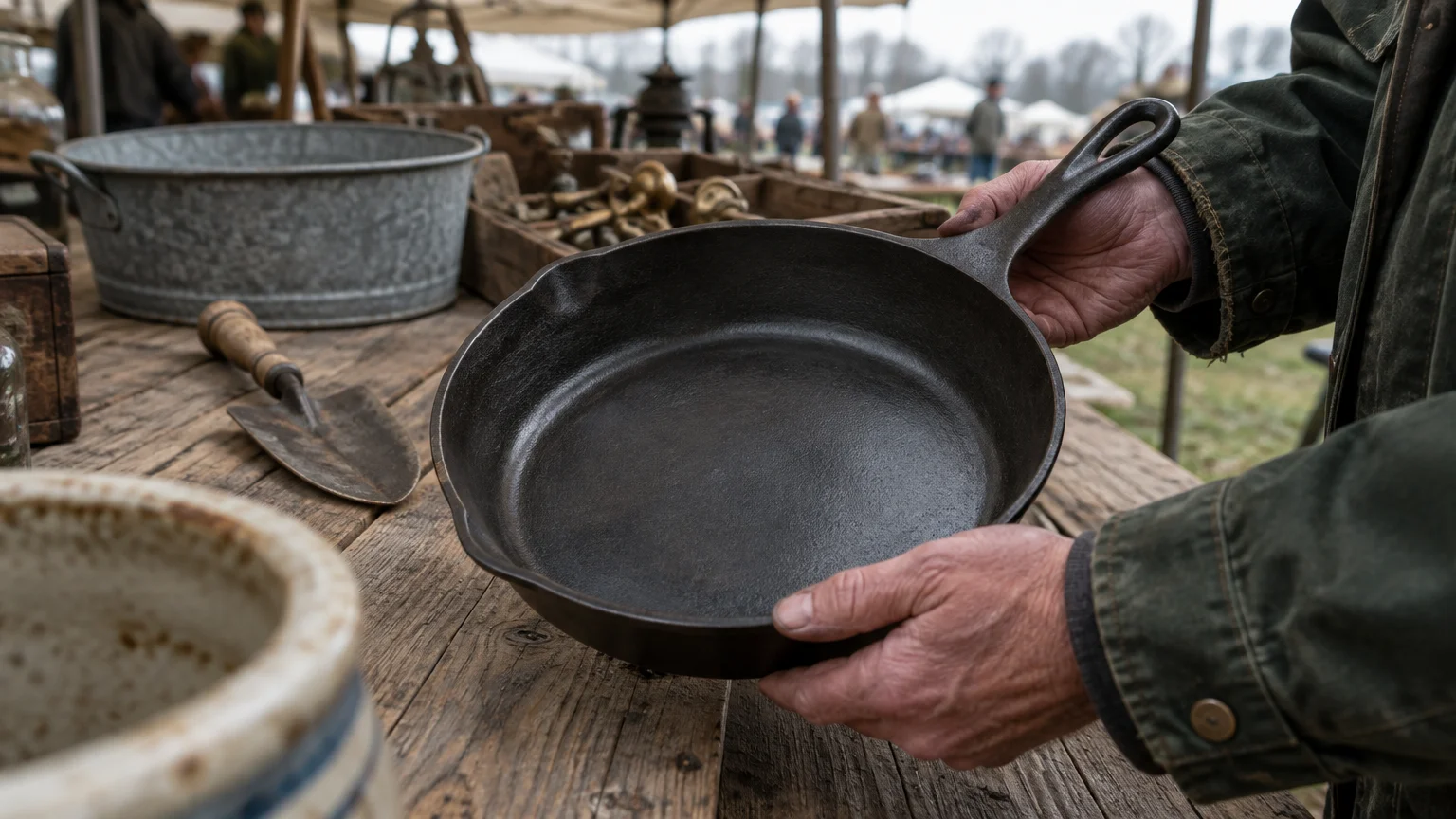
7. Skillets: flaking nonstick coatings and misread secondhand rust
Failure and cause: Daily home cooking ruins a $30 nonstick coating every three years, costing $210 across seven pans over 20 years. At the same time, buyers pass up cheap secondhand cast iron because orange rust looks permanent.

Fix: Buy one $35 cast iron skillet ($25 to $50 new) for a 3.5-year break-even and $175 saved over 20 years. Lodge backs its cast iron with a limited lifetime warranty, though read its care rules before relying on coverage.
Surface rust requires re-seasoning rather than throwing the pan away. Mississippi State University Extension’s cast iron guide walks through cleaning and rust removal so estate-sale skillets restore in one afternoon.
Motorized kitchen and floor appliances where consumables leave $0 to $60
8. Vacuums: $25-a-year bag fees and an 11.7-year break-even trap
Failure and cause: A $700 commercial vacuum ($600 to $900 typical) takes 11.7 years to break even against $180 units replaced every three years ($1,260 over 20 years). Bag costs of $25 a year raise the 20-year bill to $1,200, leaving $60 saved.
Fix: Buy the $700 machine only if tracked-in work dirt burns out budget vacuums faster than every three years, using Sebo’s warranty of up to 10 years on motors and 7 years on labor. Check our repair-or-replace guide before replacing any broken unit.
9. Stand mixers: buying commercial metal gears for occasional baking
Failure and cause: A $400 metal-gear mixer plus $75 in servicing costs $475 over 20 years, beating five $120 budget mixers ($600) by $125. Households baking occasional cookies never strip plastic gears, locking $400 into an appliance sitting idle.
Fix: Spend $400 only if you are baking bread at home weekly with stiff dough that strains budget motors. Otherwise, look for a used older mixer at $50 to $150, which flips the 20-year cost without draining first-home savings.
10. Blenders: one $150 replacement container that leaves $0 saved
Failure and cause: A $450 high-performance blender ($400 to $550 typical) plus one $150 replacement container totals $600 over 20 years, matching 10 cheap $60 blenders for $0 saved. For a weekly smoothie, a $50 blender already lasts long enough.
Fix: Save $450 for a high-performance blender only if daily frozen fruit, nuts, or greens burn out cheap motors every two years. Avoid models with touchscreens or apps that lose software support before mechanical parts wear out.
Break-even thresholds and cash-timing traps that erase durable savings
Even strong durable gear loses money when a household buys too early, buys before cash is ready, or misjudges how often an item gets used. Divide the durable price by the cheap option’s yearly cost to find your break-even year.
- Boots: $350 divided by ($110 divided by 1 year) equals 3.2 years before resoles.
- Skillet: $35 divided by ($30 divided by 3 years) equals 3.5 years.
- Vacuum: $700 divided by ($180 divided by 3 years) equals 11.7 years before bags.
Under five years signals a strong buy for daily work gear, while anything over 10 years leaves little margin once bags or containers add up. Skip durable upgrades on kids’ gear, lost pocket items, status watches, or untested hobbies.
The payday cash-crunch failure: When $110 boots split mid-month before payday, thin cash reserves force another cheap pair instead of a $350 welted upgrade. Move a small amount monthly into a separate sinking-fund account so replacement cash waits ready.
The early-upgrade penalty: Tossing a working pan, coat, or blender wastes its remaining lifespan and adds to the discarded furniture and appliances tracked in EPA’s durable goods data. Upgrade only after the cheap item actually fails.
Warranty exclusions and label traps that turn repairs into out-of-pocket bills
Households often count on lifetime guarantees and heavy-duty labels to protect a $300 to $700 purchase, only to get denied at claim time. Four specific fine-print failures turn projected 20-year savings into surprise repair bills.
- Limited lifetime exclusions: Limited warranties often cover manufacturing defects rather than daily job-site wear. Check return shipping rules too, since shipping heavy appliances or tools can rival the repair bill.
- Non-transferable used coverage: Manufacturer warranties frequently cover only the original buyer, leaving estate-sale and liquidator purchases without protection unless transfer terms exist in writing.
- Missing replacement parts: Confirm before buying that makers sell motors, gaskets, gears, casters, or soles separately, or that local shops service that brand.
- Misleading quality labels: Tags like professional series, commercial grade, and military grade have no consumer standard, and designer status pricing adds cost without adding years of use.