
You pull up to the pump, watch the numbers climb past $40, $50, or $60, and feel that familiar tightening in your chest. For most Americans, gasoline is a non-negotiable expense. You have to get to work, drop the kids at school, and run errands that keep your household moving. While you cannot control global oil markets or the price set by the station down the street, you possess far more influence over your total fuel spend than you might realize.
The average American driver travels about 13,500 miles per year. If your vehicle gets 25 miles per gallon, you consume 540 gallons of fuel annually. At a price of $3.50 per gallon, that is nearly $1,900 leaving your wallet every year. Shaving just $500 off that total does not require you to sell your SUV or start riding a bike to work. Instead, it requires a shift in how you purchase fuel, how you maintain your vehicle, and how you leverage existing reward ecosystems.
| Strategy | Estimated Annual Saving | Effort Level |
|---|---|---|
| Using Fuel Rewards & Apps | $150 – $200 | Low |
| Optimizing Tire Pressure & Maintenance | $60 – $100 | Medium |
| Switching from Premium to Regular | $150 – $300 | Low |
| Strategic Filling (Time & Location) | $50 – $80 | Low |

The Psychology of the “Closest Station” Habit
Most people treat gas stations like emergency rooms—they only visit when the light comes on and they need help immediately. This “reactive” fueling leads to paying a convenience premium. Data from GasBuddy consistently shows that gas prices can vary by as much as $0.20 to $0.40 per gallon within the same zip code. By simply driving three blocks further or planning your fill-up near your office instead of your home, you could save $2 to $5 every single time you fill the tank.
Stop viewing the gas station as a destination and start viewing it as a commodity purchase. You would likely compare prices if you were buying a new television or a set of kitchen appliances; gasoline deserves the same scrutiny. Utilize tools like the AAA Gas Prices tracker or the GasBuddy app to identify “cheap gas near me” before the low-fuel warning forces your hand.
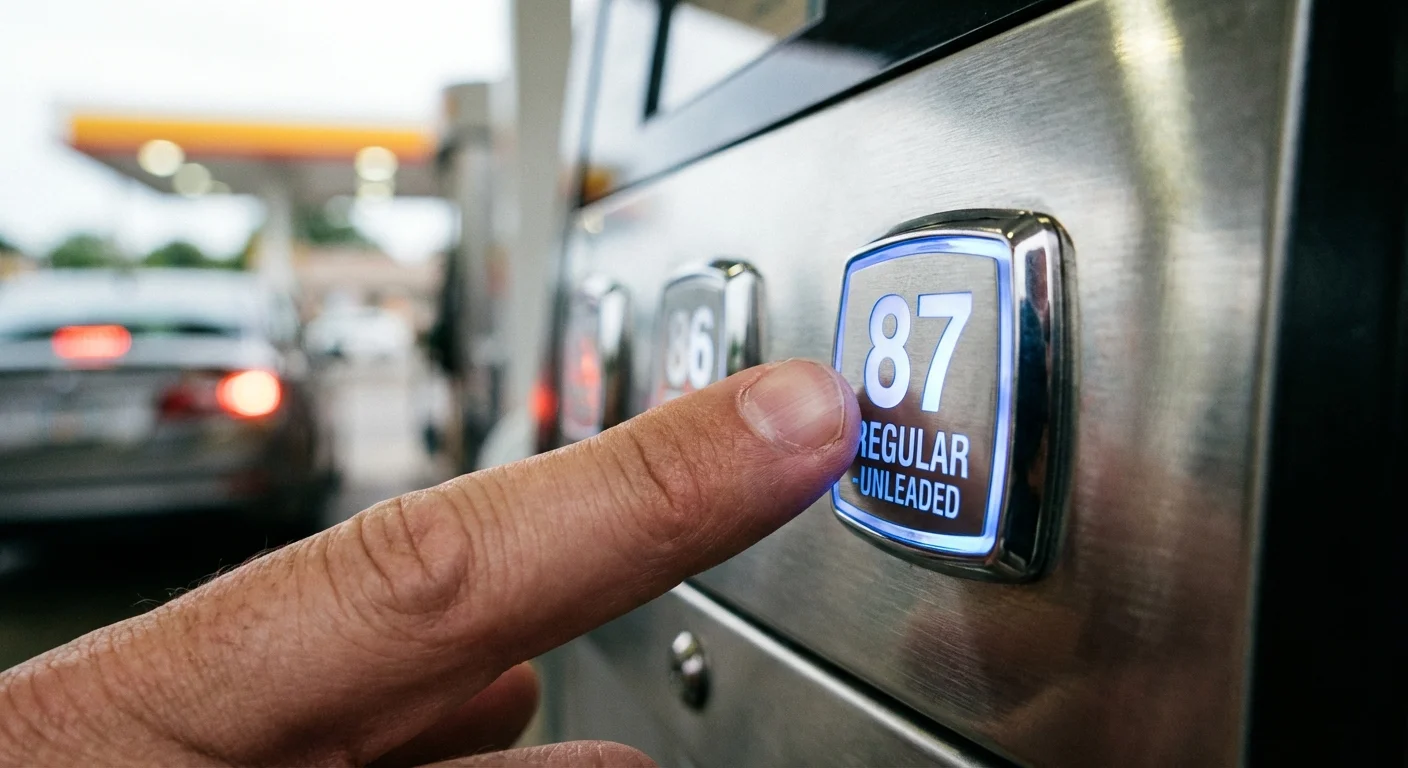
Stop Paying for Octane You Do Not Need
One of the most expensive mistakes you can make at the pump is choosing “Premium” (91 or 93 octane) when your car only requires “Regular” (87 octane). There is a persistent myth that premium fuel is “cleaner” or will make a standard engine last longer. This is objectively false for the vast majority of vehicles on the road today.
Octane is a measure of a fuel’s resistance to “knocking” or “pinging” during combustion. High-performance engines with high compression ratios require high octane to prevent premature ignition. However, if your owner’s manual says “Regular Fuel Recommended,” putting premium in the tank provides zero benefit to performance, fuel economy, or engine longevity. According to research from AAA, Americans waste over $2.1 billion annually on premium fuel for vehicles that don’t need it. If you fill a 15-gallon tank once a week and switch from premium to regular, you could save $300 to $500 per year based on current price spreads.
“It’s not your salary that makes you rich, it’s your spending habits.” — Charles A. Jaffe
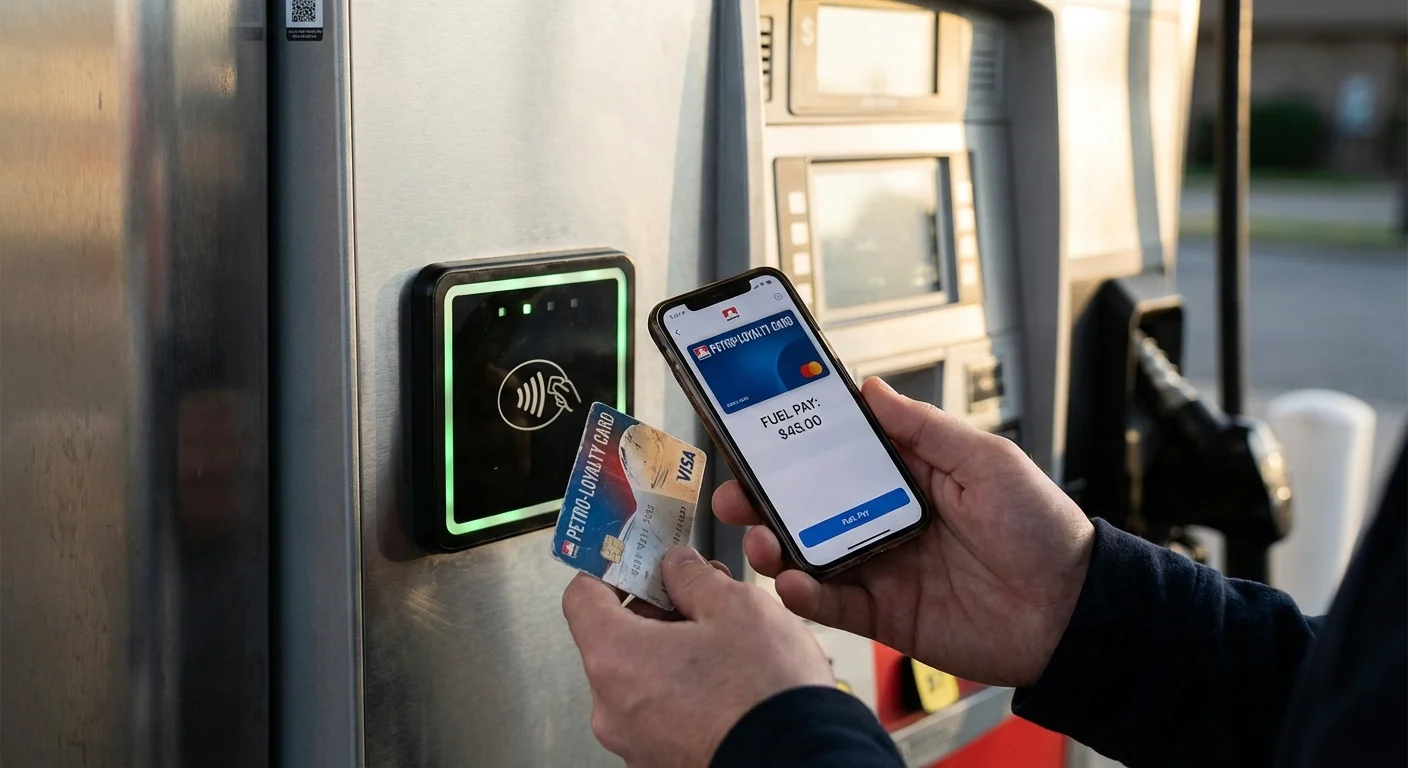
The Art of the Fuel Reward Stack
To reach that $500 savings goal, you must learn to “stack” discounts. This means using a loyalty program, a cash-back app, and a specific credit card simultaneously. If you use each of these tools in isolation, the savings are modest. Combined, they are transformative.
- Store Loyalty Programs: Major chains like Shell (Fuel Rewards), Exxon Mobil (Rewards+), and BP (BPme) offer immediate discounts of at least $0.05 per gallon.
- Grocery Store Points: Programs at Kroger, Safeway, and Publix allow you to earn fuel points for every dollar spent on groceries. Often, spending $100 on groceries nets you $0.10 off per gallon. Some shoppers strategically buy gift cards for other retailers (like Amazon or Home Depot) at the grocery store during “4x points” events to earn massive fuel discounts.
- Cash-Back Apps: Apps like Upside partner with local stations to offer “check-in” rebates. You claim an offer in the app, pay with your linked card, and receive anywhere from $0.10 to $0.25 per gallon back in your account.
- High-Yield Credit Cards: Use a card that offers 3% to 5% cash back specifically on gas station purchases. When gas is $3.50, a 5% return is equivalent to another $0.17 per gallon in savings.
By stacking these, it is entirely possible to lower your effective cost by $0.40 to $0.60 per gallon every single time you fuel up. For the average driver consuming 540 gallons a year, a $0.50 per gallon total reduction equals $270 in pure savings.

The Maintenance Math: Efficiency via Friction Reduction
If your vehicle is poorly maintained, it is essentially “leaking” money out of the exhaust pipe. You don’t need to be a mechanic to improve your car’s efficiency; you just need to manage the basics. Friction and resistance are the primary enemies of fuel economy.
Under-inflated tires are a silent budget killer. According to Energy.gov, you can improve your gas mileage by up to 3% by keeping your tires inflated to the proper pressure. For every 1 PSI (pound per square inch) drop in pressure of all four tires, your fuel economy lowers by about 0.2%. Check your door jamb for the recommended PSI and check it monthly. This simple habit can save you roughly $50 a year in fuel and significantly extend the life of your tires, saving you even more on replacement costs.
Motor oil matters more than most drivers realize. Using the manufacturer’s recommended grade of motor oil can improve gas mileage by 1% to 2%. Look for the “Energy Conserving” API performance symbol to ensure the oil contains friction-reducing additives. Furthermore, a clogged air filter on an older vehicle (specifically those with carbureted engines) can hurt mileage, though modern fuel-injected engines are better at compensating. Still, a clean filter protects the engine and ensures optimal combustion.
When It’s Worth Paying: The Top Tier Distinction
While you should avoid unnecessary octane, you should not necessarily buy the “cheapest” gas from a dilapidated station with rusting pumps. There is a meaningful difference in detergent additives. “Top Tier” gasoline is a performance standard developed by major automakers (including BMW, GM, Honda, Toyota, and VW). These fuels contain higher concentrations of detergents that prevent carbon buildup on fuel injectors and intake valves.
Using a non-Top Tier fuel for thousands of miles can lead to “engine gunk” that reduces fuel economy and causes rough idling. Paying an extra penny or two per gallon for a Top Tier brand (which includes many “discount” brands like Costco and Arco) is a smart investment in long-term efficiency. You can find a full list of licensed brands at the Top Tier Gas website.

Don’t Fall For These Fuel Myths
The internet is full of “hacks” that supposedly save gas but actually provide zero benefit or, worse, cost you more in the long run. Avoid these common traps:
- Filling up in the morning: The theory is that fuel is denser when it is cold, so you get “more” for your money. In reality, gas is stored in underground tanks that stay at a very consistent temperature. Any expansion or contraction at the pump is so minuscule that it wouldn’t buy you a single extra mile over a year.
- The “Magic” fuel additives: You will see bottles in auto parts stores claiming to increase MPG by 20%. The Federal Trade Commission (FTC) has warned consumers for years that most of these products are “snake oil” and do not work. Your fuel already contains the necessary detergents.
- Drafting behind semi-trucks: While it reduces wind resistance, it is incredibly dangerous and increases the likelihood of stone chips in your windshield or a major collision. The potential $0.05 in saved gas is not worth a $500 insurance deductible.
- Warming up the engine: Modern engines do not need to “warm up” for more than 30 seconds. Idling is the most inefficient way to use a car; you are getting 0.0 miles per gallon. Simply drive gently for the first mile or two.
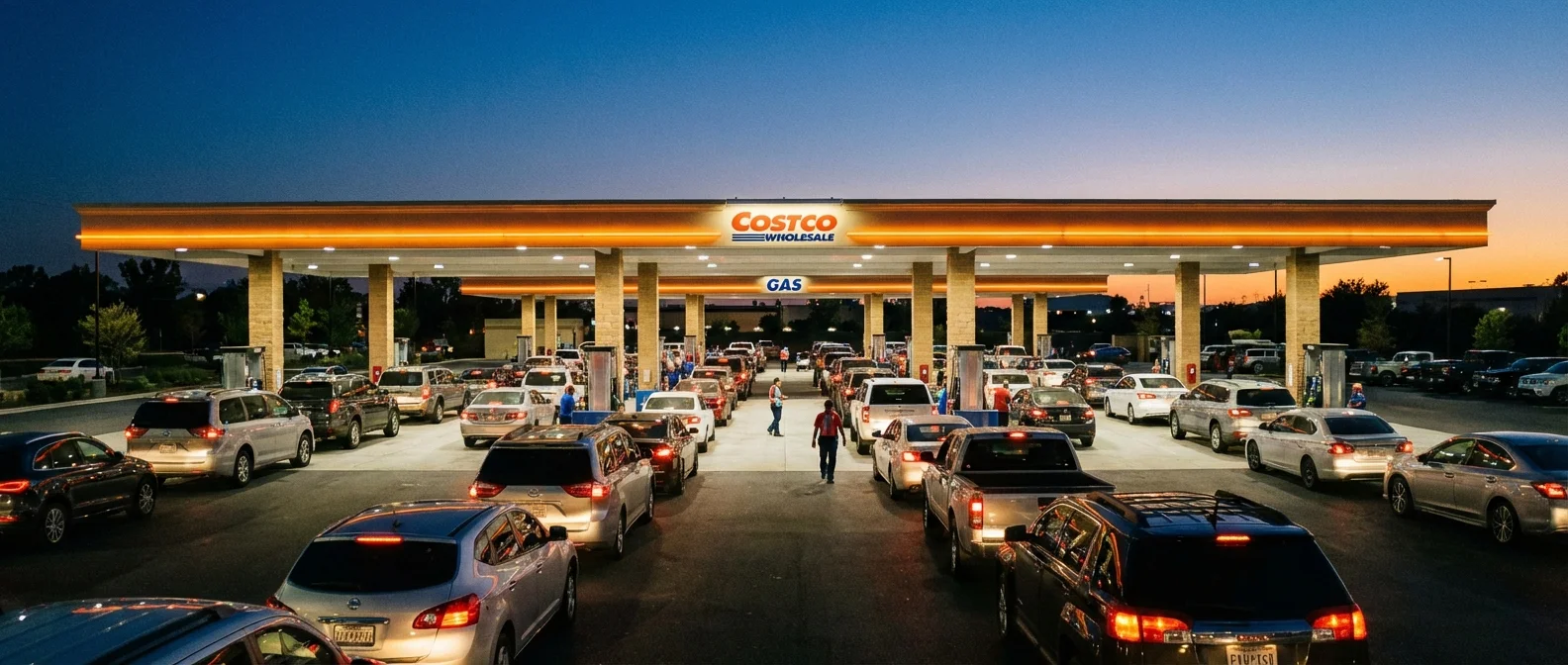
The Warehouse Club Calculation
Many drivers swear by Costco, Sam’s Club, or BJ’s for their fuel. Usually, these stations offer the lowest prices in town—often $0.20 to $0.30 below the average. However, you must weigh the membership fee and the “cost of the wait.”
If you pay $60 a year for a membership specifically to get cheaper gas, you need to buy at least 200 gallons just to break even if the savings are $0.30 per gallon. If you already shop at these stores for groceries, the gas savings are pure profit. But be wary of the “line cost.” If you spend 20 minutes idling in a line of 15 cars to save $3 on a tank of gas, you are essentially “working” for $9 an hour while burning fuel in the process. The best time to visit warehouse pumps is early morning or late evening when the lines are non-existent.
Weight and Aerodynamics: The Invisible Drags
Your car’s engine has to work harder to move more weight. For every extra 100 pounds you carry, your fuel economy drops by about 1%. If you are using your trunk as a storage unit for heavy sports equipment, tools, or bags of salt, you are paying a “storage fee” at the gas pump every single day. Clear out the clutter to see an immediate, though small, uptick in MPG.
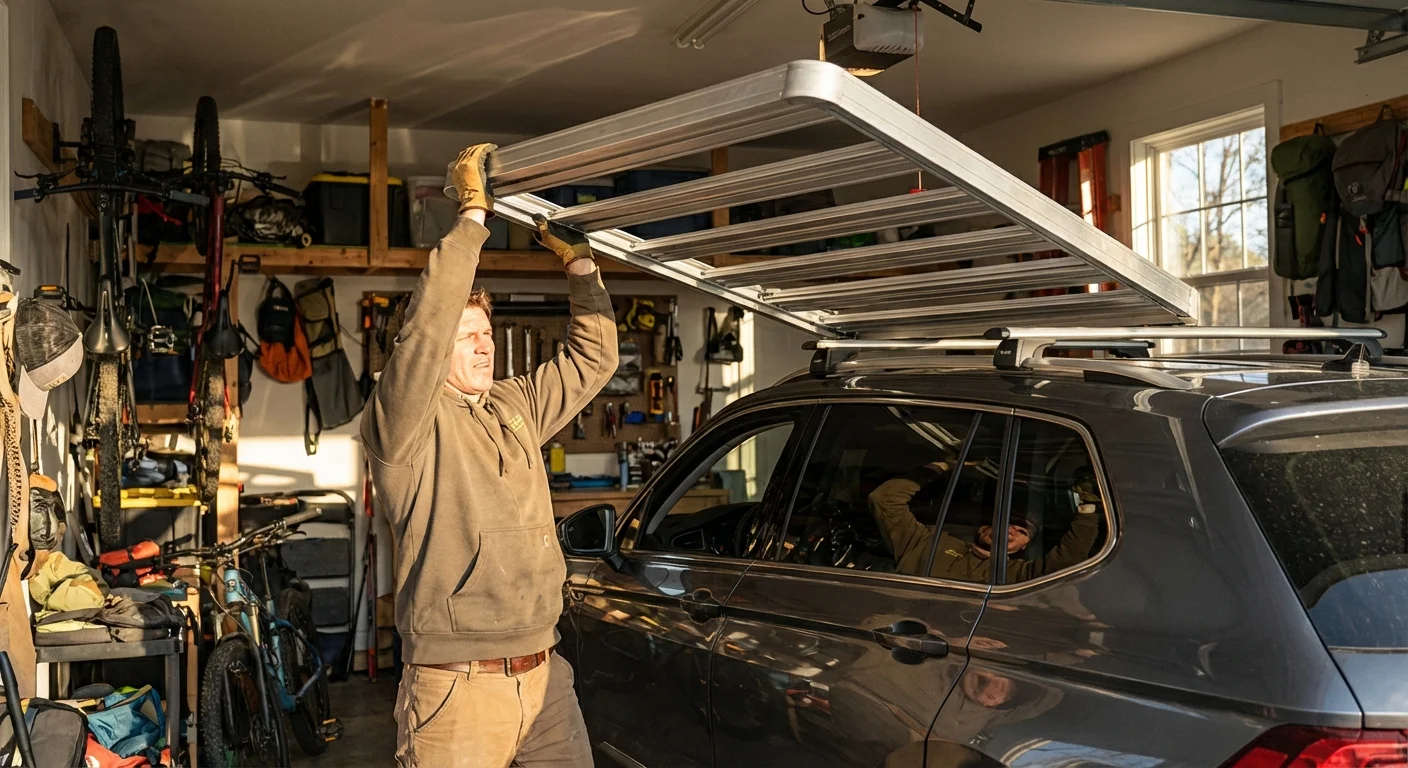
Aerodynamics are even more impactful at highway speeds. A large roof rack or a cargo box creates massive wind resistance. Energy.gov notes that a large, roof-top cargo box can reduce fuel economy by 10% to 25% at highway speeds (65 mph to 75 mph). If you aren’t using your roof rack for a trip this weekend, take it off. This single action can save you $10 on a long road trip without changing your driving habits at all.
“Beware of little expenses; a small leak will sink a great ship.” — Benjamin Franklin
Practical Steps to Your First $100 Saved
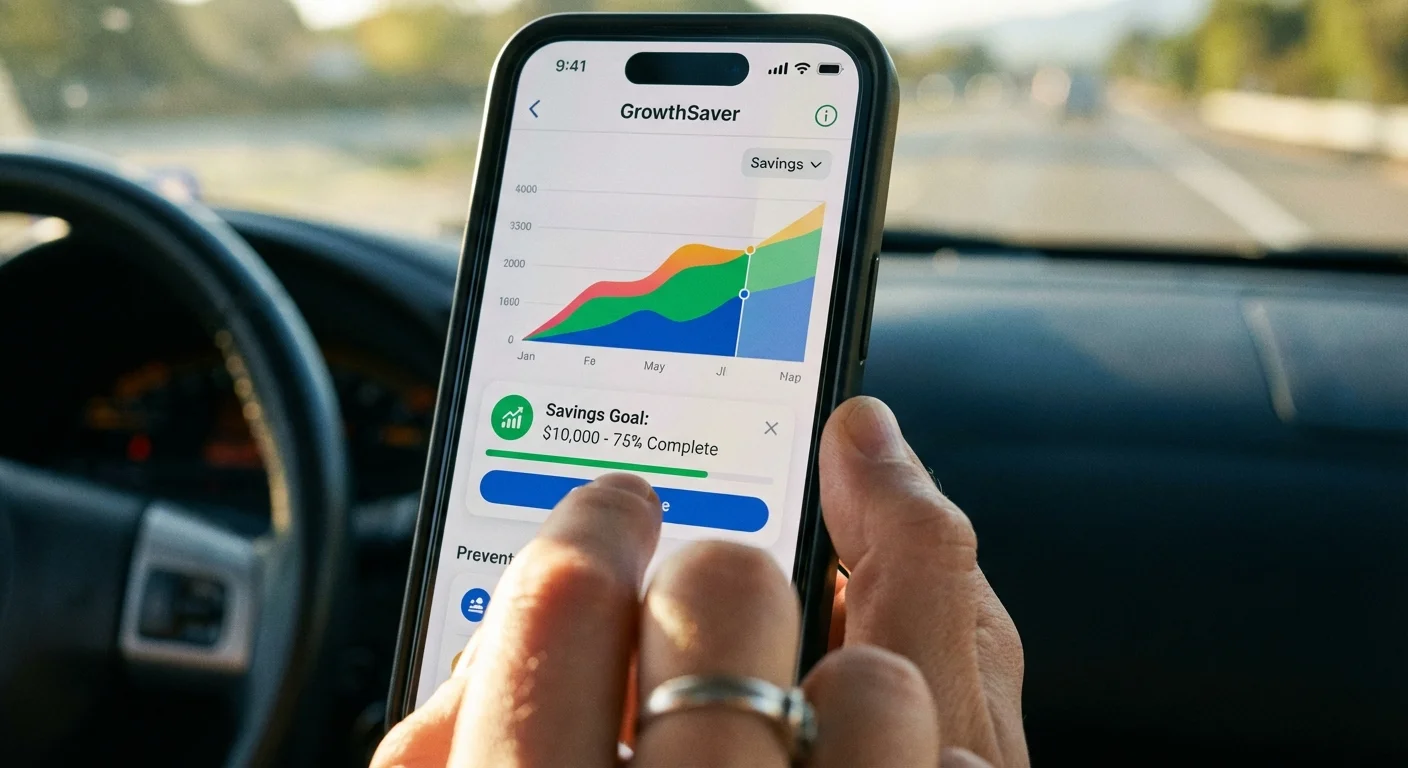
Action is more valuable than information. To start your journey toward that $500 annual savings, follow this checklist this week:
- Download Upside and GasBuddy: These are the “Big Two” for price discovery and rebates. Check them before your next fill-up.
- Check Your Owner’s Manual: Confirm your octane requirement. If it says “87 Octane” or “Regular,” stop buying the expensive stuff immediately.
- Join One Brand Loyalty Program: Pick the station you pass most often on your commute (Shell, Exxon, BP) and sign up for their free app. Many offer a “new member” bonus of $0.15 to $0.25 off your first few fill-ups.
- Visit the Air Pump: Spend $1.50 (or find a free pump at a tire shop like Discount Tire) to bring your tires up to the recommended PSI.
FAQs About Gas Savings
Is it true that I should not let my tank get below a quarter full?
From a fuel-saving standpoint, the weight of a full tank versus a near-empty tank is negligible (gas weighs about 6 pounds per gallon). However, from a maintenance standpoint, your fuel pump is cooled by the gasoline in the tank. Regularly running on empty can cause the pump to overheat and fail prematurely, leading to a $600 to $1,000 repair bill—wiping out years of gas savings.
Do “fuel-efficient” tires actually work?
Yes. Low Rolling Resistance (LRR) tires are designed to minimize the energy wasted as heat when the tire deforms while rolling. They can improve fuel economy by 1% to 2%. If you are already in the market for new tires, looking for an LRR-rated set is a smart move, but it is rarely cost-effective to replace perfectly good tires just for the MPG boost.
Does using the air conditioning really destroy my gas mileage?
It does have an impact, but the “windows down” alternative is not always better. At low speeds (under 40 mph), rolling the windows down is more efficient. At highway speeds (over 55 mph), the aerodynamic drag caused by open windows is actually more taxing on the engine than the AC compressor. If you are hot on the freeway, use the AC.
Should I buy gas when the tanker truck is filling the station’s tanks?
The old advice was to avoid this because the delivery “stirs up” sediment at the bottom of the tank. However, modern stations have sophisticated filtration systems that catch this debris before it ever reaches your nozzle. It is generally safe to fill up at any time.
The Bottom Line
Saving $500 a year on gas does not require a lifestyle overhaul. It is the result of five or six small, intentional choices. By switching to regular fuel, maintaining your tire pressure, and using a stacked rewards strategy, you reclaim control over one of your largest monthly expenses. Start by looking at your vehicle as a machine that requires optimization and the gas station as a vendor that must earn your business. Your bank account will thank you.
For more detailed data on fuel economy and vehicle-specific tips, you can explore the resources provided by Energy.gov or check current local price trends via AAA Gas Prices.
Last updated: February 2026. Prices and availability mentioned reflect research at the time of writing and may vary by location and retailer. Your actual savings will depend on your specific situation and shopping habits.









Leave a Reply