
Every spring, millions of Americans engage in a frustrating ritual: paying a private company for the privilege of telling the government how much money they earned. You navigate a maze of “free” offers that suddenly evaporate the moment you claim a standard student loan interest deduction or a simple child tax credit. The tax prep industry has spent decades—and millions in lobbying—to keep this system complicated; however, the tide turned significantly with the full-scale launch of IRS Direct File.
For the 2025 tax season, the IRS has moved beyond the pilot phase, opening its own free, secure, and direct filing portal to millions more taxpayers across the country. This isn’t just another “Free File” partner program where you are redirected to a third-party site; this is a direct interview-style software built and maintained by the IRS. If you are tired of the bait-and-switch tactics of big-name software companies, you now have a legitimate, permanent alternative that could save you hundreds of dollars in filing fees.

What You Will Save by Cutting the Cord
Before diving into the technical details, consider the financial impact of your filing choices. According to data from NerdWallet, the average taxpayer spends approximately $270 for professional tax preparation. Even if you use DIY software, “Deluxe” or “Premium” tiers often start at $60 and climb north of $120 once you add state filing fees and “processing” charges.
By switching to IRS Direct File, you realize several immediate savings:
- Direct Cost: $0. There are no tiers, no upsells, and no “pro” versions.
- State Filing Fees: While Direct File handles federal returns, it integrates with state-run systems in participating states, ensuring you don’t get hit with a $40–$60 state filing fee.
- Refund Protection: You won’t pay “refund processing fees”—those sneaky $40 charges some companies levy just to take their payment out of your tax refund.
- Time and Stress: The software is streamlined to handle specific tax situations without the clutter of marketing pop-ups or cross-promotional credit card offers.

Understanding the Direct File Evolution
The 2024 pilot program proved that the government could build a functional, user-friendly interface. Over 140,000 taxpayers used the system in its first limited run, saving an estimated $5.6 million in filing fees. For the 2025 filing season, the IRS expanded eligibility to include more states and a wider range of tax situations. This system operates as a “public option” for tax filing—it doesn’t eliminate private software, but it forces those companies to compete with a free, high-quality government product.
The interface mirrors the interview-style experience you may be used to from TurboTax or H&R Block. It asks you simple questions about your income, your family, and your credits. You don’t need to know the numbers of the forms or the intricacies of the tax code; the system handles the calculations in the background. Most importantly, it is optimized for mobile devices, allowing you to file your return from a smartphone or tablet as easily as from a desktop.
Eligibility: Can You Use Direct File in 2025?
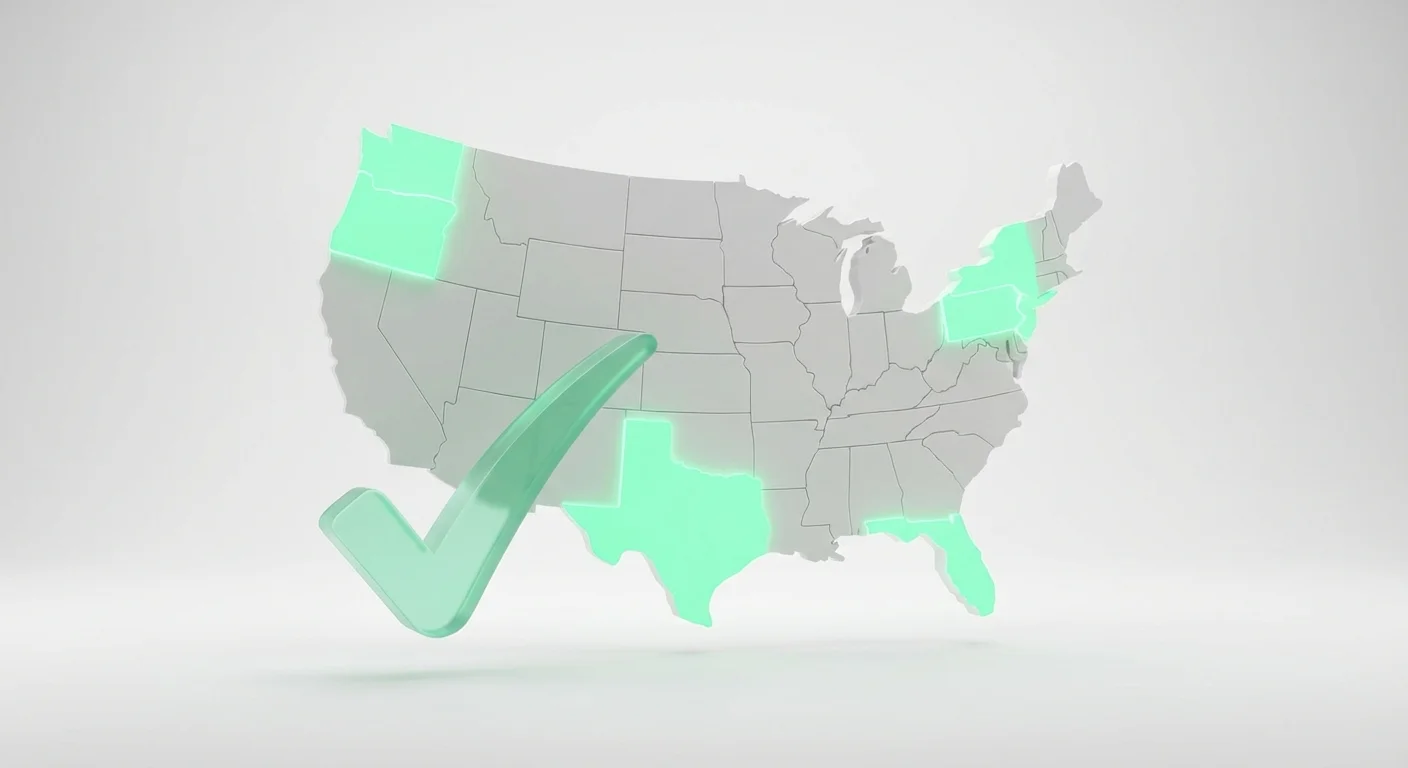
While the goal is universal access, the IRS is scaling the program strategically. Eligibility is currently determined by two factors: where you live and the complexity of your income. For 2025, the IRS has invited all 50 states to participate, but your state must agree to integrate its own filing system with the federal portal. This is a crucial distinction because the IRS only handles federal taxes; your state department of revenue handles the rest.
Currently, the system is designed for taxpayers with relatively straightforward financial lives. You are likely eligible if your income comes from the following sources:
- W-2 wage income
- Social Security or railroad retirement income
- Unemployment compensation
- Interest income of $1,500 or less
The system also handles the most common credits and deductions that often trigger “paid” tiers in private software, such as the Standard Deduction, the Earned Income Tax Credit (EITC), the Child Tax Credit, and the Credit for Other Dependents. If you are an educator claiming the classroom expense deduction or a student deducting loan interest, Direct File has you covered.
“The goal isn’t to be cheap—it’s to be intentional.” — Anonymous
Comparing Your 2025 Filing Options
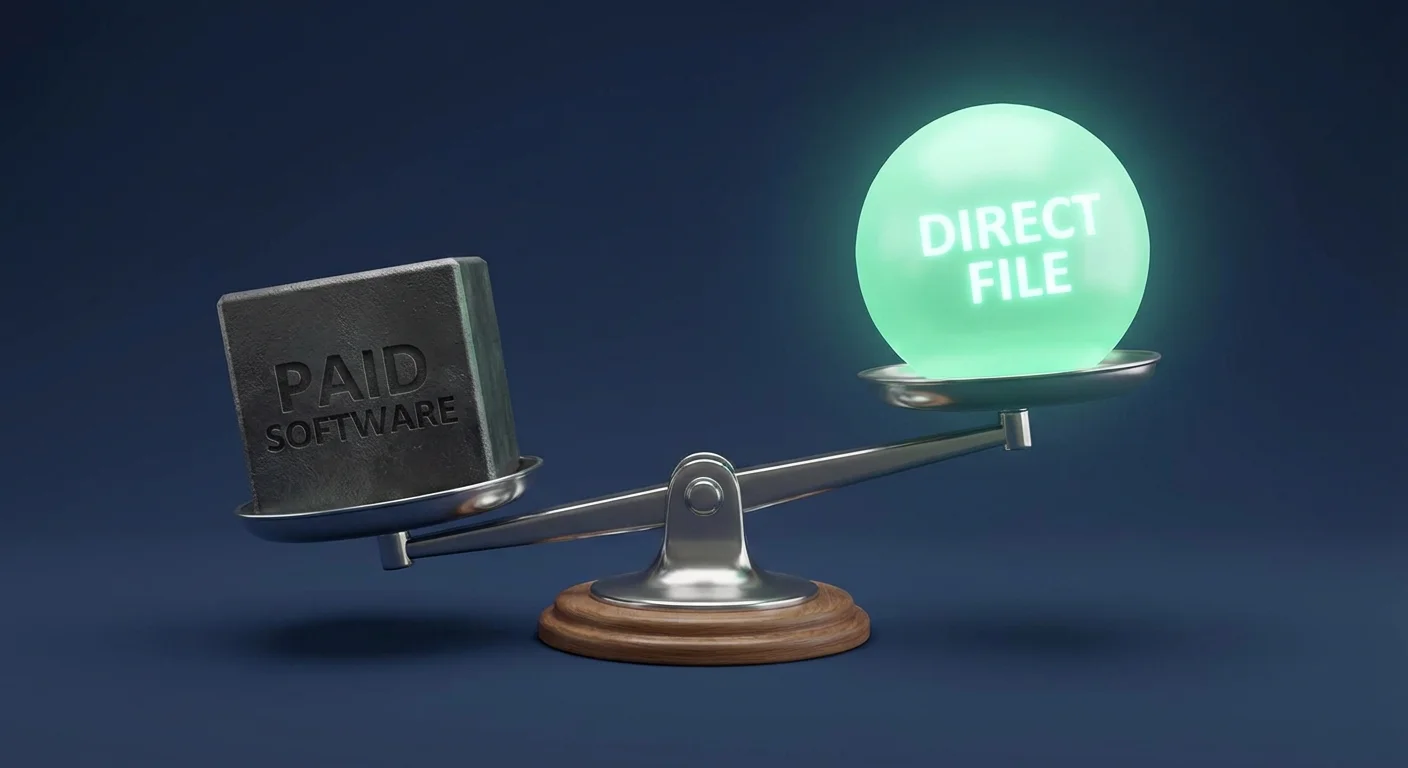
Choosing the right tool depends on your specific financial profile. While Direct File is the newest player, it’s helpful to see how it stacks up against the traditional “Free File” program and the big-box commercial software suites.
| Feature | IRS Direct File | IRS Free File (Partners) | Commercial “Big Brand” Software |
|---|---|---|---|
| Cost | Always $0 | Free if income is under $79,000 | $0 to $150+ (plus state fees) |
| User Experience | Clean, no ads, interview-style | Varies by partner (can be clunky) | Highly polished but heavy marketing |
| State Integration | Direct link to state tools | Often included for federal only | Usually $40-$60 per state |
| Support | Live IRS customer chat | Varies by company | Paid “Pro” support tiers |
| Complexity | Simple to moderate returns | Handles complex returns | Handles all return types |
The Consumer Financial Protection Bureau (CFPB) frequently notes that many consumers are nudged into paying for services they could get for free. IRS Direct File removes the middleman, ensuring that your data stays between you and the tax authorities without being used for cross-selling financial products.

How to Start Your 2025 Return
Filing through Direct File is a straightforward process, but you need to be prepared before you log in. Follow these steps to ensure a smooth experience:
- Verify Your Identity: The IRS uses ID.me to verify your identity. If you have used a government portal recently (like the VA or Social Security), you likely already have an account. If not, you will need a photo ID and a smartphone to complete a quick verification check.
- Gather Your Documents: You will need your W-2s, 1099-G for unemployment, and 1099-INT for any interest earned. If you received the Child Tax Credit, have your records handy.
- Check State Compatibility: Visit the official IRS Direct File website to see if your state is participating in the integrated filing. If it is, the portal will seamlessly guide you to your state’s return after you finish the federal portion.
- Walk Through the Interview: Answer the prompts honestly. The system will calculate your Adjusted Gross Income (AGI) and determine which credits apply to you.
- Review and Submit: Unlike some commercial software that hides your actual tax form until you pay, Direct File lets you review every line of your 1040 before you hit send.

Don’t Fall For These Common Industry Tactics
The tax preparation industry is protective of its profits. As Direct File gains popularity, you may see an increase in misleading advertisements designed to keep you paying. Be wary of “Free-to-File” ads that include small print—they often only apply to the simplest 1040 forms without any additional schedules. If you have even a tiny amount of student loan interest or a small amount of freelance income, these “free” versions often force an upgrade.
Another common tactic is the “Refund Advance” or “Refund Anticipation Loan.” These products are often framed as a helpful way to get your money faster; however, they frequently come with hidden fees or high interest rates. The fastest way to get your actual refund is to file electronically—using a tool like Direct File—and choose direct deposit. The IRS typically issues these refunds within 21 days.
You should also be careful with “Refund Processing Services.” This is where the software company offers to deduct their fees from your refund so you don’t have to pay upfront. They often charge a fee of $40 or more just for this “convenience.” By using Direct File, you eliminate the fee entirely, ensuring every cent of your refund goes into your pocket.

When It’s Worth Paying for Professional Help
While IRS Direct File is a revolution for the average worker, it isn’t the right tool for everyone. There are specific scenarios where the complexity of the tax code justifies the cost of a Certified Public Accountant (CPA) or Enrolled Agent. You should consider paying for professional advice if:
- You Own a Business with Employees: Managing payroll taxes, depreciation of assets, and complex business deductions requires specialized knowledge.
- You Have Rental Properties: Real estate tax law, including 1031 exchanges and depreciation, can be complicated for DIY tools.
- You Have Significant Foreign Assets: Failing to report foreign bank accounts (FBAR) can result in massive penalties that far outweigh the cost of a tax pro.
- You Are Dealing with an Inheritance or Complex Trust: Estate tax issues are often outside the scope of basic interview-style software.
However, if you are one of the roughly 70% of Americans with a straightforward tax situation, paying for software is essentially a “convenience tax” that you no longer need to pay.

Maximize Your Savings Beyond the Software
Choosing free software is just the first step in making your tax season more profitable. To truly stretch your dollars, you must be intentional about how you handle your refund. Treat your tax refund as a “bonus” to fuel your financial goals rather than a windfall for impulse spending. Consider directing your refund toward a high-yield savings account or using it to pay down high-interest credit card debt.
According to the Federal Trade Commission (FTC), consumers should also be vigilant about tax-related identity theft. Using the official IRS Direct File portal is one of the most secure ways to submit your data, as it bypasses third-party servers that could be vulnerable to breaches. Security is a form of savings; preventing a stolen refund saves you months of administrative headaches and financial stress.
“Beware of little expenses; a small leak will sink a great ship.” — Benjamin Franklin
Frequently Asked Questions
Is IRS Direct File really free?
Yes. There are no hidden fees, no tiers, and no “add-on” costs. It is a public service funded by the Inflation Reduction Act to provide a free filing option for taxpayers.
How is this different from IRS Free File?
IRS Free File is a partnership with private companies (like TaxSlayer or FreeTaxUSA). You go to the IRS site, but you are redirected to a private company’s website. Direct File is built, owned, and operated entirely by the IRS.
Can I use Direct File if I have a 1099 for side hustle income?
For the 2025 season, Direct File’s scope is expanding. While it primarily focuses on W-2 income, you should check the updated eligibility list on the IRS website in January, as more 1099 types are being added to the system’s capabilities.
What if I make a mistake on my return?
Direct File includes basic error-checking features. If the IRS identifies a clear mismatch with their records, the system will flag it before you submit. If you need to file an amendment later, the system provides guidance on how to do so.
Will Direct File save my data for next year?
Yes. One of the major advantages of the permanent rollout is that the system can now carry over your information from year to year, making subsequent filing seasons even faster.
The Bottom Line for 2025
The era of being forced to pay for tax filing is ending. IRS Direct File represents a shift toward a more user-centered government, where the goal is compliance rather than profit. By opting out of the traditional software cycle, you are not just saving $100 or $200—you are taking control of your financial data and refusing to pay a “complexity tax” on your hard-earned income.
As the tax season approaches, keep an eye on the official USA.gov tax resources to confirm when the portal opens for your state. Make the decision now to keep your money where it belongs: in your bank account. Filing your taxes should be a civic duty, not a financial burden. With Direct File, the IRS has finally made that a reality for millions of Americans.
Take the first step by checking your eligibility today. Even if you have used the same software for a decade, the potential savings are too significant to ignore. Your future self—and your savings account—will thank you for making the switch to a completely free, direct, and secure filing experience.
The savings estimates in this article are based on typical costs and may differ in your area. Always compare current prices and consider your household’s specific needs.
Last updated: February 2026. Prices change frequently—verify current costs before purchasing.









Leave a Reply