
You stand on the dealership lot, eyes darting between two nearly identical SUVs. One has a slightly higher sticker price and a small, chrome “Hybrid” badge on the tailgate. The other looks exactly the same but costs $3,500 less. The salesperson leans in and promises the hybrid will pay for itself in fuel savings. You want to believe them; however, you also know that math on a showroom floor rarely favors the buyer. Is the hybrid actually a savvy financial move, or are you just prepaying for gas you might never use?
Deciding between a hybrid and a traditional internal combustion engine (ICE) vehicle requires looking past the monthly payment. To find the true winner, you must calculate the Total Cost of Ownership (TCO) over a five-year window. This includes the purchase price, fuel costs, maintenance schedules, insurance premiums, and the often-ignored factor of depreciation. While gas prices fluctuate daily, the structural costs of owning these vehicles follow predictable patterns. This guide dismantles the “hybrid vs gas car cost” debate with cold, hard data to help you determine which powertrain keeps more money in your wallet.

The Upfront Hurdle: Navigating the Hybrid Premium
The first barrier you face is the “hybrid premium”—the extra amount you pay upfront for the dual-motor technology. On average, a hybrid version of a popular sedan or crossover costs between $1,500 and $4,000 more than its gas-only counterpart. Manufacturers justify this price hike by pointing to the expensive lithium-ion battery packs and the sophisticated power management software required to blend electric and gasoline propulsion.
To see how this affects your bottom line, you must view this premium as a loan you are granting the car. If you pay $3,000 more for a hybrid RAV4 today, your car “owes” you $3,000 in future savings. If you trade the car in three years before the fuel savings reach that $3,000 mark, you have effectively lost money. According to data from Edmunds, the average “break-even” point for many modern hybrids has dropped significantly as technology matures; however, it still typically sits between three and five years for most drivers.
Financing adds another layer to this upfront cost. If you finance that $3,000 premium at a 6% interest rate over 60 months, you aren’t just paying $3,000—you are paying roughly $3,480. When comparing vehicles, always calculate the total financed price, not just the MSRP. Your goal is to ensure the hybrid’s benefits outweigh the total interest-adjusted cost of the entry fee.

Fuel Savings: More Than Just MPG Numbers
Fuel savings serve as the primary engine for your return on investment. The EPA estimates on the window sticker provide a baseline, but your actual car ownership comparison depends entirely on where and how you drive. Hybrids thrive in “stop-and-go” traffic because they use regenerative braking to recapture energy that would otherwise be lost as heat. They also allow the gasoline engine to shut off entirely during idling or low-speed crawling.
Consider the math for a driver covering 15,000 miles per year. If a gas SUV gets 28 MPG and the hybrid version gets 40 MPG, the difference is stark. At a national average price of $3.50 per gallon (a figure you can track via AAA Gas Prices), the gas vehicle costs $1,875 annually in fuel. The hybrid vehicle costs only $1,312. That is a yearly saving of $563. Over five years, you save $2,815.
However, if you spend 90% of your time on the open highway at 75 MPH, the hybrid’s advantage shrinks. At high speeds, the electric motor provides less assistance, and the gas engine does the heavy lifting while carrying the extra weight of a battery pack. In some cases, a high-efficiency gas car or a turbo-diesel might nearly match a hybrid on the highway. You must honestly audit your commute before assuming the higher MPG translates to instant wealth.
“The goal isn’t to be cheap—it’s to be intentional.”

Maintenance and Repairs: Why Hybrids Surprise the Skeptics
A common fear among buyers is that hybrids are “twice as complex” and therefore “twice as expensive” to fix. The reality is often the opposite. While hybrids do have more parts, they use their components more gently than traditional cars. For example, regenerative braking allows the electric motor to slow the vehicle down, which significantly reduces wear on your brake pads and rotors. It is not uncommon for hybrid owners to reach 100,000 miles on their original set of brakes.
Furthermore, because the electric motor assists during high-load situations—like accelerating from a dead stop—the gasoline engine undergoes less stress. There is no traditional starter motor or alternator in many hybrid designs, eliminating two common failure points found in gas vehicles. Most modern hybrids also use a Planetary Gearset or a simplified eCVT (electronic continuously variable transmission), which has fewer moving parts than a traditional 8-speed or 10-speed automatic transmission.
The “elephant in the room” is the battery pack. Replacement costs can range from $2,000 to $5,000; however, federal law requires manufacturers to warrant hybrid batteries for at least 8 years or 100,000 miles (10 years/150,000 miles in California-emission states). Data from high-mileage taxi fleets shows that modern nickel-metal hydride and lithium-ion packs frequently last well beyond 200,000 miles. Unless you plan on keeping the car for 15 years, the battery replacement cost should rarely enter your 5-year TCO calculation.

Depreciation: The Hidden Winner
Depreciation is the single largest expense of car ownership, often dwarfing fuel and insurance combined. In the past, hybrids depreciated faster than gas cars because buyers feared battery longevity. That trend has completely reversed. As gas prices remain volatile and environmental awareness grows, the secondary market for used hybrids has exploded.
According to Kelley Blue Book, many hybrid models now retain a higher percentage of their value after five years compared to their gas-only siblings. If you pay $3,000 more for a hybrid today but sell it for $2,000 more than the gas version five years from now, your “true” cost for the hybrid technology was only $1,000. When you combine this high resale value with the $2,815 in fuel savings calculated earlier, the hybrid becomes the clear financial victor.

Insurance and Financing Nuances
You might expect insurance companies to reward you for driving a “greener” car, but the opposite is often true. Hybrids generally cost 5% to 10% more to insure. Insurance adjusters look at the cost of parts and labor; if you get into a front-end collision, the sensors, inverters, and cooling systems for the hybrid drivetrain are more expensive to replace than a standard radiator and bumper. Always call your insurance agent for a quote on the specific VIN or model before signing the papers.
Financing, on the other hand, can sometimes favor the hybrid. Some lenders offer “Green Auto Loans” with slightly lower interest rates to encourage the purchase of high-efficiency vehicles. Additionally, if you are looking at a Plug-in Hybrid (PHEV) rather than a standard hybrid, you may qualify for federal tax credits through the Consumer Financial Protection Bureau guidelines or state-level rebates, which can instantly wipe out the hybrid premium.
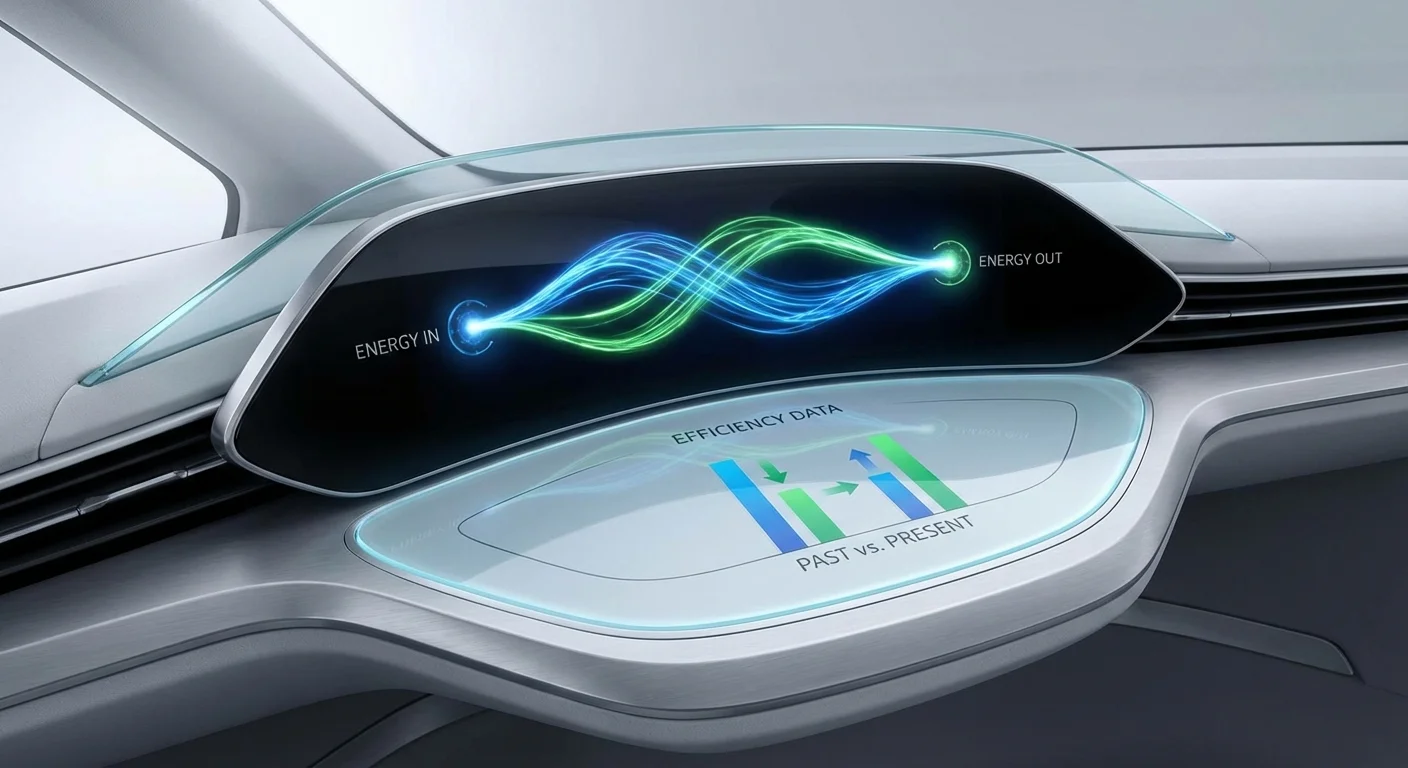
The 5-Year Head-to-Head Comparison Table
To illustrate the total cost of ownership, let’s look at a typical compact SUV—a segment where the hybrid vs gas car cost debate is most fierce. We will assume 15,000 miles per year, a $3.50 gas price, and a 5-year ownership period.
| Cost Category | Standard Gas SUV | Hybrid SUV | Difference |
|---|---|---|---|
| Purchase Price (MSRP) | $30,000 | $33,000 | +$3,000 |
| Fuel (5 Years @ 15k mi/yr) | $9,375 (28 MPG) | $6,560 (40 MPG) | -$2,815 |
| Maintenance & Repairs | $4,500 | $3,800 | -$700 |
| Insurance (5 Years) | $7,500 | $8,100 | +$600 |
| Depreciation (Estimated) | $14,000 (Retains 53%) | $13,800 (Retains 58%) | -$200 |
| Total 5-Year Cost | $35,375 | $35,260 | -$115 |
In this scenario, the hybrid and the gas vehicle are nearly a wash after five years. However, notice how the math shifts if gas prices rise. If gas hits $4.50 per gallon, the hybrid saves you an additional $800 over that same period, making it the definitive winner. If you drive 20,000 miles a year instead of 15,000, the hybrid wins by thousands. Conversely, if you only drive 5,000 miles a year, you will likely never recoup the $3,000 premium.

Costly Mistakes to Avoid
The biggest mistake buyers make is failing to match the vehicle to their specific geography and lifestyle. If you live in an extremely cold climate, your hybrid fuel economy will plummet in the winter. Batteries are less efficient in the cold, and the gasoline engine will run more often just to generate heat for the cabin. You might see a 40 MPG hybrid drop to 30 MPG during a Minnesota January.
Another error is ignoring the “PHEV” distinction. A Plug-in Hybrid (PHEV) has a much larger battery and can often travel 25 to 50 miles on electricity alone. If your daily commute is 20 miles and you can charge at home, you might go months without visiting a gas station. However, if you never plug it in, you are simply hauling a heavy, expensive battery around using the gas engine, which results in worse fuel economy than a standard hybrid. Do not buy a PHEV unless you are committed to the “plugging in” lifestyle.
Skip DIY When…
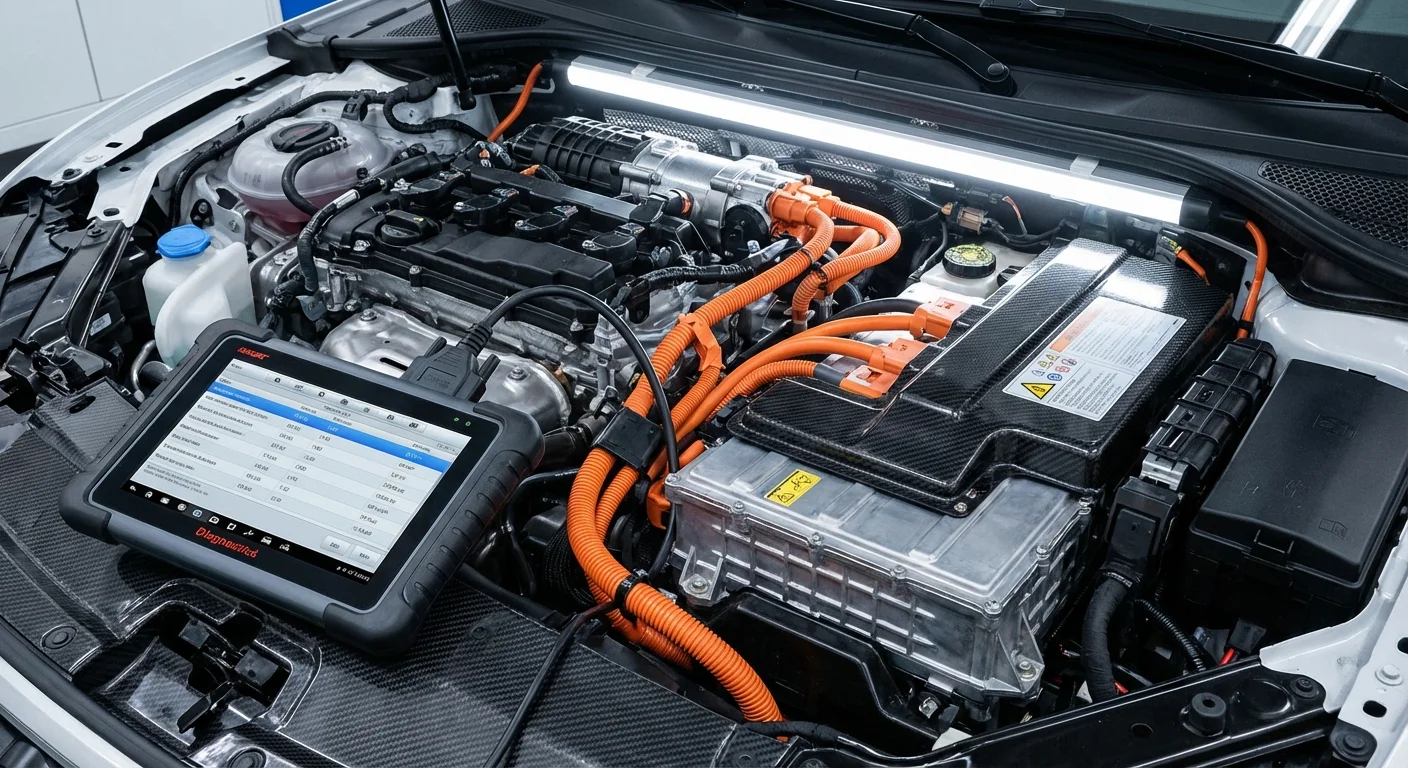
We all want to save money by doing our own oil changes or changing air filters, and you can still do those on a hybrid. However, you must skip DIY repairs when they involve the high-voltage system. Look for orange cables under the hood—these denote high-voltage lines that carry enough current to be fatal. Systems involving the inverter, the traction battery, or the integrated starter-generator require specialized insulated tools and training. Attempting to “budget fix” these components can result in severe injury or a voided warranty. Stick to tires, wipers, and oil; leave the orange cables to the certified technicians.
“Beware of little expenses; a small leak will sink a great ship.” — Benjamin Franklin

Scenarios Where Gas is Still King
Hybrids are impressive, but they aren’t a universal solution. You should stick with a traditional gas engine if:
- You have a low annual mileage: If you drive less than 10,000 miles a year, the fuel savings will likely never cover the hybrid premium.
- You primarily drive on the highway: The aerodynamic and weight penalties of some hybrids can neutralize their efficiency gains at high cruising speeds.
- You plan to sell in 2 years: The steepest part of the depreciation curve occurs early. You won’t have enough time for fuel savings to offset the higher initial taxes and registration fees.
- You need maximum towing capacity: While some hybrid trucks are powerful, many hybrid SUVs have lower towing ratings than their gas counterparts due to the added weight of the battery and the cooling requirements of the electric motors.
Frequently Asked Questions
Do hybrid batteries really cost $10,000 to replace?
No. While dealerships may quote high prices for brand-new OEM packs, the aftermarket industry for refurbished hybrid batteries has matured. You can often have a battery replaced or repaired for between $1,500 and $3,500. Furthermore, most owners sell the car long before the battery fails.
Does a hybrid car require special oil or tires?
Hybrids often use very thin synthetic oil (like 0W-16 or 0W-20) to reduce friction, but this is becoming standard for gas cars too. Some hybrids come with “Low Rolling Resistance” tires to maximize MPG. These tires can be slightly more expensive to replace, but you can use standard tires if you are willing to accept a small hit to your fuel economy.
Is the air conditioning weaker in a hybrid?
Actually, hybrid air conditioning is often superior. Most hybrids use electric A/C compressors. In a traditional gas car, the engine must be running for the A/C to blow cold. In a hybrid, the A/C can run off the high-voltage battery while you are parked, keeping the cabin ice-cold without the engine idling.
Will a hybrid save me money on taxes?
Standard hybrids (the ones you don’t plug in) generally no longer qualify for federal tax credits. However, Plug-in Hybrids (PHEVs) and EVs still do. Check your local state laws, as some states offer reduced registration fees or carpool lane access for all hybrid types, which adds significant “time value” to your purchase.
Making the Final Call
The 5-year total cost of ownership comparison reveals that hybrids are no longer just for “early adopters” or the environmentally conscious; they are mathematically sound choices for the average American commuter. If you drive more than 12,000 miles a year and spend any significant time in traffic, the hybrid will likely pay for itself through reduced fuel consumption, lower brake maintenance, and superior resale value.
To make the best decision, use a tool like NerdWallet to calculate your specific loan terms and check GasBuddy for local fuel prices. If the math shows a break-even point within four years, the hybrid is the smarter financial play. If you are a low-mileage driver who avoids city traffic, save the “hybrid premium” and put that extra $3,000 into your high-yield savings account or toward a larger down payment on a high-efficiency gas model.
Prices and availability mentioned reflect research at the time of writing and may vary by location and retailer. Your actual savings will depend on your specific situation and shopping habits.
Last updated: February 2026. Prices change frequently—verify current costs before purchasing.








Leave a Reply