
Imagine walking into your kitchen on a Tuesday evening only to find a puddle of lukewarm water seeping from under your refrigerator—and the distinct, sour smell of a hundred dollars’ worth of spoiled groceries. For many American households, the refrigerator represents one of the largest financial investments in the home, second only to the HVAC system or the house itself. Yet, most people treat this hardworking appliance like a piece of furniture; they plug it in, push it against the wall, and forget it exists until it stops humming.
According to the Bureau of Labor Statistics, the average American household spends thousands of dollars annually on food—much of which relies on a single mechanical box to stay fresh. When your fridge works harder than it should, you pay for it twice: once through an inflated electricity bill and again when the compressor dies years before its time. Refrigerator maintenance isn’t just a chore; it is a high-yield investment in your home’s bottom line.
By spending thirty minutes twice a year on basic fridge maintenance, you can increase appliance life and slash your monthly utility costs. This guide breaks down the essential steps to keep your refrigerator running at peak efficiency, focusing on the single most important task most homeowners overlook—coil cleaning.

What You’ll Save by Staying Proactive
Before you pull your refrigerator away from the wall, consider the financial stakes. A neglected refrigerator doesn’t just fail; it degrades slowly, siphoning pennies from your pocket every hour of every day. Maintaining your unit leads to tangible, measurable savings.
| Maintenance Task | Estimated Annual Savings | Impact on Lifespan |
|---|---|---|
| Condenser Coil Cleaning | $15 – $50 in electricity | Extends life by 3–5 years |
| Gasket Inspection/Replacement | $20 – $40 in electricity | Reduces compressor wear |
| Internal Temperature Calibration | $10 – $25 in electricity | Reduces food waste |
| Water Filter Replacement (Generic) | $100 – $300 vs. bottled water | Protects internal valves |
The Department of Energy notes that refrigerators are responsible for roughly 13.7% of the average home’s energy use. When coils are caked in dust, the compressor must run longer and hotter to reject the heat from inside the box. This extra work can increase energy consumption by as much as 30%—a cost that adds up quickly over a decade of ownership.
The Anatomy of Cooling: Why Coils Matter
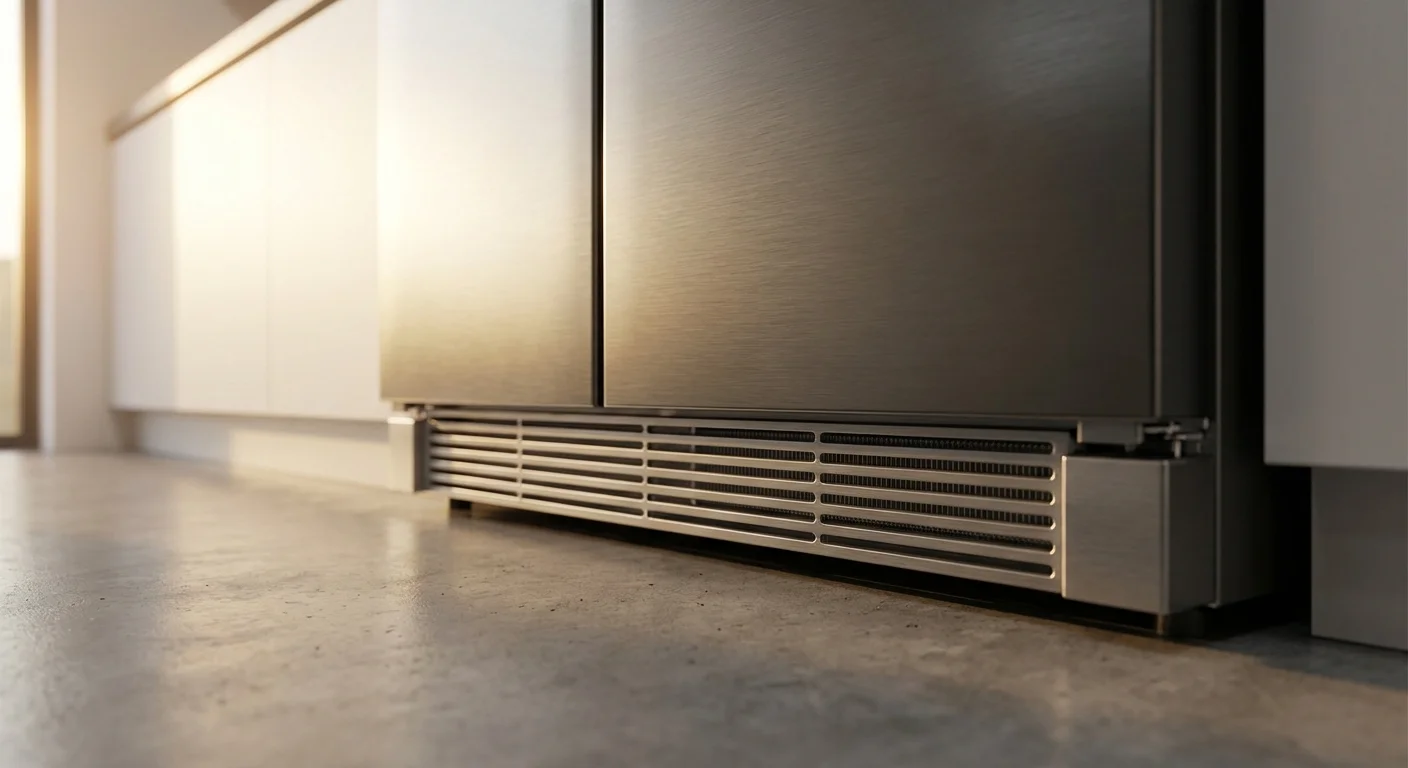
To understand why cleaning matters, you must understand how a refrigerator actually works. It doesn’t “create cold”; instead, it removes heat. A refrigerant gas circulates through the evaporator coils inside the fridge, absorbing heat from your milk and leftovers. That heat is then carried to the condenser coils—usually located at the bottom or the back of the unit—where it is released into your kitchen air.
When these external coils are covered in a blanket of dust, pet hair, and kitchen grease, they act like an insulated jacket. The heat can’t escape. Consequently, the compressor—the “heart” of your fridge—runs almost continuously to compensate. This leads to mechanical fatigue; eventually, the compressor overheats and fails. Replacing a compressor often costs between $500 and $900, which is why most people end up buying a new $2,000 refrigerator instead. A simple vacuuming session can prevent this entire financial cascade.
“Beware of little expenses; a small leak will sink a great ship.” — Benjamin Franklin
The Step-by-Step Guide to Cleaning Condenser Coils
You do not need an expensive technician to perform this service. With a few basic household tools, you can finish the job in the time it takes to watch a sitcom. Perform this every six months—or every three months if you have shedding pets.
1. Safety First: Power Down
Never work on an energized appliance. Pull the refrigerator away from the wall far enough to reach the plug. If your unit is built-in, locate the circuit breaker in your electrical panel and flip it to the “off” position. While you are at it, this is a great time to check the floor behind the unit for leaks or pest activity.
2. Locate the Coils
In most modern refrigerators, the coils are located behind a “toe kick” or “grille” at the very bottom front of the unit. Simply snap the grille off or remove a few screws. In older models or some specific brands, the coils are a large black grid on the back of the refrigerator. If yours are on the back, they are easier to access but often collect more “greasy” dust if your kitchen lacks proper ventilation.
3. Use the Right Tools
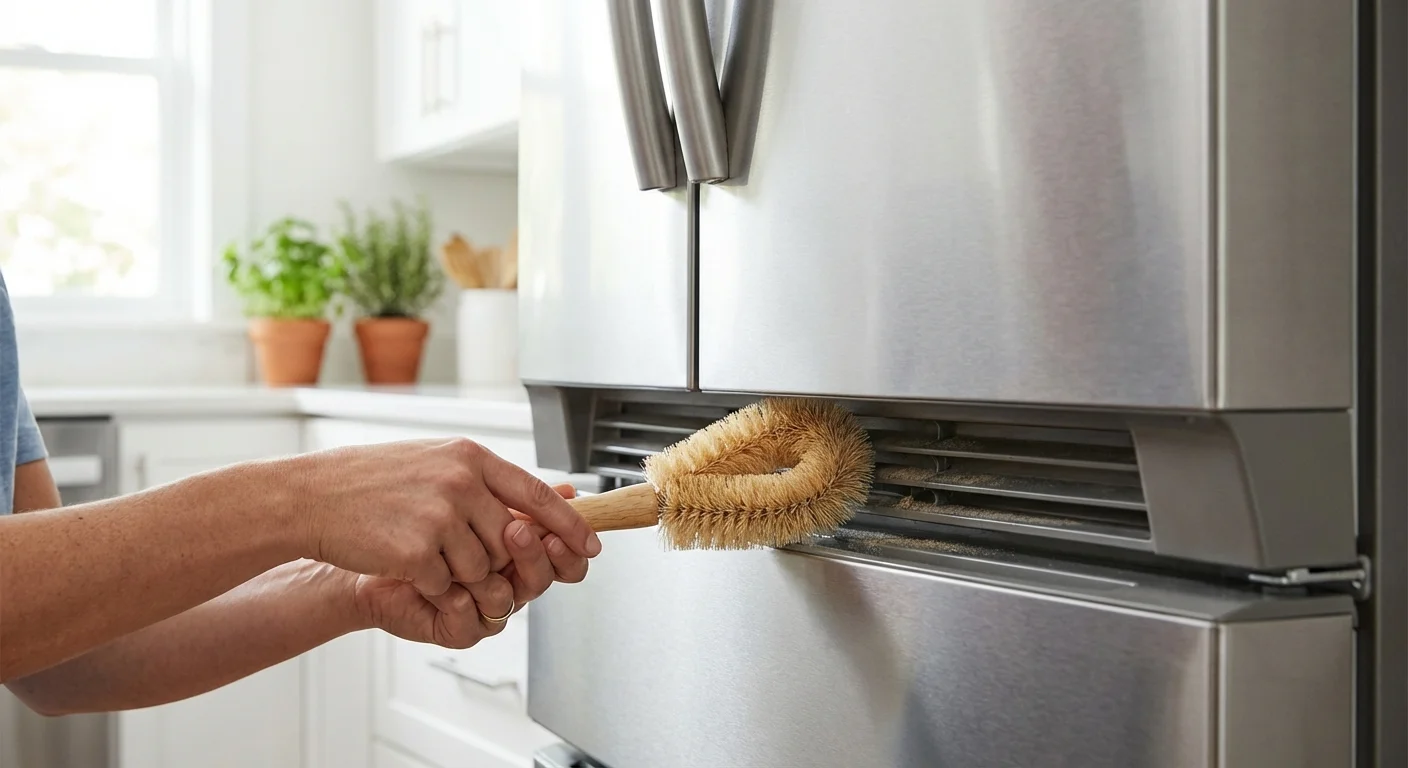
You need more than just a paper towel. To do this right, use a vacuum with a narrow crevice tool or a brush attachment. However, the real secret weapon is a refrigerator coil brush—a long, flexible, cylindrical brush designed to reach into the tight spaces between the coil loops. You can find these for under $10 at most hardware stores or online retailers.
4. Brush and Vacuum
Gently slide the brush into the coil assembly to loosen the hair and dust. Do not force it; you don’t want to bend the thin metal fins or puncture a line. As you loosen the debris, use the vacuum to suck it up immediately. If the dust is greasy, you might need to use a slightly damp cloth on the reachable parts, but avoid using heavy chemical cleaners that could corrode the metal.
5. Don’t Forget the Fan
While you are down there, look for the condenser fan. This fan blows air across the coils to help dissipate heat. If the fan blades are heavy with dust, they will spin slower and move less air. Wipe the blades clean with a microfiber cloth. A clean fan is a quiet fan; if your fridge has been “growling” lately, this might solve the problem.
Testing Your Door Seals for Hidden Leaks
Even if your coils are spotless, a leaky door gasket will bleed money. The gasket is the flexible rubber strip that creates an airtight seal when the door closes. Over time, these gaskets become brittle, tear, or lose their magnetic pull.
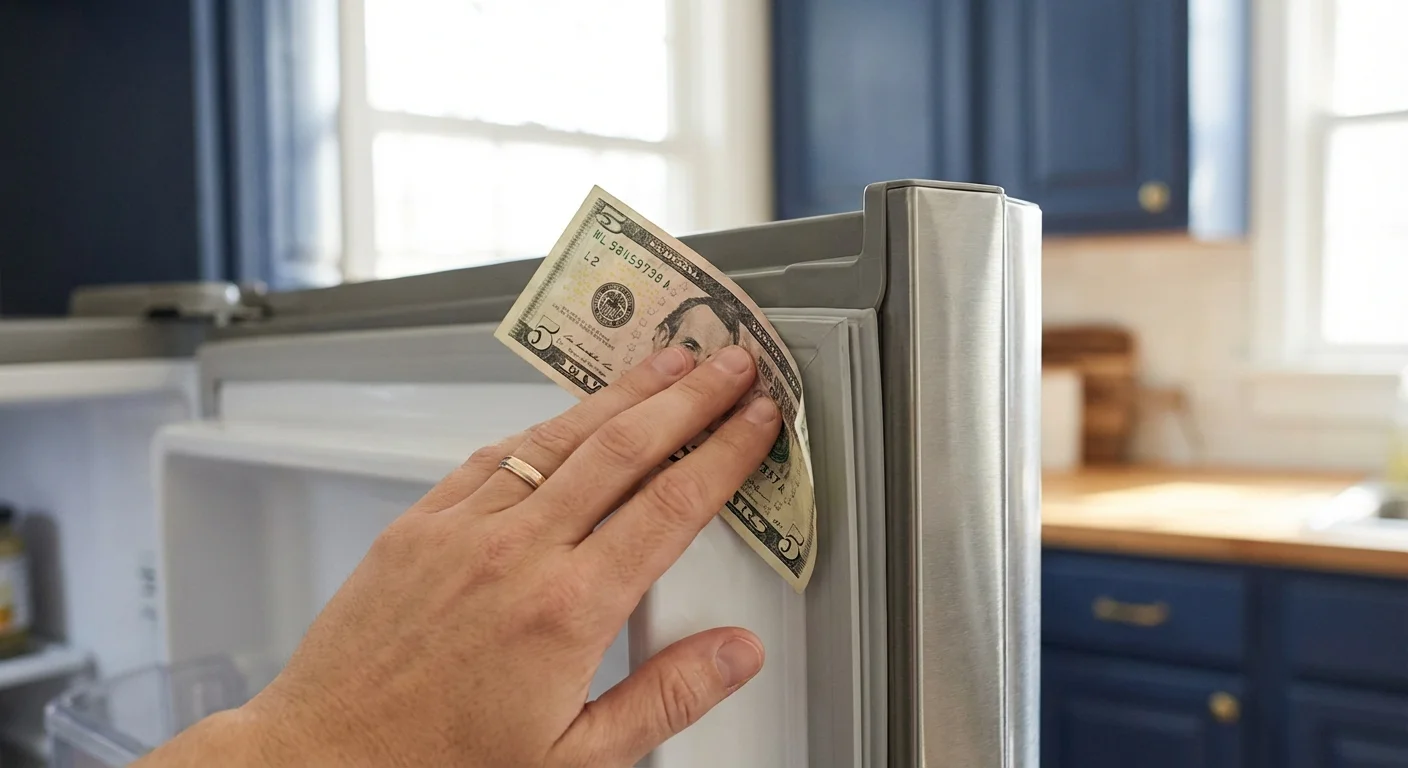
Try the Dollar Bill Test. Open the refrigerator door, place a crisp dollar bill across the seal, and close the door. Try to pull the bill out. If it slides out with no resistance, your seal is weak. Repeat this test every few inches along the top, side, and bottom of the door. If you find a gap, you are essentially paying to cool your kitchen floor.
Before buying a replacement gasket—which can cost $50 to $100—try cleaning the existing one. Spilled jam or soda can harden on the seal, creating a physical gap. Scrub the gasket with warm soapy water and a soft cloth. Once dry, apply a very thin layer of petroleum jelly to the hinge side of the gasket. This keeps the rubber supple and prevents it from folding over on itself when the door closes.
Optimal Temperature Settings for Maximum Savings
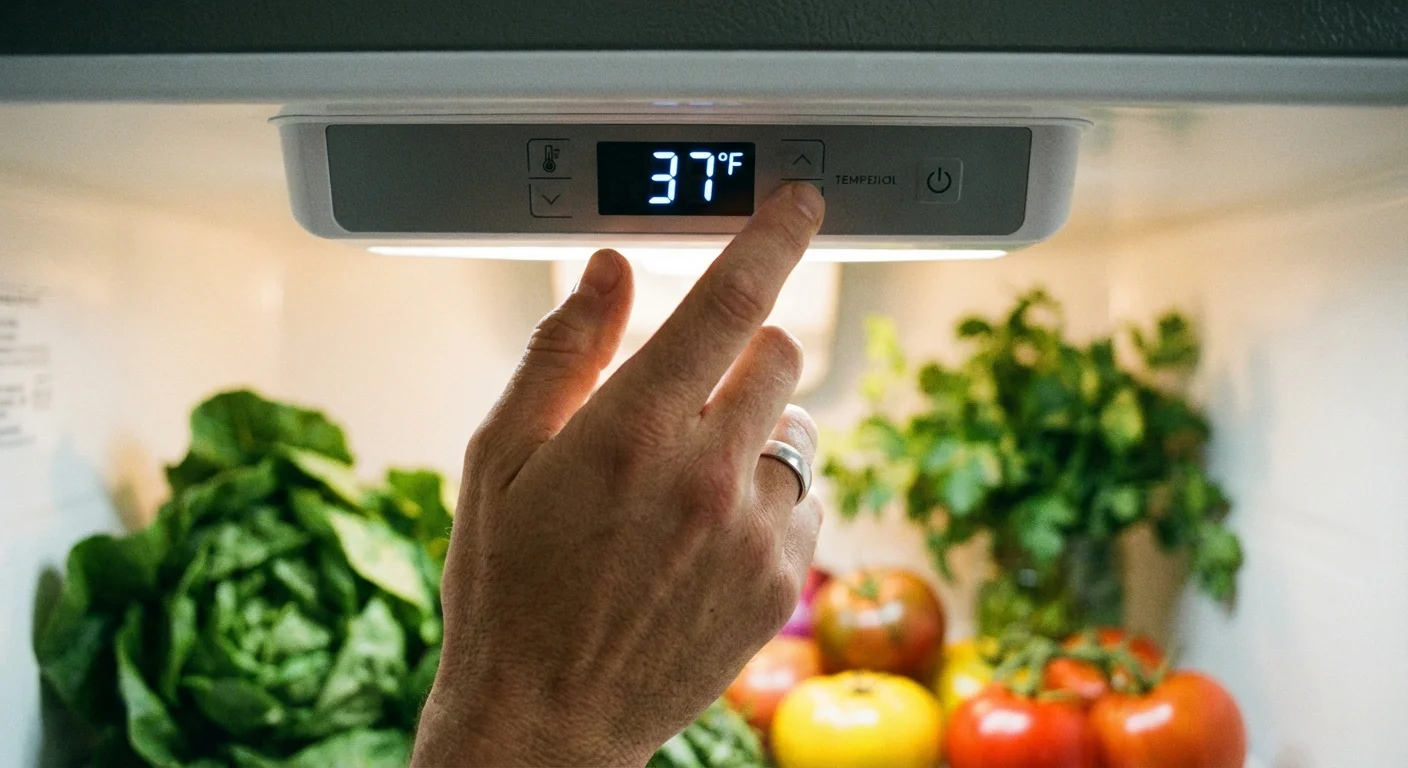
Many homeowners keep their refrigerators far colder than necessary. According to ENERGY STAR, the ideal temperature for a refrigerator is between 35°F and 38°F. Your freezer should be set exactly at 0°F. If your fridge is at 33°F, you are significantly increasing your energy load without adding any real benefit to food safety.
Don’t trust the built-in dial that merely says “Cold” to “Colder.” Buy a dedicated appliance thermometer for about $5. Place it in a glass of water in the middle of the fridge and check it after 24 hours. Adjust your settings incrementally. Every degree lower than necessary increases energy consumption by about 5%.
Strategic Loading: The “Goldilocks” Method
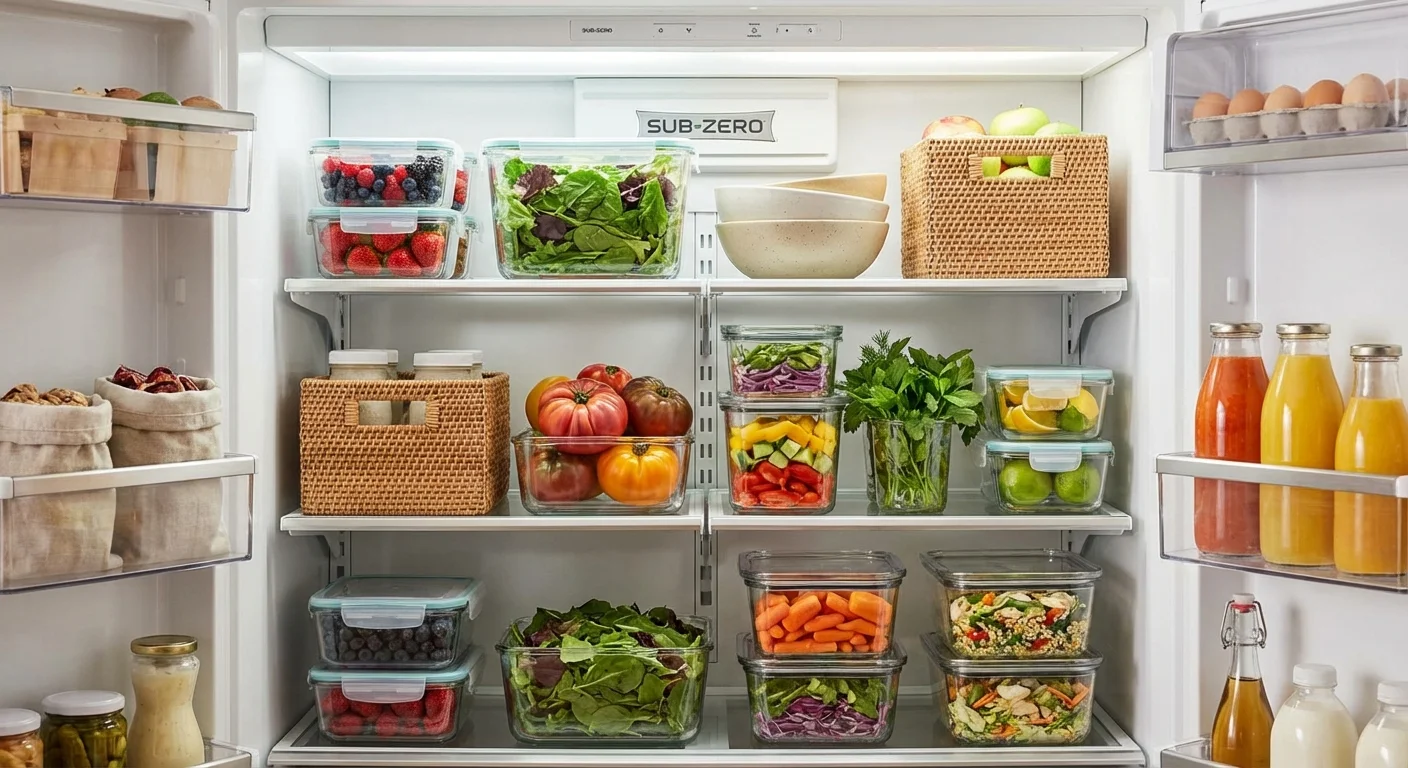
The way you arrange your groceries affects how hard the motor works. To save energy at home, aim for a refrigerator that is about three-quarters full. Air needs to circulate to maintain an even temperature. If you jam every shelf tight with Tupperware, you create “dead zones” where food can spoil while the compressor runs overtime trying to reach the sensor’s target temperature.
Conversely, an empty fridge is also inefficient. When you open the door of an empty fridge, all the cold air falls out and is replaced by warm air. Solid objects (like a gallon of milk or a jar of pickles) hold “thermal mass.” Once they are cold, they stay cold and help stabilize the temperature when the door is opened. If your fridge is looking sparse, fill a few old juice jugs with water and keep them in the back. This acts as a “cold battery,” reducing the number of times the compressor has to cycle on.

Don’t Fall For These Common Maintenance Mistakes
Frugality is about being smart, not just cheap. Avoid these common pitfalls that can lead to expensive repairs:
- Using Sharp Objects to De-ice: If your freezer has ice buildup, never use a knife or screwdriver to chip it away. You can easily puncture the evaporator coils, which releases refrigerant gas and effectively destroys the appliance. Use a hair dryer on a low setting or a bowl of hot water instead.
- Ignoring “Sweating”: If you see condensation on the outside of the fridge or around the door frame, your heaters or seals are failing. This moisture can lead to mold and structural damage to your kitchen cabinets.
- Neglecting the Drip Pan: Most fridges have a pan underneath to catch condensation. If your kitchen has a mysterious “musty” smell, the pan likely has stagnant water and mold. Pull it out and bleach it once a year.
- Placing the Fridge Next to the Oven: If you are remodeling, avoid placing the refrigerator directly next to the range or a sunny window. The ambient heat will force the fridge to run much more frequently.

When It’s Worth Paying for Professional Help
While DIY maintenance covers 90% of issues, some scenarios require a professional’s touch. You should call a technician if:
- The Fridge is Vibrating Violently: This usually indicates a failing compressor mount or an internal mechanical failure that could lead to a sudden breakdown.
- You Hear a Hissing Sound: A persistent hiss often means a refrigerant leak. This is a closed system; if it’s leaking, it requires specialized tools and EPA-certified technicians to fix.
- The Back Wall is Iced Over: If the interior back wall of the fridge has a thick sheet of ice, your defrost heater or thermostat has likely failed. While you can manually defrost it, the problem will return within days until the component is replaced.

The Financial Crossroads: Repair or Replace?
Eventually, every appliance reaches the end of its journey. The average lifespan of a modern refrigerator is 10 to 14 years. If your unit is over a decade old and requires a repair costing more than 50% of the price of a new unit, it is time to shop for a replacement.
Newer units are significantly more efficient than those made just 15 years ago. Transitioning to an ENERGY STAR-certified model can save you over $200 in energy costs over the life of the unit compared to a standard model. Check Energy.gov Savings Tips for local rebates; many utility companies will actually pay you $50 or more to haul away and recycle your old, inefficient “garage fridge.”

A Quick Maintenance Checklist
Keep this checklist on your phone or printed inside a kitchen cabinet to stay on track:
- Every 3-6 Months: Vacuum condenser coils and wipe down the fan blades.
- Every 6 Months: Change the water filter (buy generic brands on sites like Slickdeals to save 50%).
- Every 6 Months: Inspect door gaskets for tears and perform the “dollar bill test.”
- Annually: Clean the drip pan and check the level of the refrigerator. A fridge that tilts forward may not close its doors automatically.
As Charles A. Jaffe once said, “It’s not your salary that makes you rich, it’s your spending habits.” Taking care of the machines you already own is one of the most effective spending habits you can develop. By keeping your refrigerator clean and calibrated, you aren’t just preventing a headache; you are actively keeping more of your hard-earned money in your bank account.
Start today by pulling your fridge out just a few inches. If you see a wall of dust, you’ve found your first easy win for your household budget. Grab the vacuum, clear the debris, and enjoy the silence of a motor that finally doesn’t have to struggle to stay cool.
Prices and availability mentioned reflect research at the time of writing and may vary by location and retailer. Your actual savings will depend on your specific situation and shopping habits.
Last updated: February 2026. Prices change frequently—verify current costs before purchasing.








Leave a Reply