
Walking into a big-box furniture store today often feels like a lesson in diminishing returns. You see a dining table priced at $1,200, only to realize it is made of medium-density fiberboard (MDF) with a paper-thin wood veneer. Within three years, the edges will peel, and the joints will wobble. This frustration drives millions of Americans toward the secondhand market, where the search for “real” furniture—pieces made of solid oak, cherry, or maple—becomes a rewarding hunt. However, not all secondhand sources are equal. You generally face a choice between two giants: the neighborhood thrift store and the professional estate sale.
Choosing between these two options involves more than just looking at a price tag. It requires an understanding of how inventory moves, how pricing fluctuates over a weekend, and where the highest quality items actually land. Whether you are trying to furnish a first apartment on a shoestring budget or looking to add high-end character to a forever home, knowing where to spend your time and fuel is the first step toward significant savings.
The Economics of the Secondhand Market
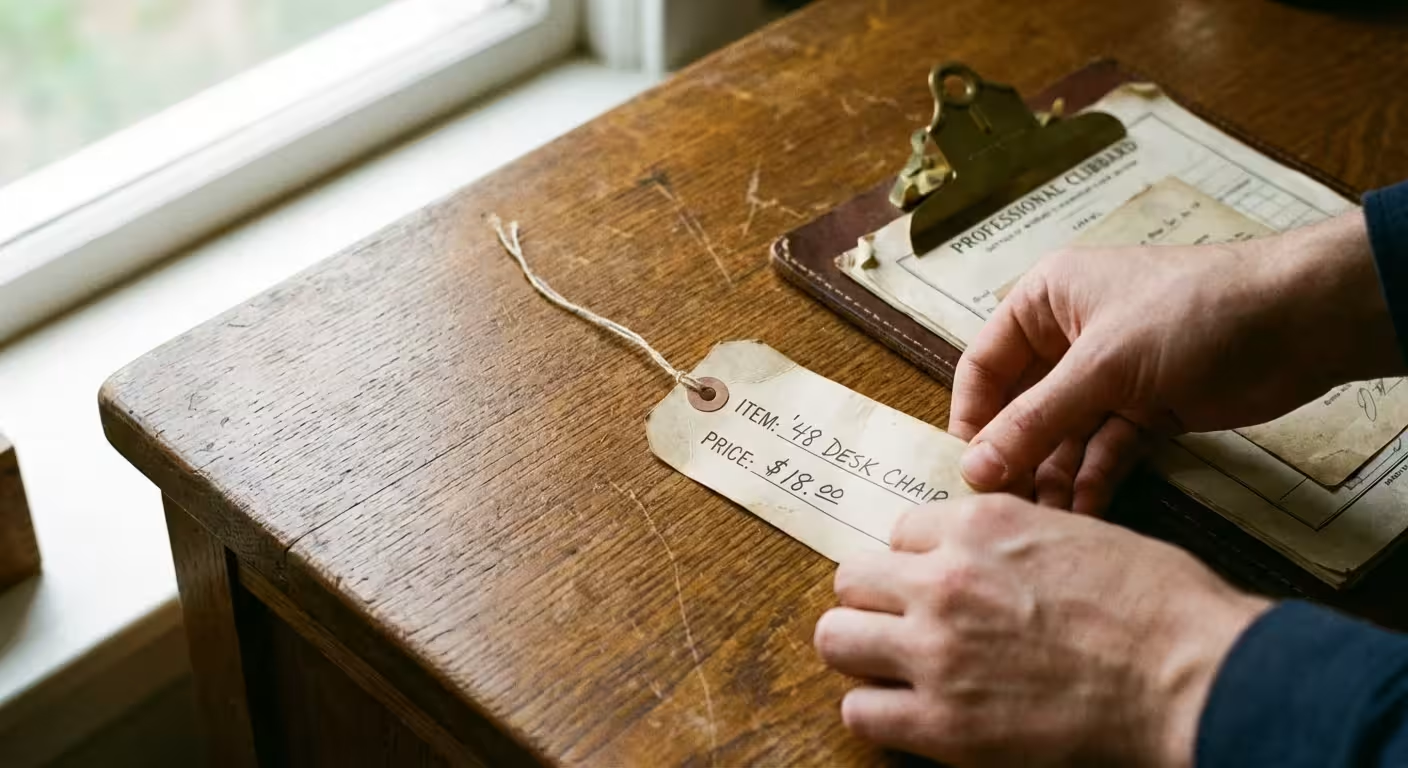
To understand value, you must understand how these businesses acquire their goods. Thrift stores, such as those run by non-profits or local charities, rely entirely on donations. Because their inventory cost is zero, their pricing is often arbitrary, based on a quick assessment by a floor manager. According to the Bureau of Labor Statistics, the cost of household furnishings has seen volatile swings over the last decade, making these zero-cost-inventory stores a vital safety valve for consumer spending. You can find more data on consumer spending trends at the Bureau of Labor Statistics.
Estate sales operate on a different model. These are typically managed by professional liquidation companies hired by families to clear out a home, often due to a death, a divorce, or a major downsize. These companies take a commission—usually 30% to 50% of the total sales—so they are incentivized to price items closer to their actual market value, at least on the first day. This fundamental difference in business models dictates exactly what you will find and what you will pay.
“It’s not your salary that makes you rich, it’s your spending habits.” — Charles A. Jaffe
Inside the Estate Sale: High Stakes and High Quality
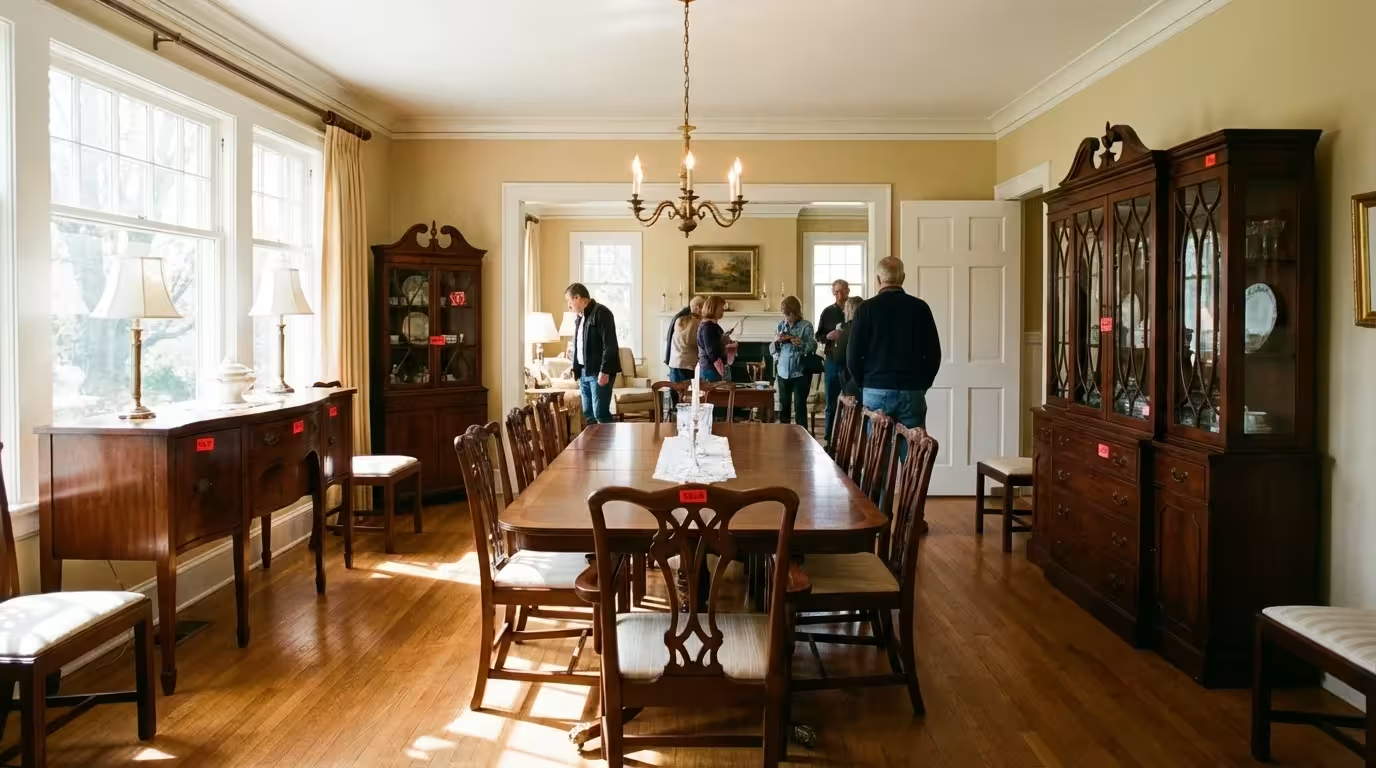
Estate sales are the gold standard for high-quality home furnishings. Because you are walking into a complete home, you see the furniture in its natural habitat. You aren’t just looking at a couch; you are looking at a couch in a smoke-free, pet-free living room of a homeowner who may have owned it for forty years. This context is invaluable for assessing quality and condition.
The primary advantage of the estate sale is the sheer volume of “brown furniture”—the solid wood antiques that modern retailers simply don’t produce anymore at affordable prices. While a new solid wood dresser might retail for $2,000 at a high-end boutique, you can frequently find 1940s-era mahogany dressers at estate sales for $150 to $300. These pieces feature dovetail joints, heavy brass hardware, and a level of durability that survives multiple moves.
However, estate sales require a strategy. Most sales run from Thursday or Friday through Sunday. On the first day, you pay a premium for the best selection. By the final day, almost everything is typically 50% to 75% off. If you are hunting for a specific, high-demand item like a Mid-Century Modern sideboard, you must show up early on day one. If you are just looking for a solid kitchen table and don’t care about the specific style, Sunday afternoon is your best friend.

The Thrift Store Hustle: Consistency and Luck
Thrifting furniture is a different game entirely. It is less of a “event” and more of a routine. Thrift stores receive dozens of drop-offs daily, meaning the floor changes by the hour. The value here lies in the “missed” items—the pieces the floor manager didn’t realize were valuable or the items that were priced to move quickly because the warehouse is full.
The price point at a thrift store is almost always lower than the starting price at an estate sale. You might find a perfectly functional, albeit slightly scratched, pine coffee table for $15. At an estate sale, that same table might start at $45. The trade-off is the “sorting” you have to do. Thrift stores are often crowded, and furniture is frequently stacked or buried under bags of clothes. You also run a higher risk of encountering damaged goods, as donations aren’t always vetted as strictly as estate sale inventory.
To succeed at thrifting, you must be a regular. Successful hunters often visit three or four stores on a specific circuit twice a week. They know that Mondays and Tuesdays are often the best days to shop because the weekend donations have finally been processed and put on the floor. For more tips on smart shopping and consumer rights, visit USA.gov Consumer Resources.
Head-to-Head Comparison: Where the Value Lies
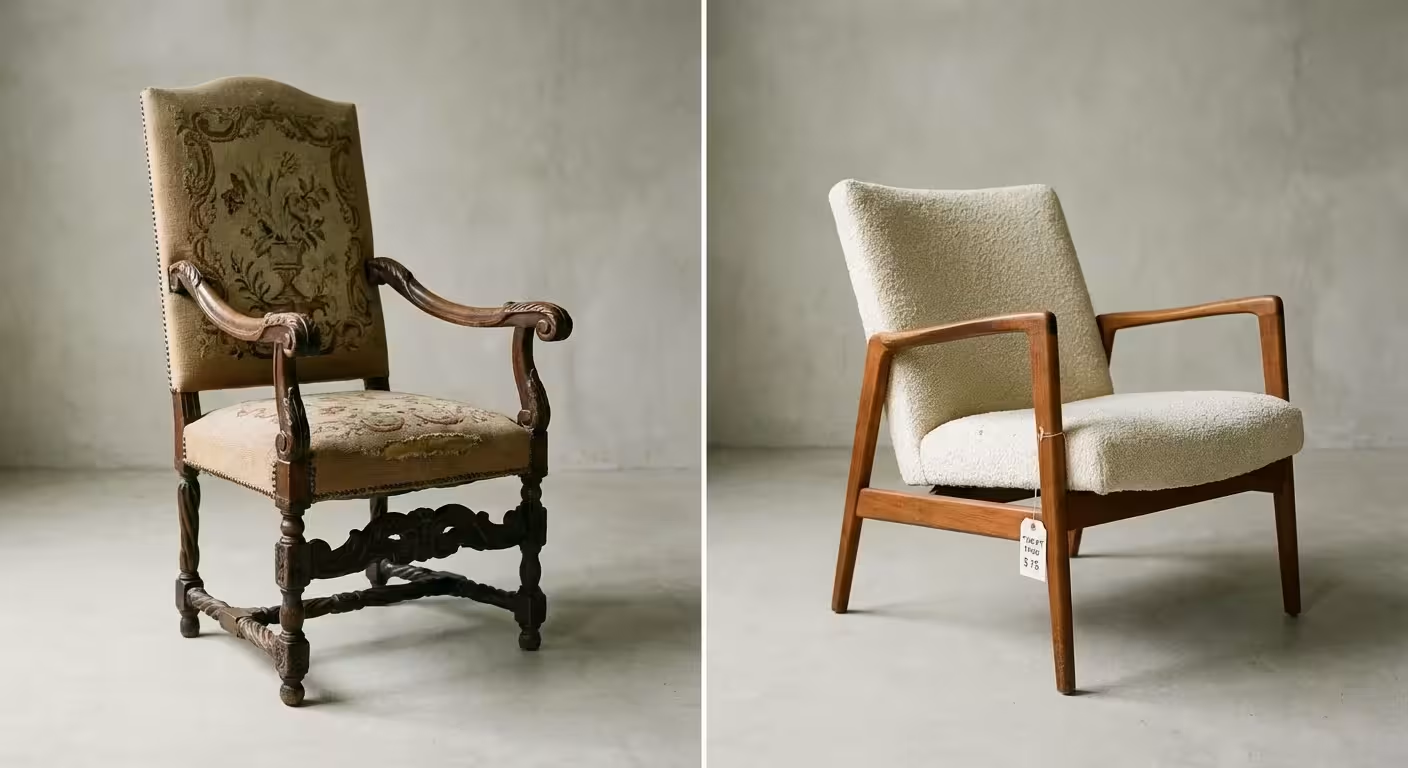
If you have $500 to spend on a dining room set, where should you go? The following table breaks down the strengths and weaknesses of each venue to help you decide.
| Feature | Estate Sales | Thrift Stores |
|---|---|---|
| Price Point | Moderate (Day 1) to Low (Day 3) | Consistently Low |
| Furniture Quality | High (Solid woods, antiques) | Variable (Particle board to treasures) |
| Inventory Volume | High (Full house at once) | Low (Item by item) |
| Negotiation | Expected (Especially on later days) | Rare (Usually fixed price) |
| Convenience | Low (Specific dates/hours) | High (Daily regular hours) |
| Delivery Options | None (Bring your own truck) | Occasionally available for a fee |

Pro Estate Sale Tips for First-Timers
If you decide to brave the estate sale circuit, you need to understand the unwritten rules. Most professional companies use a “sign-up sheet” or a “number system.” If a sale starts at 9:00 AM, the sheet might be put on the porch at 7:00 or 8:00 AM. If you aren’t on that list, you won’t get in until the first wave of buyers has already picked over the best furniture.
- Check the photos first: Use websites like EstateSales.net or EstateSales.org to view hundreds of photos before you leave your house. If you don’t see quality furniture in the photos, don’t waste the gas.
- Bring your own tools: Carry a tape measure, a flashlight (for looking into dark cabinets), and most importantly, a vehicle capable of hauling your finds. Most estate sales require you to move the furniture yourself, often by the end of the day or the end of the weekend.
- Inspect the “hidden” areas: Pull out the drawers. Are they wood or plastic? Do they slide on wooden tracks or cheap metal rollers? Flip chairs over to check for “corner blocks”—extra pieces of wood screwed into the corners of the frame—which signify high-quality construction.
- Cash is king, but plastic is common: Most professional companies now accept credit cards, but they may charge a 3% convenience fee. Carrying cash can sometimes help you negotiate a better deal on the final day when the liquidator just wants the house empty.

Thrifting Furniture: Identifying Value Beyond the Grime
When you are thrifting furniture, you have to look past the surface. A dresser covered in stickers or a table with a ring from a wet glass can be a massive value opportunity if the “bones” are good. Because thrift store employees are often rushed, they frequently overlook high-end brand names.
Look for tags inside drawers or on the underside of tables. Brands like Ethan Allen, Henredon, Drexel, and Thomasville are common in the secondhand market. These pieces were built to last a century. If you find a Thomasville nightstand for $25 at a thrift store, buy it immediately, even if it needs a light sanding. You are buying a piece that would cost $600 new today.
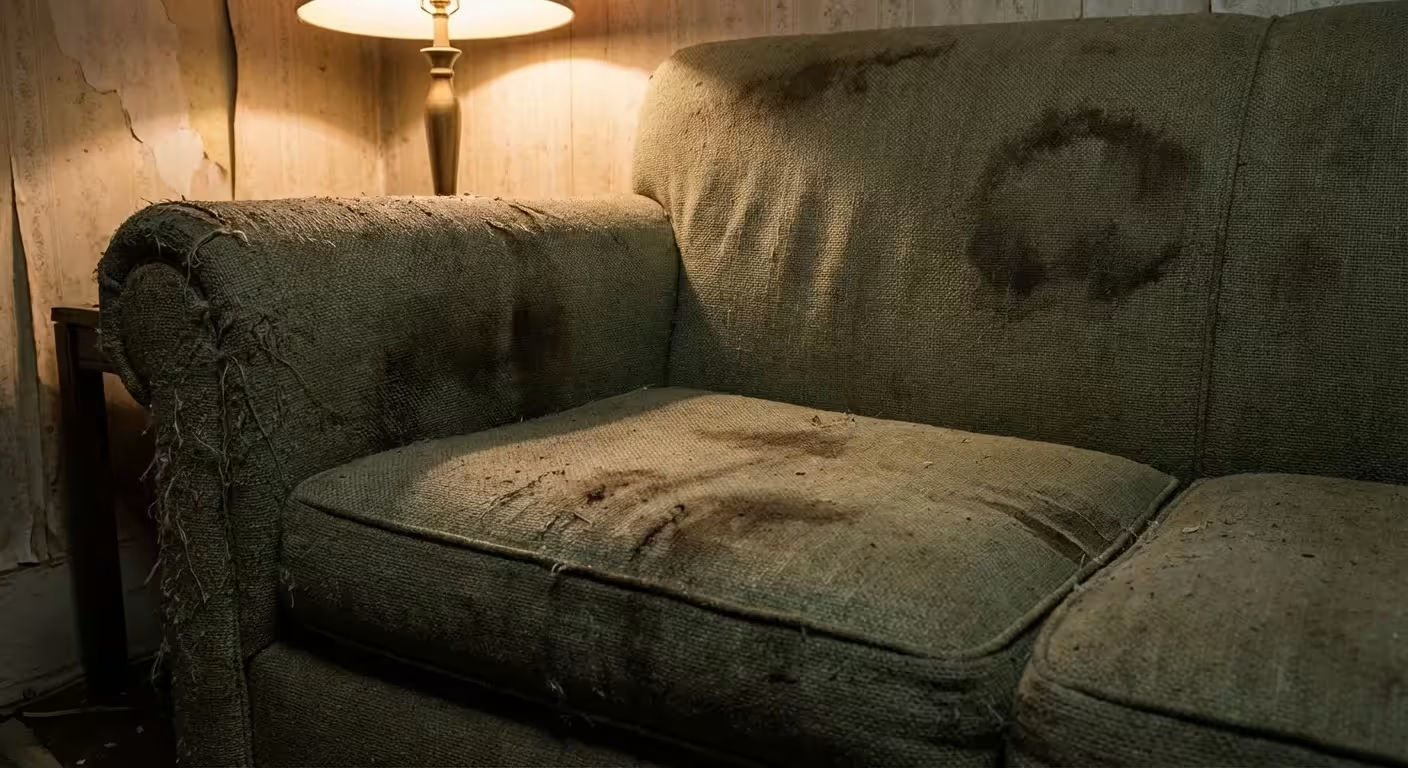
Before buying any upholstered furniture at a thrift store, perform a “sniff test” and a deep inspection of the seams. While most reputable stores screen for pests, the risk of bed bugs is real. If the piece has a heavy “basement” odor or shows any signs of dark spotting in the crevices, walk away. The savings are not worth the cost of an exterminator. For more on household safety and product reviews, Wirecutter offers excellent guides on maintaining your home.

Costly Mistakes to Avoid
The adrenaline of a “good deal” can often cloud your judgment. To truly save money, you must avoid the “project trap.” Many people buy furniture that needs significant repair, thinking they will fix it up, only to have it sit in the garage for two years.
- The “Free” Furniture Tax: A free or $10 sofa that needs reupholstering is not a deal. Professional reupholstery for a standard sofa can cost between $800 and $1,500, not including the cost of fabric. Unless you can do the work yourself, only buy upholstered pieces in “ready to use” condition.
- Ignoring the Dimensions: You find the perfect armoire for $100. You get it home, and it doesn’t fit through the front door or around the corner of the stairs. Always measure your entryways and the intended space before you go shopping.
- Underestimating Transport Costs: If you have to rent a U-Haul for $60 plus mileage to pick up a $40 chair, your “value” just disappeared. Try to bundle your trips or borrow a friend’s truck to keep your overhead low.
- Buying “Almost” Right: Don’t buy a piece just because it is cheap. If you need a six-person dining table and you buy a four-person table because it was $50, you haven’t solved your problem. You have just spent $50 on a temporary solution.
Skip the Used Market When…
While I am a huge advocate for secondhand shopping, there are specific scenarios where buying new is the smarter financial and safety move. The Federal Trade Commission provides guidelines on consumer protection that are worth reviewing when making large purchases. Check their resources at FTC.gov.
Skip the used market for mattresses and bedding. The hygiene risks and the loss of structural integrity make used mattresses a poor investment. A mattress loses its support over 7-10 years; buying a used one means you are likely buying someone else’s discarded problem. Your sleep quality directly impacts your health and productivity, making this an area where “intentional spending” on a new, warrantied product is justified.
Skip used cribs and car seats. Safety standards for children’s furniture change rapidly. Older cribs may have slat spacing that is dangerous, or they may have been recalled. Car seats have expiration dates and should never be used if they have been in an accident, which you cannot verify when buying secondhand.

Budget Home Decor: Winning the Small Battles
If you aren’t ready to haul a wardrobe home, you can still find incredible value in small home decor at both estate sales and thrift stores. This is where “budget home decor” truly shines. Items like solid brass candlesticks, silver-plated serving trays, and original artwork are frequently priced for pennies on the dollar.
At an estate sale, look in the kitchen. High-end cookware like Le Creuset or All-Clad often hides in the back of cabinets. Finding a $300 Dutch oven for $40 is a major win for your household budget. At thrift stores, focus on the “odds and ends” wall. Large, high-quality wooden picture frames are a steal at $5, whereas a custom frame shop would charge you $100 or more for the same size.
Frequently Asked Questions
Which is better for finding Mid-Century Modern (MCM) furniture?
Estate sales are generally better for MCM because you can find entire sets (like a bedroom suite or dining set) that have been in the same home since the 1960s. Thrift stores occasionally get MCM pieces, but they are often snapped up by professional flippers within minutes of hitting the floor.
How do I handle “professional flippers” at these sales?
Don’t worry about them. While flippers are fast, they are looking for very specific high-profit items. If you are looking for high-quality “utility” furniture—pieces that are beautiful and functional but perhaps not “trendy”—there is plenty of room for everyone. Arriving 30 minutes before a sale starts is usually enough to beat the casual crowd.
Are prices negotiable at thrift stores?
In most corporate thrift stores (like Goodwill or Salvation Army), prices are non-negotiable. However, at small, locally-run “mom and pop” thrift shops or church-run stores, you can often negotiate, especially if you are buying multiple items or the item has a visible defect.
Should I bring my own packing materials?
Yes. Estate sales rarely provide boxes, bubble wrap, or blankets. If you are buying glassware or delicate wood pieces, bring a roll of packing paper and some old moving blankets to protect the finish during the drive home.
The Final Verdict: Which Offers Better Value?
If you are looking for the absolute lowest price and have the time to shop frequently, thrift stores offer the best value for small items and “starter” furniture. You can’t beat the $10 end table or the $5 lamp. It is a low-risk, high-reward environment for those who enjoy the “thrill of the hunt.”
However, if you want to furnish your home with pieces that will last a lifetime, estate sales are the clear winner. The quality-to-price ratio at an estate sale is unmatched in the retail world. For the price of a cheap, flat-pack dresser from a big-box store, you can own a piece of American craftsmanship that holds its value and brings character to your home. By shifting your perspective from “buying cheap” to “buying intentional,” you turn your home furnishings from a depreciating expense into a long-term asset.
Prices and availability mentioned reflect research at the time of writing and may vary by location and retailer. Your actual savings will depend on your specific situation and shopping habits.
Last updated: February 2026. Prices change frequently—verify current costs before purchasing.







Leave a Reply